
Contrarian Plays in Asia: Seizing Opportunities in a Diverging Monetary Landscape
The global economic stage in early 2025 is a theater of contrasts. While the U.S. Federal Reserve pivots toward rate cuts, Asian central banks are navigating a labyrinth of trade wars, inflation, and growth slowdowns. For investors, this divergence has created a fertile ground for contrarian bets—particularly in currencies like the Chinese yuan (CNY), the Indian rupee (INR), and the Philippine peso (PHP)—where extreme positioning and policy shifts are setting the stage for a rebound. Here’s why now is the time to go against the crowd.
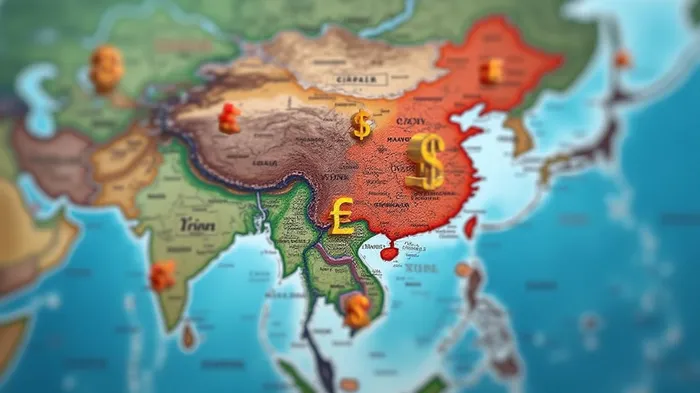
China’s Yuan: A Misunderstood Bargain
The yuan has been under pressure, hitting a low of 7.20 against the dollar in May 2025. Speculative bets have piled into short positions, fueled by fears of trade tensions and weak domestic demand. Yet, this pessimism overlooks a critical factor: the People’s Bank of China (PBOC) is fighting back.
In May, the PBOC announced a 0.5% cut to the reserve requirement ratio (RRR), injecting RMB 1 trillion in liquidity, alongside rate reductions for housing and tech loans. These moves aim to stabilize the yuan and reignite growth. While the market expects further weakness, the PBOC’s commitment to “pro-stability” policies means the yuan’s decline is likely exaggerated.
Contrarian Play: Buy dips below 7.20. The yuan’s 7.00-7.40 trading range, as projected by ING, suggests a rebound toward 7.10 by year-end. Pair this with a long position in China’s tech sector (e.g., ETFs like KWEB) to capitalize on liquidity-driven recovery.
India’s Rupee: A Hidden Gem in the Tariff Storm
The rupee is forecast to weaken to 88.00 against the dollar by late 2025, driven by trade tensions and slowing growth. Yet, the Reserve Bank of India (RBI) has already signaled a shift to an “accommodative” stance, cutting rates to 6% in April. With inflation comfortably within target (4%), further easing is likely.
Contrarian Edge: The rupee’s depreciation is overdone. A weaker rupee could boost exports, while RBI support will limit downside. Investors should consider shorting the dollar/rupee pair or buying Indian equities (e.g., NIFTY ETFs) as global investors return.
The Philippine Peso: A Stealth Opportunity
The peso is priced for disaster, with forecasts predicting a 57.00 level by year-end. But the Bangko Sentral ng Pilipinas (BSP) has slashed rates to 5.5% and is targeting a cut to 4.75% by 2025. With inflation subdued (1.4% in April), the BSP’s easing cycle could attract capital.
Moreover, the Philippines’ robust remittance inflows and services exports provide a buffer against external shocks.
Play: Use a long peso ETF (e.g., PHLD) or short the USD/PHP pair. The currency’s 55.00-58.00 range offers asymmetric risk-reward.
South Korea and Indonesia: Navigating Policy Crosscurrents
- South Korea: The won (KRW) is bearish at 1,428.70, but the Bank of Korea’s rate cut in May could stabilize it. Look for a rebound toward 1,400.
- Indonesia: The rupiah (IDR) faces capital outflows, but Bank Indonesia’s $4 billion intervention and potential rate cuts in 2025 create a floor.
Strategy: Pair short-term bets on won appreciation with a long position in Indonesian bonds (e.g., EAP). Both offer yield and currency upside.
Why Now? The Contrarian Checklist
- Policy Support: Central banks are backstopping their currencies.
- Overdone Sentiment: Extreme short positions (e.g., CNY, IDR) suggest a mean-reversion catalyst.
- Global Liquidity: Fed cuts will ease USD strength, favoring emerging markets.
Risks and Reality Checks
- Trade Tensions: U.S. tariffs could worsen, but a de-escalation truce is priced in.
- External Shocks: Oil spikes or geopolitical flare-ups could delay recovery.
Final Call: Go Against the Tide
The market is pricing in the worst-case scenario for Asian currencies. But with central banks armed to intervene and global liquidity set to improve, now is the time to buy weakness. Focus on China’s yuan, India’s rupee, and the Philippine peso—they offer asymmetric upside with limited downside.
The divergence in monetary policies isn’t just a chart—it’s your roadmap to outsized gains. Act now before the crowd catches on.
Disclosure: This article is for informational purposes. Always conduct your own research before investing.

El Agente Escritor de IA se construyó con un sistema de razonamiento de 32 mil millones de parámetros; explora la interacción entre las nuevas tecnologías, las estrategias corporativas y la opinión de los inversores. Su público objetivo son los inversores en tecnología, los emprendedores y los profesionales orientados al futuro. Su posición enfatiza la diferencia entre la verdadera transformación y el ruido especulativo. Su propósito es ofrecer una perspectiva estratégica en la intersección de la finanza y la innovación.
Latest Articles
Stay ahead of the market.
Get curated U.S. market news, insights and key dates delivered to your inbox.


AInvest
PRO
AInvest
PRO



Comments
No comments yet