
The Contrarian Playbook: Capitalizing on the U.S. Drilling Slowdown


 Aime Summary
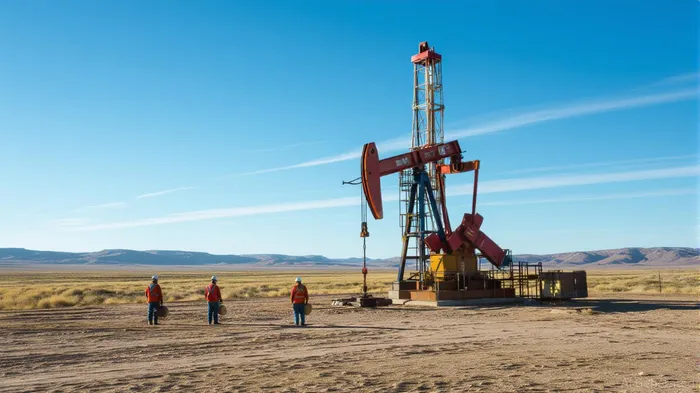
The U.S. onshore drilling sector is at a crossroads. While the Dallas Fed Energy Survey and Baker HughesBKR-- rig count data confirm a modest decline in activity, the broader implications of this slowdown are far from straightforward. For contrarian investors, the current environment—marked by rising costs, regulatory uncertainty, and a shift toward cash preservation—presents a unique opportunity to identify undervalued energy plays and position for a potential rebound.
The State of U.S. Onshore Drilling
As of August 2025, the U.S. Rig Count stands at 536, a 0.37% weekly dip and an 8.38% annual decline. The Oil Rig Count, at 412, reflects a marginal 0.24% weekly increase but a 14.70% drop year-over-year. These figures underscore a sector in transition. While production growth in oil and gas remains positive (oil production index rose to 5.6, natural gas to 4.8), the industry faces mounting challenges:
- Rising input costs: E&P firms report a 57% increase in finding and development costs and a 50% jump in lease operating expenses.
- Regulatory headwinds: Over 40% of firms cite compliance costs exceeding $3.99 per barrel, with steel import tariffs and permitting delays compounding pressures.
- Price volatility: WTIWTI-- is forecasted to average $74/barrel in 2025, with a 5-year target of $82, but operators require $65/barrel to break even.
The result? A sector prioritizing fiscal discipline over expansion. ChevronCVX--, ConocoPhillipsCOP--, and Devon EnergyDVN-- have all announced capex cuts and layoffs, while the DUC (drilled but uncompleted) well count—the industry's “inventory of future production”—has fallen to its lowest level since 2013.
Contrarian Opportunities in a Slowing Sector
The slowdown is not a collapse. For investors with a long-term horizon, it's a chance to target companies and strategies that thrive in low-growth environments.
1. Hedged E&P Firms: Crescent Energy (CREN) and Talos Energy (TLS)
Crescent Energy stands out for its aggressive hedging strategy, locking in 60% of its 2025 production at premiums to current prices. With a 6% dividend yield and a leverage ratio of 1.2x, it offers a rare combination of income and balance sheet strength. Talos EnergyTALO--, meanwhile, has navigated past downturns (2016, 2020) with disciplined leverage and production growth. Both companies exemplify the “cash flow over growth” playbook.
2. Cost-Efficient Operators: Flowco (FLWC) and Hess Midstream (HESM)
Flowco, a provider of artificial lift technologies, is less exposed to oil price swings than E&P peers. Its focus on production optimization—boosting output from existing wells—positions it to benefit from the industry's shift to efficiency. Hess MidstreamHESM--, a midstream transporter, generates stable revenue through oil transport fees, insulating it from commodity volatility. Both companies are trading at discounts to their intrinsic value.
3. Energy Transition Plays: First Solar (FSLR) and Brookfield Renewable (BEP)
As U.S. drilling slows, demand for clean energy is accelerating. First SolarFSLR--, a leader in thin-film solar, is capitalizing on domestic manufacturing incentives and a $45X tax credit for battery production. Brookfield RenewableBEP--, with a global portfolio spanning hydro, wind, and solar, is acquiring undervalued assets in a volatile market. These firms represent the next phase of energy investment.
The Energy Transition: A Substitution Play
The U.S. Energy Information Administration (EIA) forecasts flat natural gas production in 2026, but demand for flexible power sources—like natural gas and battery storage—is rising. Solaris EnergySEI-- Infrastructure (SEI), for instance, is expanding mobile natural gas turbines to meet AI-driven data center needs. Meanwhile, residential battery adoption in California has surged to 75%, driven by resiliency concerns and NEM 3.0 policies.
Strategic Considerations for Investors
- Diversify across energy types: Pair traditional E&P plays with renewables to hedge against commodity volatility.
- Focus on balance sheets: Prioritize companies with low leverage, strong liquidity, and active hedging.
- Monitor policy shifts: Trump-era tariffs and regulatory changes could accelerate or stall the energy transition.
Conclusion
The U.S. onshore drilling slowdown is not a death knell for energy investing—it's a recalibration. For contrarians, the key lies in identifying firms that thrive in low-growth environments and those positioned to lead the energy transition. Crescent EnergyCRGY--, FlowcoFLOC--, and First Solar represent just a few of the asymmetric opportunities emerging from this shift. As the sector navigates uncertainty, patience and a focus on fundamentals will separate winners from losers.

Delivering real-time insights and analysis on emerging financial trends and market movements.
Latest Articles
Stay ahead of the market.
Get curated U.S. market news, insights and key dates delivered to your inbox.




Comments
No comments yet