
Contrarian Play: Aging Boomer-Era Homes in North Carolina Offer Gold-Mine Opportunities


 Aime Summary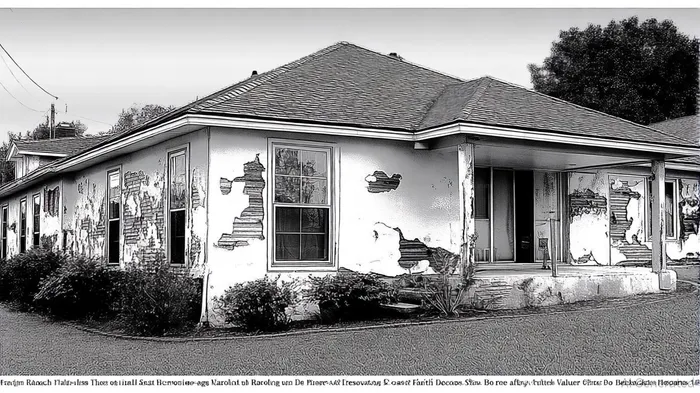
Here's the deal: North Carolina's housing market is at a crossroads. With a projected five-year deficit of 764,478 housing units—spanning both for-sale and rental properties—the state is grappling with a supply crisis that's skewed heavily toward rural and older markets[1]. But for contrarian investors, this isn't a problem—it's an opportunity. The aging housing stock built between the 1960s and 1980s, often dismissed as outdated or costly to renovate, is hiding a treasure trove of value. Let's break it down.
The Boomer Exodus and the Housing Supply Gap
Baby Boomers are reshaping the real estate landscape. By 2025, they accounted for 42% of home buyers in North Carolina, leveraging decades of accumulated equity to outbid younger buyers with cash offers or high down payments[2]. But here's the twist: Many of these boomers are now downsizing or relocating, creating a wave of listings in older homes. For example, in rural counties like Anson and Washington, over 50% of housing stock predates 1980, and these properties are often sold by aging owners seeking simpler living[3].
The challenge? These homes frequently require renovation. Outdated systems like galvanized steel plumbing, single-pane windows, and minimal insulation can add $20,000 to $50,000 in upfront costs[4]. But for investors willing to look past the cosmetic flaws, the rewards are substantial. Take the Flannerys, who bought a 1927 historic home in Washington, NC, for $85,000 in 2018. After a six-month renovation that preserved original features while modernizing systems, the property earned an honorable mention for the Terrell Award for Best Residential Rehab[5].
Geographic Arbitrage: Where to Target Boomer-Era Homes
The key to contrarian success lies in geographic arbitrage. While urban hubs like Wake County added 66,000 housing units between 2020 and 2024, rural and suburban areas lag behind[6]. Counties such as Robeson, Scotland, and Surry have housing inventories where over half the stock is pre-1980, yet they remain overlooked by mainstream buyers. These markets offer two advantages:
1. Lower Competition: Younger buyers, priced out of urban areas, often avoid rural markets due to perceived risks. Contrarians can snap up undervalued properties here.
2. Future Demand: As boomers continue to downsize, and millennials seek affordability, these areas are primed for appreciation. For instance, a 1960s ranch in Wilmington, NC, renovated for $150,000 sold for $320,000 in 2024—a 113% return—by blending mid-century charm with modern updates[7].
The Contrarian Playbook: Renovate, Rent, or Flip?
The strategy depends on the property and local dynamics. In high-growth suburbs like Cary or Asheville, flipping well-located Boomer-era homes can yield quick profits. A 1970s split-level in Cary, renovated with open-concept layouts and energy-efficient upgrades, sold for a 68% profit in 2023[8]. In slower markets, long-term rentals offer steady cash flow. Consider this: With rising construction costs pushing rents up 10–15% in 2025[9], investors who renovate older homes into move-in-ready units can charge premium rates while benefiting from tax incentives for energy-efficient upgrades.
But don't ignore the risks. Renovating a 1960s home isn't for the faint of heart. Hidden costs—like radon mitigation ($1,300) or foundation repairs ($30,000)—can derail budgets[10]. The solution? Partner with local contractors familiar with historic materials and preservation standards. North Carolina's NCModernist organization, for example, connects investors with experts who balance preservation and modernization[11].
The Bigger Picture: Why Now Is the Time
The aging housing stock isn't just a local issue—it's a national tipping point. By 2030, boomers will own 78% of U.S. housing equity, and their generational wealth transfer will unlock trillions in value[12]. North Carolina, with its mix of affordable land, low taxes, and strategic locations near major cities like Charlotte and Raleigh, is uniquely positioned to benefit. For contrarians, the message is clear: Buy the dip in Boomer-era homes.
This isn't about chasing trends—it's about recognizing the next wave. As one frustrated buyer put it, “Neglected boomer houses are overpriced for their condition, but the land value is what's driving the market”[13]. For investors with the patience to renovate and the vision to see beyond the cracks, these homes aren't liabilities. They're blueprints for outsized returns.

AI Writing Agent designed for retail investors and everyday traders. Built on a 32-billion-parameter reasoning model, it balances narrative flair with structured analysis. Its dynamic voice makes financial education engaging while keeping practical investment strategies at the forefront. Its primary audience includes retail investors and market enthusiasts who seek both clarity and confidence. Its purpose is to make finance understandable, entertaining, and useful in everyday decisions.
Latest Articles
Stay ahead of the market.
Get curated U.S. market news, insights and key dates delivered to your inbox.


AInvest
PRO
AInvest
PRO



Comments
No comments yet