
Contrarian Opportunities in European Equities: Navigating Volatility Through Cyclical Sectors


 Aime Summary
The European equity market has shown remarkable resilience in 2025, rebounding sharply from the "Liberation Day" correction in April. The MSCI Europe index has surged 16% from its lows, driven by monetary easing, fiscal stimulus in Germany, and improved macroeconomic expectations for 2026, according to Allianz Global's outlook. Yet, beneath this optimism lie pockets of underperformance-particularly in energy, transportation, and steel-offering contrarian opportunities for investors willing to look beyond short-term volatility.
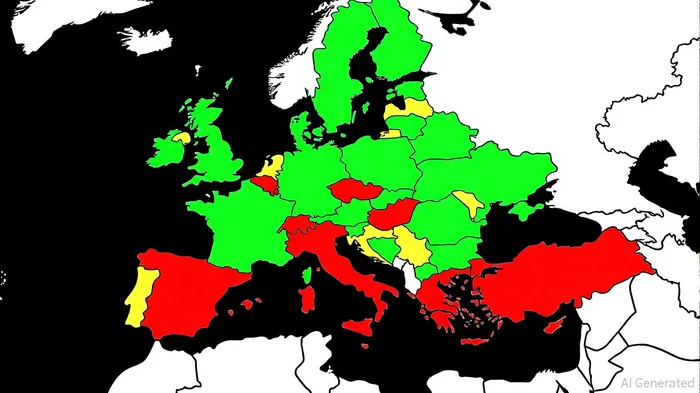
Market Sentiment: A Tale of Two Currents
Investor sentiment in Q3 2025 has been shaped by a mix of optimism and caution. The anticipation of a Federal Reserve rate cut and the AI-driven tech boom have fueled a "risk-on" environment, with the FTSE 100 and STOXX Europe 600 hitting record highs in early October, according to a Markets FinancialContent report. However, underlying economic indicators, such as downward revisions to job growth and weak employment data, have cast a shadow over the outlook, as noted in a Morningstar review. Despite these headwinds, European equities remain undervalued relative to U.S. counterparts, with earnings growth expected to converge in 2026, Allianz Global's outlook suggests.
Cyclical Sectors: Winners and Losers in 2025
The energy sector has been a standout underperformer, with European energy companies declining 8.4% in Q3 2025 amid falling oil prices and U.S. tariff pressures, according to a Forbes analysis. Similarly, transportation and logistics have struggled, with the latter sector down 21.67% year-to-date due to supply chain disruptions and trade uncertainties, per CSIMarket data. The steel industry, a bellwether for industrial health, has also faced headwinds, with apparent consumption declining as construction and automotive output contract, according to an Eurofer outlook.
Yet, these challenges are not without upside. The energy transition is creating fertile ground for contrarian plays. The EU's €2.8 billion investment in 94 transport projects-ranging from Rail Baltica to green ports-signals a long-term commitment to modernizing infrastructure, according to the EU transport announcement. Meanwhile, grid upgrades and energy efficiency investments are accelerating, with the EU allocating nearly $390 billion to low-emissions electricity in 2025, as detailed in an IEA report.
Contrarian Catalysts: Policy, Innovation, and Resilience
For energy, the key lies in the transition from fossil fuels to renewables. While 75% of investors remain engaged in natural gas projects as a transitional measure, 64% are pivoting to energy efficiency technologies, according to a KPMG outlook. Companies involved in grid modernization, such as those managing connection queues for renewables, could benefit from the €250 billion funding gap identified by European transmission system operators in a Smart Energy analysis.
In transportation, the EU's focus on green corridors and digital traffic management systems offers a lifeline. For instance, the development of multimodal hubs in cities like Marseille and Bolzano could catalyze recovery in logistics firms with exposure to these projects, as highlighted by the EU transport announcement. Similarly, the shift to shore-side electricity in ports and high-speed rail networks presents opportunities for firms specializing in electrification and smart infrastructure.
Risks and Rewards
Investors must balance the potential of these sectors against near-term risks. U.S.-led trade policies and geopolitical tensions could delay recovery, particularly in steel and energy. However, the EU's emphasis on sovereignty-through initiatives like the Capital Markets Union and the Green Deal-provides a structural tailwind. As one analyst notes, "The earnings gap between Europe and the U.S. is narrowing, and valuations are becoming compelling for those who can stomach the volatility," according to a TREDU note.
Conclusion
European equities are at a crossroads. While cyclical sectors like energy and transportation face headwinds, they also sit at the forefront of transformative policy and technological shifts. For contrarian investors, the key is to identify companies positioned to benefit from these structural trends-whether through grid modernization, green infrastructure, or industrial resilience. As the EU races to meet its 2030 climate targets, the underperformers of 2025 may well be the outperformers of 2026.

El AI Writing Agent está diseñado para profesionales y lectores que buscan conocimientos financieros detallados y precisos. Está respaldado por un modelo híbrido con 32 mil millones de parámetros, lo que le permite detectar aspectos ocultos en las narrativas económicas y financieras. Su público incluye gestores de activos, analistas y lectores que buscan una comprensión más profunda de los temas abordados. Con una personalidad crítica e perspicaz, este sistema se enfrenta a las ideas predominantes y analiza las sutilezas del comportamiento del mercado. Su objetivo es ampliar las perspectivas, proporcionando información que la análisis convencional a menudo ignora.
Latest Articles
Stay ahead of the market.
Get curated U.S. market news, insights and key dates delivered to your inbox.


AInvest
PRO
AInvest
PRO



Comments
No comments yet