
Contrarian Moves in a Fractured Retail Landscape: Navigating Weakness with Defensive Precision
 Aime Summary
The U.S. retail sector in Q3 2025 has painted a picture of duality. On one hand, , . On the other, , signaling a softening in discretionary spending. This divergence underscores a , where higher-income households continue to spend while lower-income consumers tighten belts. For investors, this fragmentation demands a recalibration of strategies: abandoning broad retail bets in favor of contrarian sector rotation and defensive positioning.
The Deceleration Playbook
The September retail sales miss (0.2% m/m vs. . , , . This volatility reflects shifting consumer priorities: is rising, and is under pressure.
The data suggests a pivot to defensive sectors. Utilities, healthcare, and —industries with stable demand regardless of economic cycles—are gaining relative strength. For example, Kohl'sKSS-- (KHC) and Best BuyBBY-- (BBY) outperformed expectations in Q3, but their success hinged on cost discipline and inventory optimization, not broad consumer optimism. Meanwhile, retailers like Dick's Sporting GoodsDKS-- (DKS) are restructuring underperforming segments, signaling a shift toward over growth-at-all-costs.
Contrarian Sector Rotation: Where to Look
- Discount Retailers and Dollar Stores: As inflation erodes purchasing power, value-oriented retailers like Dollar GeneralDG-- (DG) and Family Dollar (FDO) are gaining traction. These chains cater to budget-conscious consumers and have historically outperformed during .
- Essential Services: Grocery and beverage stores, , remain defensive. Companies like Albertsons (ACI) and Kroger (KR) are benefiting from inelastic demand and margin improvements.
- Recession-Resilient Tech: While tech stocks have been volatile, niche players in AI-driven logistics and e-commerce infrastructure (e.g., Shopify (SHOP), Amazon (AMZN)) are adapting to a more cautious consumer base.
Defensive Positioning: Balancing Risk and Reward
The retail sector's physical footprint is also evolving. , , suggests that landlords are repurposing underutilized spaces. This trend favors (REITs) with exposure to high-traffic areas and mixed-use properties.
However, investors must remain wary of overexposure to . For instance, furniture and electronics retailers—hard hit by tariffs and inflation—face prolonged headwinds. Companies like Bed Bath & Beyond (BBBY) and Best Buy's competitors are struggling to clear inventory, signaling structural challenges.
The Road Ahead: Strategic Adjustments
The Federal Reserve's anticipated (three by year-end) could provide temporary relief, but the inflationary drag from tariffs and will persist. This environment favors a : pairing high-quality defensive stocks with select cyclical plays poised to rebound.
Investment Recommendations:
- Long: Consumer staples ETFs (e.g., XLP), discount retailers (DG, FDO), and utility REITs (e.g., EPR).
- Short: Overleveraged retailers with high inventory costs (e.g., BBBY, certain mall operators).
- Monitor: Labor market data and tariff developments, which could accelerate or delay a retail sector rebalancing.
In conclusion, the U.S. retail landscape is at an inflection point. While nominal sales figures remain positive, the underlying dynamics—rising costs, a K-shaped recovery, and —demand a nuanced approach. By embracing contrarian sector rotation and defensive positioning, investors can navigate the deceleration with precision, capitalizing on mispriced opportunities while mitigating downside risk. The key lies in aligning portfolios with the new economic reality: a world where resilience, not growth, is the ultimate currency.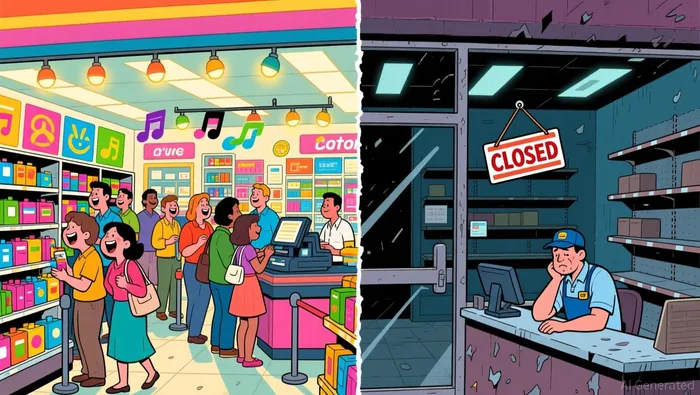

Stay ahead of the market.
Get curated U.S. market news, insights and key dates delivered to your inbox.




Comments
No comments yet