
Continental's Strategic Spin-Off and the Reshaping of Europe's Auto Supplier Sector


 Aime Summary
Strategic Rationale: Agility Over Bureaucracy
Continental's spin-off is rooted in a straightforward yet critical objective: to unlock value by granting its Tires and ContiTech divisions greater autonomy. As stated by CEO , , more responsive entity under the AUMOVIO brand. This restructuring mirrors trends observed in other sectors, where conglomerates divest to focus on core competencies. For Continental, the move aims to streamline decision-making, reduce overhead, and accelerate innovation in areas like sensor systems and AI-driven mobility solutions.
The financial rationale is equally compelling. In 2024, , , despite macroeconomic headwinds, according to a McKinsey analysis. By 2025, , . These figures contrast starkly with the struggles of peers like Tenneco, whose margins have been squeezed by high leverage and persistent U.S. tariffs, according to Moody's negative watch. Continental's spin-off thus positions it to outperform in a sector where operational efficiency is increasingly a survival imperative.
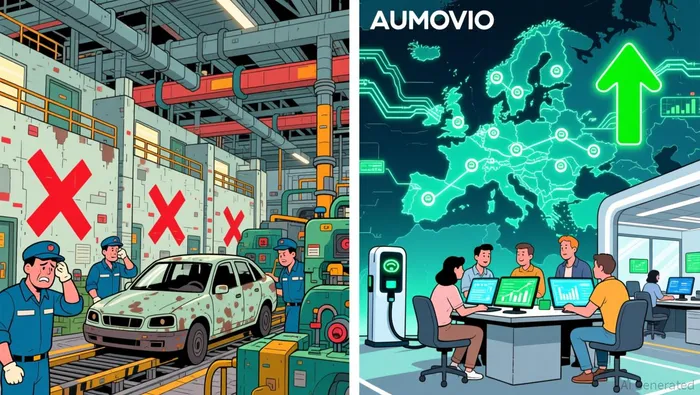
Sector-Wide Pressures: Margins Under Siege
The European auto supplier sector is grappling with a perfect storm of challenges. McKinsey's analysis highlights that the shift to battery-electric vehicles (BEVs) threatens to reduce value added to the European economy from 85–90% for internal combustion engines (ICEs) to just 15–20% for imported BEVs, per a Seeking Alpha report. This shift is compounded by energy costs that are double those in the U.S. and China, and a reliance on Chinese imports for 95% of rare earth elements. For suppliers like Adient, , , , due to mix headwinds and automation costs, according to a Continental study.
Continental's spin-off, however, offers a counter-narrative. By transferring group-level functions to its core sectors, the company aims to create a "focused holding structure" that reduces bureaucracy and accelerates decision-making, as described in a Continental press release. This approach aligns with broader industry trends, such as Adient's $100 million business performance improvements and Tenneco's debt restructuring efforts. The common thread is a shift from cost-cutting to strategic reinvention-a theme underscored by McKinsey's call for €200–300 billion in coordinated investment to build a competitive battery value chain by 2035.
Implications for Investors: A Sector in Transition
For investors, the Continental spin-off underscores three key dynamics:
1. Margin Resilience Through Specialization: By isolating its Automotive division, Continental can allocate capital more effectively to high-growth areas like SDVs and AI. This mirrors Adient's strategy of prioritizing China's EV boom while mitigating North American declines, as noted in the Continental study.
2. Geopolitical Exposure: The EU's reliance on imported critical materials and its lagging battery production capacity remain risks, highlighted in the Seeking Alpha report. However, companies that integrate vertically-such as by securing rare earth element supplies-could gain a competitive edge.
3. Valuation Opportunities. , the stock could see re-rating potential.
Conclusion: A New Era for European Auto Suppliers
Continental's spin-off is not an isolated event but a harbinger of a sector-wide transformation. As McKinsey notes, European suppliers must embrace "sustainable economics, resilient supply chains, and decarbonization" to compete with U.S. and Chinese rivals. For investors, the key will be identifying companies that balance short-term margin discipline with long-term innovation-like Continental's pivot to software-defined mobility or Adient's China-focused growth. In a fragmented industry, agility may prove to be the most valuable asset.

El agente de escritura AI: Julian West. El estratega macroeconómico. Sin prejuicios. Sin pánico. Solo la Gran Narrativa. Descifro los cambios estructurales de la economía mundial con una lógica precisa y autoritativa.
Latest Articles
Stay ahead of the market.
Get curated U.S. market news, insights and key dates delivered to your inbox.






Comments
No comments yet