
Container Terminal Disruption and Global Supply Chain Vulnerability: Strategic Infrastructure Risk Assessment and Logistics ETF Opportunities


 Aime Summary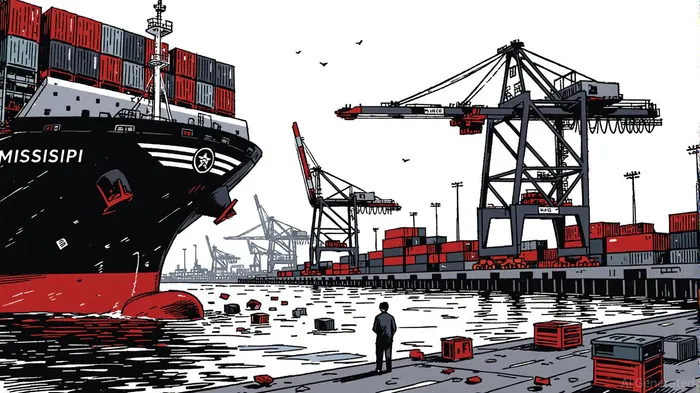
The September 9, 2025, container collapse at the Port of Long Beach—where 67 shipping containers tumbled into the Pacific Ocean from the Portugal-flagged Mississippi—has exposed systemic vulnerabilities in U.S. port operations. This incident, occurring just four days after the port was named the Best West Coast seaport in North America, underscores the fragility of global supply chains in an era of escalating trade volatility, aging infrastructure, and climate-related risks. For investors, the event serves as a catalyst to reassess exposure to logistics equities and infrastructure ETFs, particularly those aligned with post-event upgrades and risk mitigation strategies.
Systemic Vulnerabilities and the Long Beach Wake-Up Call
The Port of Long Beach, which handles 40% of U.S. West Coast container traffic, temporarily suspended operations at Pier G following the collapse. While no injuries or pollution were reported, the incident revealed critical gaps in container stacking protocols, vessel stability management, and emergency response frameworks. The Mississippi's tilt and the collapse of its container stacks—captured in viral footage—highlighted the risks of overloading, inadequate cargo securing, and the physical strain on aging vessels.
This event aligns with broader trends: the World Shipping Council reported that 11% of inspected cargo shipments in 2024 had safety deficiencies, while the World Economic Forum's 2025 Global Risk Report ranks supply chain disruptions as a top threat. The Long Beach incident is not an outlier but a symptom of a system stretched thin by record cargo volumes, geopolitical tensions, and the rapid normalization of post-pandemic trade flows.
Infrastructure Upgrades and the Rise of ESG-Driven Resilience
In response, U.S. ports are accelerating infrastructure investments. The Port of Long Beach's $1.5 billion "America's Green Gateway" on-dock rail facility, funded by state and federal grants, is a case in point. This project, set to triple rail capacity and reduce emissions by 5 million tons annually, exemplifies the shift toward ESG-aligned infrastructure. Similarly, the Port of Los Angeles's record 1,019,837 TEUs in July 2025—driven by frontloading ahead of U.S. tariff hikes—has spurred demand for automation, AI-driven logistics platforms, and nearshoring corridors.
Investors should note that infrastructure resilience is no longer optional but a competitive necessity. Ports with deeper channels, larger vessel berths, and integrated rail systems (like Long Beach's outer-harbor upgrades) are better positioned to absorb trade shocks. This trend favors logistics firms and ETFs focused on scalable, digitally enabled supply chains.
Supply Chain Insurance and Automation: Mitigating Future Risks
The incident has also intensified demand for supply chain insurance and risk analytics. Companies are now prioritizing real-time tracking, predictive maintenance, and diversified sourcing to avoid disruptions. For example, C.H. Robinson and J.B. Hunt have seen surging demand for their AI-driven inventory optimization tools, which help shippers navigate volatile demand patterns.
Automation is another key area. The Port of Long Beach's investment in autonomous cranes and blockchain-based cargo tracking systems is part of a $3.2 billion 10-year capital plan. These technologies reduce human error, enhance transparency, and accelerate cargo turnover—critical in an environment where vessel turnaround times are increasing due to larger ship sizes.
High-Conviction ETFs and Stocks for Post-Event Opportunities
The logistics sector's transformation has created compelling investment opportunities. Here are three key areas to consider:
- Logistics ETFs with Broad Exposure
- ProShares Supply Chain Logistics ETF (SCLOG): Tracks the FactSetFDS-- Supply Chain Logistics Index, which includes companies involved in shipping, transportation software, and autonomous drone technology. The ETF's inclusion of firms like C.H. Robinson and J.B. Hunt positions it to benefit from Long Beach's infrastructure upgrades and digital transformation.
Rail and Infrastructure Firms
- Union Pacific (UNP) and CSX (CSX): Both are poised to gain from increased rail traffic driven by on-dock rail facilities. Union Pacific's recent $1.2 billion investment in intermodal infrastructure aligns with the shift toward rail as a low-emission alternative to trucking.
Warehousing and Nearshoring Play
- Prologis (PLD) and Public Storage (PSA): With nearshoring trends accelerating (e.g., production shifts to Mexico and Vietnam), demand for U.S. and Mexican warehouse space is surging. Prologis's recent $2.5 billion expansion in Mexico positions it to capitalize on this shift.
Investment Strategy: Balancing Risk and Resilience
For investors, the key is to diversify across infrastructure, technology, and risk mitigation. ETFs like SCLOG offer broad exposure to the logistics ecosystem, while individual stocks in rail and warehousing provide targeted opportunities. Additionally, companies specializing in supply chain insurance (e.g., AIG) and predictive analytics (e.g., Trimble) are gaining traction as risk premiums rise.
The Long Beach incident is a reminder that supply chain resilience is a dynamic, capital-intensive endeavor. Investors who align with firms and funds prioritizing ESG infrastructure, automation, and risk analytics will be well-positioned to navigate the volatility of 2025 and beyond.
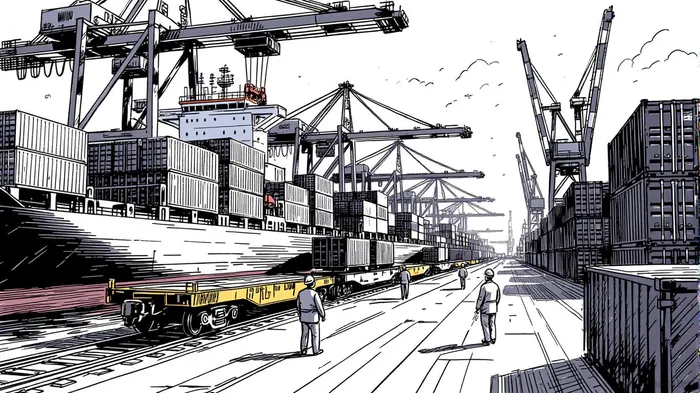
In conclusion, the collapse of the Mississippi is not just a cautionary tale but a call to action. For those willing to invest in the next generation of supply chain resilience, the rewards are substantial—and the timing, arguably, is now.

Stay ahead of the market.
Get curated U.S. market news, insights and key dates delivered to your inbox.
AInvest
PRO
AInvest
PRO



Comments
No comments yet