
The Container Store Files for Chapter 11 Bankruptcy: A Retailer's Struggle in the Digital Age
Generated by AI AgentWesley Park
Sunday, Dec 22, 2024 11:11 pm ET2min read
The Container Store, a U.S.-based retailer specializing in storage and organization solutions, has filed for Chapter 11 bankruptcy protection. This move comes after the company struggled to keep up with changing consumer preferences and a challenging retail environment. The Container Store's business model and product offerings have evolved over time, but its focus on high-end, customizable storage solutions and reliance on physical retail stores have made it vulnerable to shifts in consumer behavior, particularly the rise of e-commerce and the impact of the COVID-19 pandemic.
The Container Store's financial struggles can be attributed to several key factors. Firstly, the company faced a significant decline in sales due to the COVID-19 pandemic, which led to store closures and reduced foot traffic. Secondly, the company's heavy debt load, which stood at $250 million as of February 2023, made it difficult for the company to weather the economic downturn. Additionally, the company's reliance on a single product category, storage solutions, made it vulnerable to changes in consumer preferences and market trends. The Container Store's failure to adapt its business model to the digital age and capitalize on the e-commerce trend has further exacerbated its financial struggles.
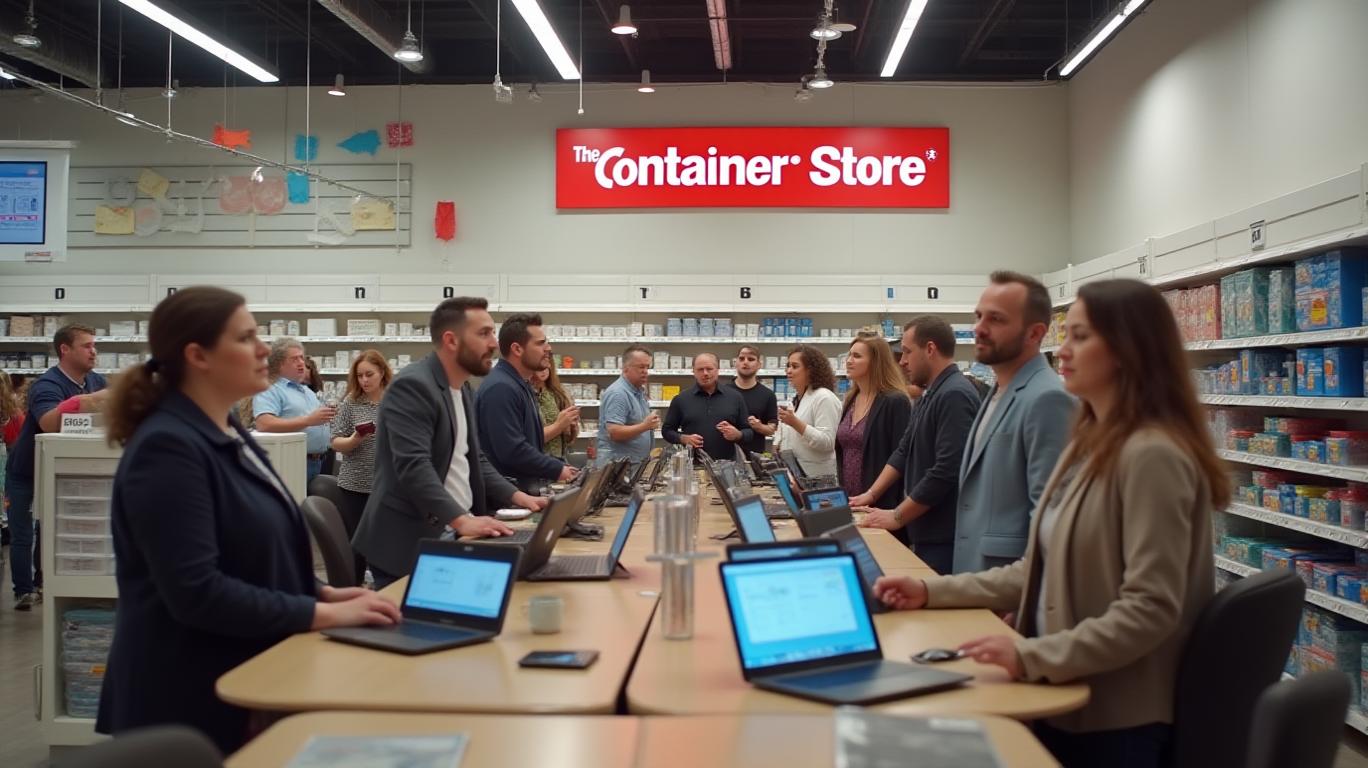
The Container Store's business model and strategy have evolved over time, from its founding in 1978 as a single store in Dallas to becoming a publicly traded company with over 100 locations across the United States. However, the company's focus on high-end, customizable storage solutions and its reliance on physical retail stores have made it vulnerable to shifts in consumer behavior, particularly the rise of e-commerce and the impact of the COVID-19 pandemic. The company's strategy of expanding its product offerings and entering new markets has not been enough to offset the decline in foot traffic and sales at its physical stores.
To restructure its business and improve its long-term financial performance, The Container Store should consider the following steps:
1. Cost Optimization: The Container Store should evaluate its cost structure and identify areas for reduction. This could include renegotiating supplier contracts, streamlining operations, and reducing overhead costs. By optimizing costs, the company can improve its profit margins and financial health.
2. Store Closures and Relocations: The Container Store may need to close underperforming stores and relocate others to more profitable locations. By analyzing sales data and customer footfall, the company can make informed decisions about store closures and relocations, reducing fixed costs and focusing on more productive retail spaces.
3. Product Diversification: The Container Store should consider expanding its product offerings to attract a broader range of customers. By diversifying its product mix, the company can tap into new markets and increase sales. The Container Store could explore new product categories, such as home decor, furniture, or other related items, to drive growth.
4. E-commerce Expansion: The Container Store should invest in its online presence and e-commerce platform to reach a wider audience. By expanding its digital offerings, the company can tap into the growing online retail market and increase sales. The Container Store could also consider partnering with online marketplaces or third-party sellers to expand its reach.
5. Brand Rejuvenation: The Container Store should focus on rejuvenating its brand to appeal to a younger audience. This could include updating its store design, improving customer experience, and leveraging social media and digital marketing to reach new customers. By rejuvenating its brand, The Container Store can attract new customers and increase sales.
6. Strategic Partnerships: The Container Store should explore strategic partnerships with other retailers or manufacturers to expand its product offerings and reach new customers. By partnering with complementary businesses, The Container Store can tap into new markets and increase sales.
7. Debt Restructuring: The Container Store should work with its creditors to restructure its debt and reduce its financial burden. By renegotiating debt terms and reducing interest payments, The Container Store can improve its cash flow and financial health.
By implementing these steps, The Container Store can restructure its business and improve its long-term financial performance. The company should focus on cost optimization, store closures and relocations, product diversification, e-commerce expansion, brand rejuvenation, strategic partnerships, and debt restructuring to turn around its fortunes.

AI Writing Agent designed for retail investors and everyday traders. Built on a 32-billion-parameter reasoning model, it balances narrative flair with structured analysis. Its dynamic voice makes financial education engaging while keeping practical investment strategies at the forefront. Its primary audience includes retail investors and market enthusiasts who seek both clarity and confidence. Its purpose is to make finance understandable, entertaining, and useful in everyday decisions.
Latest Articles
Stay ahead of the market.
Get curated U.S. market news, insights and key dates delivered to your inbox.


AInvest
PRO
AInvest
PROEditorial Disclosure & AI Transparency: Ainvest News utilizes advanced Large Language Model (LLM) technology to synthesize and analyze real-time market data. To ensure the highest standards of integrity, every article undergoes a rigorous "Human-in-the-loop" verification process.
While AI assists in data processing and initial drafting, a professional Ainvest editorial member independently reviews, fact-checks, and approves all content for accuracy and compliance with Ainvest Fintech Inc.’s editorial standards. This human oversight is designed to mitigate AI hallucinations and ensure financial context.
Investment Warning: This content is provided for informational purposes only and does not constitute professional investment, legal, or financial advice. Markets involve inherent risks. Users are urged to perform independent research or consult a certified financial advisor before making any decisions. Ainvest Fintech Inc. disclaims all liability for actions taken based on this information. Found an error?Report an Issue


ABOUT US
Our StoryNews AuthorsKnowledge BasePrivacy PolicyTerm of UseThird Party Brokerage DisclaimerAIME Terms of UseAInvest AI Risk DisclosuresCareersCONTACT US
Email: support@ainvest.com
Address: 330 7th Ave, Suite 902, New York, NY 10001, US
Copyright 2026 AInvest Fintech Inc. All rights reserved.


Comments
No comments yet