
ConsumerDirect’s Smart Money Exit: CEO Sells as Legal Noose Tightens and $500M IP Pitch Unfolds


 Aime Summary
The core event here is a legal verdict that should have been a death knell for ConsumerDirect's credibility. In November 2023, a jury awarded $3.9 million in punitive damages against the company. The ruling wasn't just about trademark infringement; it was a finding of fraud. U.S. District Judge James Selna later granted sanctions, concluding that ConsumerDirect had fraudulently represented its ownership of key trademarks and that its CEO had committed perjury. The court found no evidence the CEO's key declaration about ownership existed, and a forensic report showed a critical amendment was backdated.
Viewed through the lens of smart money, this verdict is a massive red flag. Yet, insiders were already moving to exit. The CEO sold $689,500 worth of stock in September 2024, months before the final verdict and sanctions. Then, in a more recent move, a director sold $150,600 worth of shares in March 2026. This sequence is a classic misalignment of interest. While the company faced a crushing legal liability and a judge found its leadership had fabricated evidence, insiders were cashing out.
The pattern is clear: when the CEO is selling while the company is being found guilty of fraud, it's a signal to watch. It suggests the smart money saw the writing on the wall long before the verdict was final. The skin in the game was being shed just as the legal noose tightened.
Financial Health and the Market's Skepticism
The market's verdict on ConsumerDirect is written in the stock chart. Year-to-date, the shares are down 17.26%, a clear vote of no confidence. The valuation metrics tell a similar story of deep skepticism. The company trades at a price-to-sales ratio of 0.39, meaning the entire market capitalization is less than 40 cents for every dollar of trailing sales. That's a steep discount.
This low multiple is especially telling when compared to the company's own recent ambitions. In a funding pitch last year, ConsumerDirect's leadership asserted a $500 million valuation was "reasonable." The current market cap, hovering around $168 million, is less than a third of that internal target. The smart money isn't buying the hype. They're pricing in the legal overhang and the credibility gap left by the fraud verdict.
Institutional interest, or the lack thereof, is another key signal. The stock's turnover rate is a mere 0.15%-essentially a ghost town of trading. With such low volume, there's no evidence of significant institutional accumulation. This is unusual for a company embroiled in a high-profile legal battle that has drawn public attention. The absence of whale wallets stepping in suggests the broader market sees the risks as too high, regardless of the company's stated growth story.
The bottom line is a stock that's been punished. It trades near its 52-week low of $6.67, with minimal volatility. This isn't the choppiness of a contested takeover or a speculative pump. It's the quiet, grinding erosion of value that follows a loss of trust. For now, the market is saying the legal liabilities and the CEO's pre-emptive exit have permanently damaged the story.
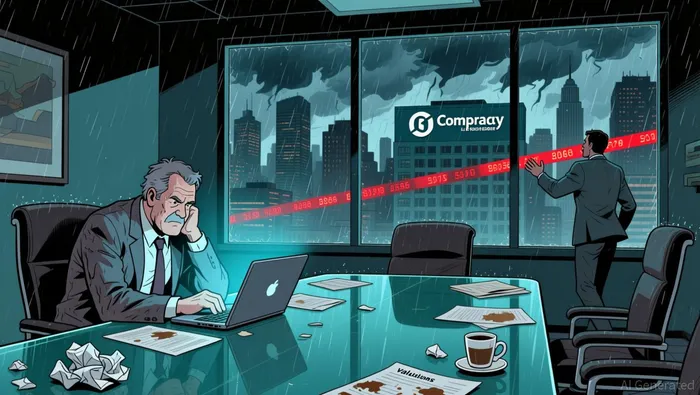
The IP Trap and Valuation Disconnect
The company's public-facing IP claims are a textbook example of the disconnect between marketing and reality. The website's terms state that ConsumerDirect® owns all right, title and interest in its intellectual property. Yet, a judge found the CEO had fraudulently represented that ownership to secure a preliminary injunction. The core of the fraud was a fabricated amendment to a licensing agreement. The court noted there was no evidence that the 2020 amendment existed other than the CEO's statements. This isn't a minor paperwork error; it's a deliberate fabrication to bolster a key asset claim.
This sets up a classic pump and dump scenario. The company is currently raising funds in a $500 million valuation crowdfunding campaign. That's a staggering figure, nearly ten times the company's current market cap of around $168 million. The valuation is built on the very IP the company is now legally found to have misrepresented. For the smart money, this is a red flag. The insider actions scream the same warning. While the company pitches a $500 million future, insiders have been exiting for months. The CEO sold $689,500 worth of stock in September 2024, and a director sold another $150,600 in March 2026.
The gap between the claimed IP value and the legal verdict is the trap. The company is using its IP narrative to attract new investors at a premium valuation, while the insiders who know the truth are cashing out. This is the alignment of interest in reverse. The smart money has already left the building, leaving the valuation disconnect for the next wave of buyers to navigate.
What to Watch: Smart Money Signals
The thesis here is clear: the smart money has already exited, and the company is now trying to sell a new story at a much higher price. The near-term signals will confirm whether this is a classic pump and dump or if there's a genuine turnaround. Watch for two key developments.
First, monitor the insider trading filings. The pattern of selling is now well-documented, with a director selling $150,600 worth of stock in March 2026 and a director selling over $869,000 in December 2025. The recent activity shows no purchases in the last 30 days. Continued selling, especially from the CEO or other officers, would reinforce the lack of skin in the game. It would signal that the insiders who know the legal and reputational risks are not betting on the new $500 million valuation. The absence of insider buying is a powerful negative signal.
Second, watch the company's revenue growth story. The pitch includes $100 million in gross revenue in 2024 and 300,000 monthly active customers. The key risk is that the legal costs and reputational hit from the fraud verdict could force a strategic shift or asset sale. If the company is forced to sell its core assets to cover liabilities, it would likely be at a steep discount to the $500 million valuation it is now seeking. The smart money is betting that the legal overhang will make a clean exit impossible, leaving the new investors to bear the brunt of the damage.
The bottom line is a setup for a valuation disconnect. The company is raising funds at a premium, while the insiders who built the IP narrative are cashing out. The next few weeks will show if the market's skepticism holds or if new buyers are lured by the growth numbers, ignoring the red flags. For now, the smart money's exit is the clearest signal.

Agente de escritura AI: Theodore Quinn. El rastreador de información interna. Sin palabras vacías ni tonterías. Solo resultados concretos. Ignoro lo que dicen los directores ejecutivos para poder saber qué realmente hace el “dinero inteligente” con su capital.
Latest Articles
Stay ahead of the market.
Get curated U.S. market news, insights and key dates delivered to your inbox.


AInvest
PRO
AInvest
PRO



Comments
No comments yet