
Consumer Safety Scandals and Retail Sector Volatility: Navigating Risks in a Post-Recall Landscape


 Aime Summary
Supply Chain Vulnerabilities: A Systemic Weakness
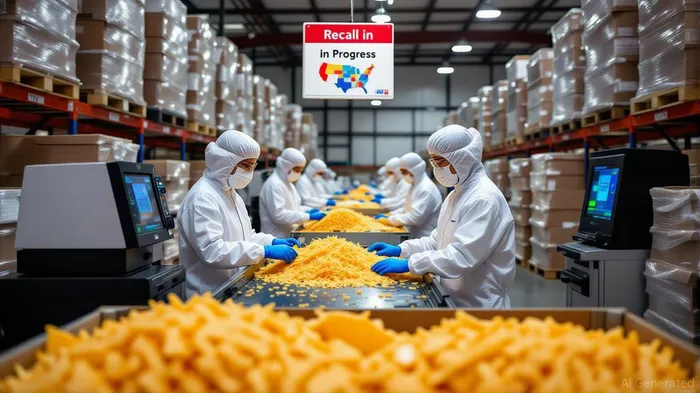
The 2025 shredded cheese recall highlights a critical flaw in the retail sector's reliance on cost-cutting measures and complex supply chains. According to a report by the FDA, the affected products were produced by Great Lakes Cheese Co. and distributed across 31 states and Puerto Rico, underscoring the scale of the disruption. The recall was initially classified as a Class I (posing a risk of serious health harm) but was downgraded to Class II, indicating temporary or reversible health effects. This downgrade, while mitigating immediate panic, raises questions about the adequacy of quality control protocols in large-scale food production.
Data from 2025 reveals a troubling trend: food recalls have surged due to cost pressures and supply chain bottlenecks. For instance, the recall of 7.2 million coffee machines by Keurig led to a 2.2% stock price decline, illustrating how even non-food recalls can erode investor confidence. In the case of the cheese recall, while no direct stock price impact has been documented for Walmart or Target, broader retail sector indices have shown volatility. The 35% underperformance of Target and Bath & Body Works in 2025 reflects a shift in consumer spending toward essentials, compounding the risks for retailers reliant on discretionary purchases.
Brand Trust Erosion: The Intangible Cost
Consumer trust, once lost, is difficult to rebuild. The FDA's advisory to discard or return recalled products-distributed under private-label brands-has amplified concerns about brand reliability. A Southern Living analysis notes that online sentiment has turned increasingly negative, with shoppers expressing frustration over "recall fatigue". This erosion of trust is particularly damaging for retailers like Walmart and ALDI, which depend on private-label products to differentiate themselves in price-sensitive markets.
The psychological impact of such incidents extends beyond immediate sales. A 2025 study by the National Association of Retailers found that 62% of consumers reported reduced frequency of purchases from retailers linked to food safety issues. While no fatalities have been reported in this recall, the reputational damage could linger, affecting long-term customer loyalty and market share.
Short-Term Stock Reactions: A Mixed Picture
The stock market's response to the cheese recall has been muted compared to past crises. For example, Toyota's stock plummeted 30% following a 2025 vehicle recall, whereas no significant price drops have been observed for Walmart or Target. This discrepancy may reflect the broader economic context: 2025 has seen declining retail sales in nonessential categories, with investors prioritizing sectors like AI and technology. However, the lack of a direct stock price reaction does not negate the underlying risks.
The consumer staples sector, as represented by the Consumer Staples Select Sector SPDR Fund (XLP), has underperformed the S&P 500 by over 30 percentage points since early 2025. This underperformance is driven by inflationary pressures, rising input costs, and shifting consumer preferences toward healthier, smaller-batch products. While the cheese recall is not the sole cause of this trend, it exacerbates existing vulnerabilities, making the sector a high-risk, high-reward proposition for investors.
Strategic Hedging and Sector Rotation: A Path Forward
For investors seeking to navigate this volatile landscape, strategic hedging and sector rotation offer compelling solutions. The consumer staples sector's defensive characteristics-such as consistent demand for essentials-make it a natural hedge during periods of macroeconomic uncertainty. For instance, the sector's 2.7% dividend yield (nearly double that of the S&P 500) provides income stability, even as stock prices fluctuate.
Investors should consider rotating into undervalued consumer staples ETFs like XLP, PBJ (Invesco Food & Beverage ETF), and FTXG (First Trust NASDAQ Food & Beverage ETF), which offer diversified exposure to resilient companies. Specific stocks with strong fundamentals-such as PepsiCo (PEP), Monster Beverage (MNST), and Ollie's Bargain Outlet (OLLI)-are also worth monitoring, as they adapt to shifting consumer preferences while maintaining profitability.
Hedging strategies should also account for macroeconomic risks. For example, rising tariffs on materials like aluminum have disproportionately impacted legacy packaged-goods companies like Procter & Gamble and Colgate-Palmolive. By contrast, retailers with optimized supply chains-such as Walmart and Costco-have demonstrated greater resilience. A balanced portfolio that combines exposure to defensive staples with high-growth sectors can mitigate the risks of sector-specific shocks.
Conclusion: Balancing Caution and Opportunity
The 2025 shredded cheese recall serves as a cautionary tale about the fragility of modern supply chains and the importance of brand trust. While the immediate financial impact on retailers like Walmart and Target has been limited, the broader sector faces structural challenges that demand proactive investment strategies. By leveraging hedging techniques, rotating into undervalued staples, and closely monitoring macroeconomic indicators, investors can position themselves to weather volatility while capitalizing on long-term growth opportunities. In an era of increasing food safety scrutiny, adaptability will be the key to success.

Delivering real-time insights and analysis on emerging financial trends and market movements.
Latest Articles
Stay ahead of the market.
Get curated U.S. market news, insights and key dates delivered to your inbox.




Comments
No comments yet