
Consumer Safety Recalls and Their Impact on Food Retailers and Suppliers: Assessing Supply Chain Risk and Brand Resilience


 Aime Summary
Supply Chain Vulnerabilities and the Root of the Recall
The contamination originated from raw materials supplied to Great Lakes Cheese Co. Inc., highlighting a critical gap in supplier oversight. According to a report by , the metal fragments likely entered the production process during the sourcing phase, a flaw that bypassed quality control measures. For retailers like ALDI, Target, and WalmartWMT--, this incident raises questions about their due diligence in vetting suppliers. While these retailers operate under private-label brands (e.g., Aldi's Happy Farms, Target's Good & Gather, Walmart's Great Value), the recall has blurred the lines of accountability with their supplier.
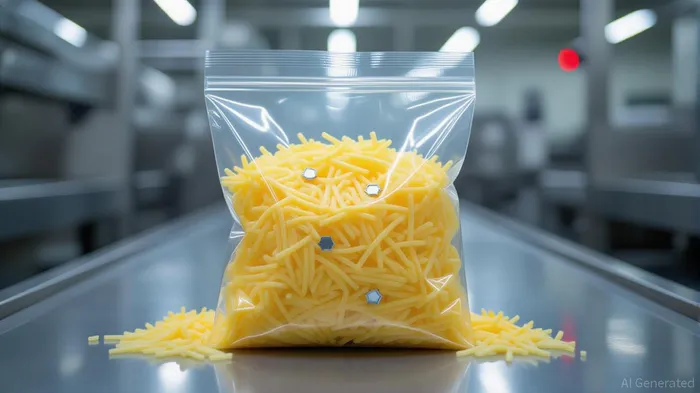
The FDA's reclassification of the recall to Class II on December 1, 2025, suggests that while the health risks are not life-threatening, the incident still signals systemic weaknesses. As stated by the FDA, such recalls "may cause temporary or medically reversible adverse health consequences," emphasizing the need for stricter supplier audits and real-time contamination detection systems.
Reputational and Financial Risks for Retailers and Suppliers
Though no illnesses have been reported, . states and Puerto Rico-has eroded consumer trust. notes that consumers are now more cautious about private-label products, which are often perceived as cost-effective but less rigorously tested than national brands. For ALDI, Target, and Walmart, this could translate into short-term sales losses as customers shift to alternative products or competitors. However, concrete financial data on sales declines or stock price fluctuations remains unavailable, as investor statements and market analyses have not yet been disclosed.
Great Lakes Cheese Co. Inc., meanwhile, faces existential risks. The recall not only disrupts its operations but also invites heightened regulatory scrutiny. article highlights that the company's failure to detect contamination at the supplier level could lead to long-term penalties, including increased insurance costs and strained relationships with retail partners. For investors, the incident serves as a cautionary tale about over-reliance on single suppliers and the importance of diversifying sourcing strategies.
Long-Term Implications and Investor Considerations
The recall's long-term implications extend beyond immediate financial losses. Retailers must now invest in enhanced supplier verification protocols, such as or third-party audits, to rebuild consumer confidence. For example, Walmart has previously invested in blockchain technology to track food origins; such initiatives may become non-negotiable in the post-recall landscape. According to Reuters, Walmart has tested blockchain to track food origins.
Investors should also monitor how companies communicate during crises. ALDI, Target, and Walmart have issued standard advisories urging customers to return affected products, but their ability to pivot to proactive transparency-such as publicizing supplier improvements-will determine their brand resilience. analysis of past recalls suggests that firms that swiftly address root causes and engage with stakeholders often recover faster than those that adopt defensive postures.
Conclusion: Building Resilience in an Uncertain Landscape
The 2025 shredded cheese recall is a microcosm of broader challenges in the food industry. While the absence of reported illnesses and concrete financial metrics limits immediate quantification of losses, the reputational damage and regulatory scrutiny are undeniable. For investors, the key takeaway lies in evaluating companies' supply chain robustness and crisis management frameworks. Retailers and suppliers that prioritize transparency, diversification, and technological innovation in quality control will likely emerge stronger, while those clinging to cost-cutting at the expense of safety may face recurring risks.
As the FDA and industry stakeholders continue to monitor the situation, the incident serves as a stark reminder: in an era of heightened consumer awareness, brand resilience is not just about avoiding recalls but about learning from them.

Delivering real-time insights and analysis on emerging financial trends and market movements.
Latest Articles
Stay ahead of the market.
Get curated U.S. market news, insights and key dates delivered to your inbox.
AInvest
PRO
AInvest
PRO



Comments
No comments yet