
Consumer Safety Crises and Retailer Stock Volatility: Lessons from the 2025 National Shredded Cheese Recall


 Aime Summary
The Recall and Its Immediate Implications
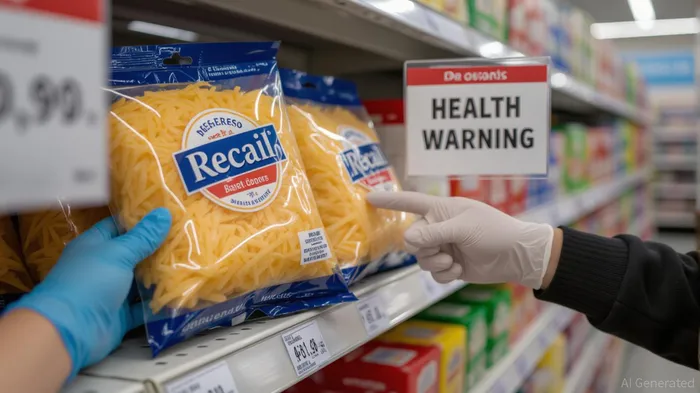
The U.S. (FDA) classified the recall as Class II, indicating that consumption of the affected products could lead to temporary or reversible health effects, such as dental damage or intestinal lacerations. The recall spanned 31 states and Puerto Rico, impacting brands like Walmart's Great Value and Target's Good & Gather, and Aldi's Happy Farms. While no illnesses were reported, the incident exposed vulnerabilities in supplier oversight and quality control systems.
Retailers acted swiftly to remove the products from shelves, a standard response to mitigate consumer harm. However, the speed of action alone is insufficient to address long-term risks. As noted by the FDA, the recall highlighted the need for enhanced and transparency in sourcing. For instance, Aldi emphasized its "rigorous " in public statements, while WalmartWMT-- and Target focused on refund processes to minimize customer friction according to corporate statements.
Financial Impacts: Earnings, Stock Volatility, and Market Reactions
The financial repercussions of the recall varied across retailers. Walmart reported robust Q4 2025 earnings, . However, its stock price following cautious fiscal 2026 guidance, which investors perceived as a sign of potential stagnation. While the cheese recall was not explicitly cited as a factor, the incident occurred amid broader investor concerns about supply chain costs and profit margins.
Target faced more direct challenges. In Q3 2025, , according to financial reports. The retailer also announced layoffs and a subdued Q4 outlook, compounding investor skepticism. Aldi, though not explicitly analyzed in financial reports, benefited from the broader value shopping trend, which offset some recall-related anxieties.
Notably, the recall did not trigger immediate stock volatility for any of the three retailers, suggesting that markets may have discounted such risks as part of routine operational hazards. However, the absence of short-term earnings penalties does not negate long-term reputational costs.
Brand Trust and Risk Management Strategies
Brand trust metrics, though not quantified in the recall's immediate aftermath, are likely to have been strained. Consumer surveys and sentiment analysis typically reveal a correlation between product recalls and declines in brand loyalty, particularly for staple items like cheese. Retailers mitigated this risk through transparent communication. For example, Aldi's public statements emphasized its commitment to safety, while Walmart and Target prioritized swift refund processes according to media reports.
The recall also exposed gaps in supplier oversight. Great Lakes Cheese Co., the manufacturer, initiated the recall voluntarily in October 2025, but the FDA upgraded the risk classification to in December, signaling heightened concerns. This delay raises questions about the adequacy of pre-distribution quality checks. Retailers must now invest in more rigorous supplier audits, including real-time monitoring of production facilities and third-party certifications.
Investor Sentiment and Strategic Lessons
Investor sentiment during the recall was shaped by how companies managed the crisis. Walmart's stock decline post-earnings, though attributed to broader guidance, illustrates how markets punish uncertainty. Target's struggles, meanwhile, highlight the risks of over-reliance on private-label brands, which can amplify recall impacts. Aldi's resilience, conversely, underscores the value of a value-oriented brand identity that prioritizes affordability without compromising safety perceptions according to .
For investors, the recall underscores the importance of evaluating a retailer's . Key metrics include the frequency of supplier audits, transparency in recall responses, and the integration of quality control into procurement contracts. Companies that treat supply chain resilience as a strategic priority-rather than a compliance checkbox-are better positioned to weather crises without significant earnings or trust erosion.
Conclusion
The 2025 Shredded Cheese Recall serves as a stark reminder of the interconnected risks in modern supply chains. While Walmart, Target, and Aldi managed the crisis with varying degrees of effectiveness, the incident highlights the need for proactive supplier oversight, transparent communication, and contingency planning. For investors, the recall reinforces the value of scrutinizing a company's risk management practices as part of broader due diligence. In an era where consumer safety crises can escalate rapidly, resilience is not just a operational imperative-it is a financial one.

Delivering real-time insights and analysis on emerging financial trends and market movements.
Latest Articles
Stay ahead of the market.
Get curated U.S. market news, insights and key dates delivered to your inbox.
AInvest
PRO
AInvest
PRO



Comments
No comments yet