
Consumer Safety Crises and Retailer Stock Volatility: Analyzing the Cheese Recall Impact


 Aime Summary
Investor Sentiment and Stock Volatility: A Fragile Equilibrium
While the provided data does not quantify precise stock price movements for WalmartWMT--, TargetTGT--, or Aldi following the December 2025 recall, the broader context of "recall fatigue" in 2025 suggests a growing erosion of consumer and investor confidence. According to a report by NPR, the cheese recall added to a year marked by multiple food safety incidents, from contaminated shrimp to Pecorino Romano linked to listeria. Such patterns have led to heightened scrutiny of retailers' quality control measures, with analysts noting that even non-fatal risks as classified by the FDA can trigger short-term volatility.
Investor sentiment, though not directly measured in the sources, can be inferred from public discourse. StockTwits commentary highlighted a decline in online trust, with consumers expressing frustration over "packaged food recalls testing their nerves"(). For retailers reliant on private-label brands-often marketed as affordable and reliable-such crises risk undermining the value proposition that drives their market share. While sales data for the affected retailers remains unreported, the reputational damage could manifest in long-term stock underperformance, particularly if recalls become recurrent.
Supply Chain Resilience: A Test of Preparedness
The recall's root cause-metal fragments traced to Great Lakes Cheese Co.-exposes a critical flaw in the supply chain: over-reliance on third-party manufacturers for staple products. Aldi, Walmart, and Target, all of which sourced the recalled cheese through Great Lakes, faced immediate pressure to reassure customers. Their responses, however, varied in tone and transparency.
Aldi, for instance, emphasized its "commitment to safety" in public statements, directing customers to its website for updates and offering full refunds. Target and Walmart provided detailed lists of affected products and sell-by dates, a move that, while reactive, aimed to mitigate confusion. Yet, these efforts highlight a reactive rather than proactive approach to risk management. noted, the incident underscores the fragility of supply chains where quality assurance is outsourced.
For investors, the lesson is clear: companies must invest in supplier audits, real-time monitoring, and contingency planning. Walmart's recent pledge to remove artificial colors and 30+ additives from its store-brand products by 2027 signals a shift toward transparency, but such measures must be paired with rigorous supplier oversight to prevent future crises.
Long-Term Brand Trust: The Unseen Cost
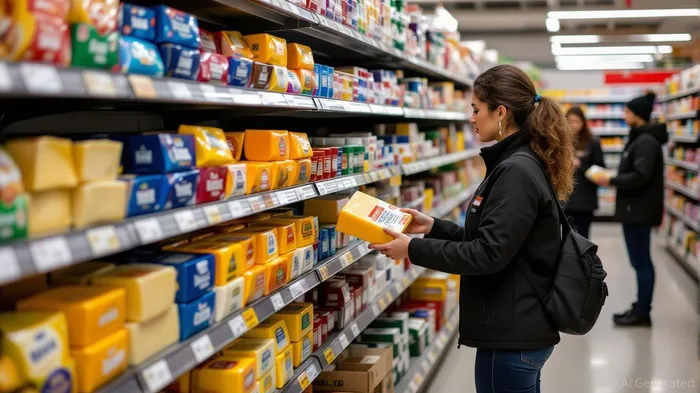
The recall's most enduring impact may lie in its effect on brand trust, particularly for budget retailers. Store-brand products are often chosen for their perceived reliability and affordability, but contamination risks threaten to reframe these advantages as liabilities. As one analysis noted, the shredded cheese recall intensified public scrutiny of private-label offerings, potentially damaging long-term loyalty.
This is not merely a reputational issue but a financial one. . For retailers like Aldi and Walmart, which derive significant revenue from private-label lines, such shifts could translate into measurable sales declines. Target's response, which included swift product removal and public apologies, may help mitigate this risk, but trust, once shaken, is difficult to rebuild.
Strategic Responses: Lessons for Risk Management
The retailers' handling of the recall offers a case study in crisis management. All three companies acted swiftly to remove products and communicate with customers, a critical first step in minimizing harm. However, their strategies lacked differentiation. Aldi's emphasis on safety protocols and Target's detailed product lists were commendable, but neither addressed the systemic issue of supplier oversight.
For investors, the key takeaway is that effective risk management requires more than reactive recalls-it demands a cultural commitment to safety. This includes:
1. : Reducing dependence on single-source manufacturers to mitigate cascading risks.
2. : Leveraging blockchain or AI-driven quality checks to enhance traceability.
3. Consumer Communication: Proactively educating customers on recall procedures and safety standards.
Conclusion: A Call for Vigilance
The 2025 cheese recall serves as a stark reminder that in food retail, safety is not a cost center but a core competency. For Walmart, Target, and Aldi, the incident highlights the need to align their supply chain strategies with the expectations of a risk-aware consumer base. While their immediate responses were adequate, long-term resilience will depend on their ability to innovate in quality control and rebuild trust.
As the market watches, investors must weigh not just the financial impact of recalls but the strategic investments companies make to prevent them. In an industry where a single contaminated product can unravel years of brand equity, the true measure of a retailer's strength lies in its preparedness-not its reaction.

Delivering real-time insights and analysis on emerging financial trends and market movements.
Latest Articles
Stay ahead of the market.
Get curated U.S. market news, insights and key dates delivered to your inbox.
AInvest
PRO
AInvest
PRO



Comments
No comments yet