
Consumer Safety Crises and Retailer Liability: Assessing Brand Resilience and Supply Chain Risk in Food Retail Stocks


 Aime Summary
The New Normal: Regulatory Shifts and Supply Chain Volatility
The U.S. regulatory landscape has shifted dramatically, with the ban on forcing food retailers to reformulate products using natural alternatives. This isn't just a cost issue-it's a supply chain nightmare. Sourcing natural ingredients like beet juice or turmeric is more complex and expensive, and companies are scrambling to avoid mislabeling penalties or recalls. Meanwhile, global supply chains are buckling under climate change, geopolitical instability, and . Labor issues in cocoa and seafood supply chains, for instance, have become existential risks for brands like Dollar GeneralDG-- and Foot Locker, which due to operational inefficiencies.
The financial toll is staggering. According to a 2025 report, agricultural companies are adopting regenerative practices and crop insurance to mitigate climate risks, but the upfront costs and yield variability remain significant hurdles. For investors, this means watching for companies that can balance short-term pain with long-term resilience.
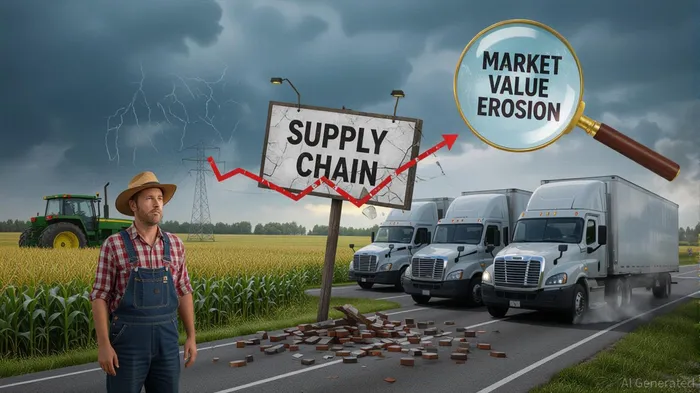
Case Studies: Winners and Losers in the Recall Era
Let's talk numbers. WalmartWMT--, KrogerKR--, and AlbertsonsACI-- have all faced recalls in recent years, but their responses-and stock performances-tell vastly different stories. In July 2024, Walmart and Kroger were part of a massive recall of produce from Wiers Farm Inc., affecting 13 states. While the immediate financial impact wasn't disclosed, Walmart's stock after a second-quarter earnings miss, signaling investor unease about supply chain and consumer resilience.
Albertsons, meanwhile, has been a rollercoaster. Despite posting better-than-expected quarterly earnings in 2025, its stock plummeted 7% due to concerns over future performance. The company's aggressive $750 million share-buyback program-a bid to signal confidence- but couldn't offset broader worries about its supply chain vulnerabilities. Kroger, by contrast, .
What's the takeaway? Companies with robust traceability systems and diversified supplier networks are outperforming peers. Kroger and Albertsons, for example, have mandated traceability for all food products-well ahead of FDA deadlines-using GS1 standards to enable rapid recall responses. Walmart, too, is pushing suppliers to adopt electronic traceability, a move that's likely to insulate it from future crises.
The Resilience Playbook: Tech, Transparency, and Trust
Investors should focus on three metrics: , , and supplier diversification. According to a 2025 FMI report, . These tools aren't just for inventory management-they're critical for identifying contamination risks before they hit shelves.
Take Walmart's recent partnership with Ecotrace, a startup using blockchain to trace contaminated products back to their origins. This isn't just about compliance; it's about restoring consumer trust. With , transparency is now a competitive advantage.
The Bottom Line: Where to Play and Where to Stay Clear
The food retail sector is a mixed bag. Companies like Walmart and Kroger are investing heavily in resilience, but Albertsons remains a cautionary tale. Its reliance on a one-size-fits-all supply chain model and lack of collaboration with external carriers have left it exposed. For investors, the key is to avoid firms with opaque supply chains and instead target those leveraging AI, , and real-time analytics.
But don't ignore the macro risks. According to a 2025 BCG report, , forcing retailers to rethink sourcing strategies. Nearshoring and reshoring-shifting production to North America-are gaining traction, but they come with high upfront costs. For now, the best bets are companies that balance innovation with fiscal discipline.
In short, the food retail sector is at a crossroads. Those that adapt will thrive; those that don't will be left scrambling-and their shareholders will pay the price.

Delivering real-time insights and analysis on emerging financial trends and market movements.
Latest Articles
Stay ahead of the market.
Get curated U.S. market news, insights and key dates delivered to your inbox.
AInvest
PRO
AInvest
PRO



Comments
No comments yet