
Consumer Safety Alerts and Retail Stock Volatility: Assessing the Impact of the 2025 Shredded Cheese Recall


 Aime Summary
Supply Chain Risks: A Manufacturer's Achilles' Heel
The root cause of the recall traces back to contaminated raw materials supplied to Great Lakes Cheese Co., a key player in private-label cheese production. This highlights a recurring issue in the food industry: overreliance on without rigorous oversight. According to a report, . For manufacturers, this means that even minor lapses in supplier quality control can cascade into massive financial and reputational damage.
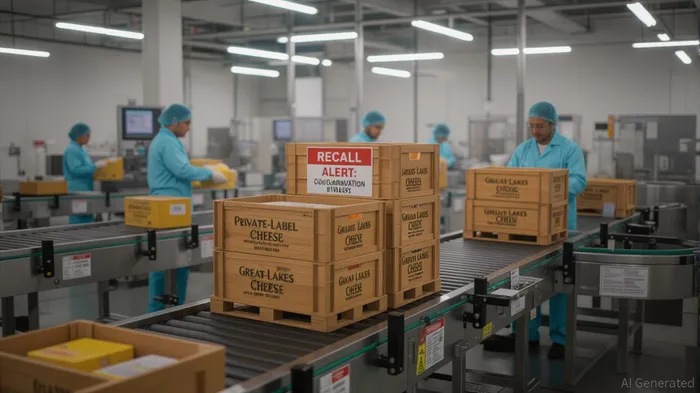
Retailers like Aldi and Walmart, which rely heavily on private-label products, are particularly vulnerable. These brands often prioritize cost efficiency, but the 2025 recall demonstrates that cutting corners on supplier vetting can lead to costly disruptions. Data from the Food Safety News survey , . For investors, this signals that companies with opaque or fragmented supply chains face heightened operational risks.
Consumer Trust: A Fragile Commodity
The recall's impact on consumer trust is equally alarming. found , . Younger demographics, particularly , are even more skeptical, with to repurchase affected brands. This generational divide is critical for investors to note, as these cohorts increasingly dominate purchasing power.
The erosion of trust is not just a short-term issue. revealed , including real-time recall communication and proactive quality assurance measures. Companies that fail to meet these expectations risk long-term brand degradation. For example, the Happy Farms cheese recall at Aldi led to immediate store-level disruptions, with customers advised to discard or return products-a move that likely accelerated trust erosion.
Investment Implications: Navigating the Fallout
While specific stock price data for Great Lakes Cheese Co., Aldi, or Walmart post-recall remains undisclosed, the broader market context suggests volatility. The 2025 recall trend. For investors, this points to two key strategies:
Due Diligence on Supply Chain Practices: Prioritize companies with robust supplier audits, , and . Firms like Tyson Foods and Hormel, which have invested in , are better positioned to mitigate such risks.
: Evaluate how companies handle crises. Those with transparent recall protocols and swift consumer communication-such as ALDI's stated commitment to "rapid response" measures-are more likely to retain customer loyalty.
Conclusion: A Call for Vigilance
The 2025 shredded cheese recall is a wake-up call for the packaged food sector. It exposes the fragility of supply chains and the high stakes of consumer trust. For investors, the lesson is clear: companies must balance efficiency with accountability. Those that fail to adapt will face not only regulatory scrutiny but also a growing consumer base that demands safety and transparency. As the market digests this crisis, the winners will be those who treat recalls not as isolated incidents but as systemic risks requiring strategic investment.

Delivering real-time insights and analysis on emerging financial trends and market movements.
Latest Articles
Stay ahead of the market.
Get curated U.S. market news, insights and key dates delivered to your inbox.
AInvest
PRO
AInvest
PRO



Comments
No comments yet