
Consumer Retail Risks and Opportunities Amid High-Profile Product Recalls


 Aime Summary
The 2025 Recall Landscape: Scale and Scope
Costco's 2025 recalls spanned multiple product categories, including prepared foods, beverages, electronics, and automotive items. The most notable were the voluntary recalls of Caesar Salad and Chicken Sandwich with Caesar Salad due to potential plastic contamination in the dressing according to reports, according to reports. These recalls were concentrated in select regions-Midwest, Northeast, and Southeast-highlighting localized supply chain bottlenecks or quality control lapses.
The company also addressed broader safety concerns, such as fire risks in Anker Powercore 10000 Power Banks and mold-prone window air conditioners. These incidents collectively exposed vulnerabilities in Costco's supplier vetting processes and quality assurance protocols, raising questions about its ability to maintain its reputation for reliability.
Stock Valuation Pressures and Analyst Reactions
While , the immediate impact of the 2025 recalls on trading volume or price remains less explicit. Analysts, however, have adjusted their outlooks based on broader financial trends. Truist Securities and Evercore ISI lowered price targets , respectively, citing valuation concerns and inflationary pressures. Conversely, , emphasizing Costco's robust membership growth and fee income.
This divergence reflects a nuanced investor calculus: while recalls may erode short-term confidence, Costco's core business- . , though elevated, suggests investors are betting on long-term resilience.
Supply Chain Adjustments and Brand Trust Recovery
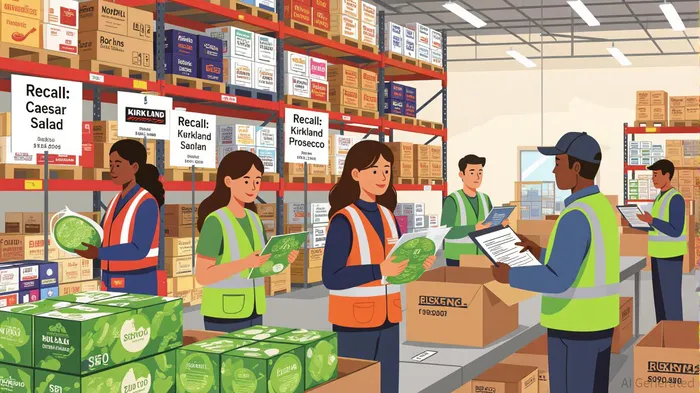 Costco's response to the recalls has focused on transparency and customer safety. For instance, the prosecco recall involved coordinated efforts with 12 states to provide refunds, while the Caesar Salad recall included clear guidance for returning affected items. These actions align with broader supply chain adjustments, such as enhanced supplier vetting and stricter quality control for prepared foods according to reports.
However, brand trust remains a fragile asset. The mislabeling of allergens in and listeria contamination in highlight the need for systemic improvements. Costco's emphasis on accountability-such as promoting auto-renewal memberships and expanding Executive member benefits-signals a dual strategy: mitigating reputational damage while retaining customer loyalty.
Broader Implications for Retail Investors
Costco's experience underscores a critical lesson for investors: supply chain vulnerabilities are no longer isolated incidents but systemic risks that can ripple through valuation metrics. The TCW Transform Supply Chain ETF's Q3 2025 commentary notes that reshoring and localized production are gaining traction as companies seek to mitigate such risks. For retailers, this means higher operational costs but potentially greater resilience.
Investors should also monitor brand trust dynamics. While Costco's swift recalls may temporarily dent confidence, its proactive communication and customer-centric policies could accelerate recovery. The key is to differentiate between short-term volatility and long-term fundamentals. For example, to 89.8%-remains robust, indicating that core demand is intact.
Conclusion: Balancing Risk and Resilience
The 2025 recalls at CostcoCOST-- illustrate the dual-edged nature of retail investing. On one hand, supply chain disruptions and product safety issues pose tangible risks to brand equity and stock performance. On the other, companies with strong operational discipline and customer loyalty-like Costco-can turn crises into opportunities to reinforce trust. For investors, the challenge lies in assessing whether a retailer's response to such challenges aligns with its long-term strategic vision. In an era of heightened consumer expectations and regulatory scrutiny, the ability to adapt swiftly will separate winners from losers in the retail sector.

Delivering real-time insights and analysis on emerging financial trends and market movements.
Latest Articles
Stay ahead of the market.
Get curated U.S. market news, insights and key dates delivered to your inbox.




Comments
No comments yet