
Consumer Retail Resilience in Oregon's Grocery Chains: Operational Adaptability and Customer Retention During Peak Seasonal Demand


 Aime Summary
The resilience of local grocery chains during peak seasonal demand has become a critical metric for investors evaluating the retail sector. Oregon's Thanksgiving 2025 shopping season offers a compelling case study in how operational adaptability and customer retention strategies can mitigate economic headwinds. With rising grocery prices, shifting consumer behavior, and supply chain challenges, Oregon's retailers have demonstrated a nuanced approach to balancing profitability and customer loyalty.
Operational Adaptability: Navigating Shifting Demand
The Thanksgiving 2025 period revealed a clear shift in consumer behavior, with 37% of shoppers opting for smaller family gatherings and 33% reducing the scale of their celebrations. This trend prompted Oregon's grocery chains to recalibrate inventory management and store operations. For instance, retailers like Safeway and Fred Meyer adjusted their turkey supply chains, prioritizing smaller birds and pre-made meals to align with demand. These adjustments were supported by AI-driven demand forecasting tools, which optimized inventory planning and reduced waste.
Store hours also reflected this adaptability. Chains such as AlbertsonsACI-- and Fred Meyer implemented modified hours on Thanksgiving Day, ensuring last-minute shoppers could access essentials while managing staffing costs. This strategy balanced convenience with operational efficiency, a critical factor in maintaining margins amid a 2.7% annual increase in grocery prices.
Customer Retention: Value-Driven Strategies and Community Engagement
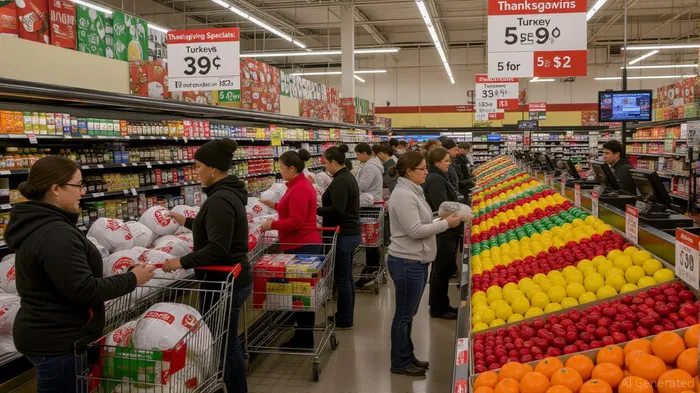
To counter inflationary pressures, Oregon's local grocers emphasized affordability and loyalty incentives. Independent stores and co-ops, in particular, leveraged community ties by offering budget-friendly promotions, such as turkeys at $0.39 per pound and cranberries for $5 for two bags. These deals not only attracted price-sensitive shoppers but also reinforced brand loyalty.
Loyalty programs further amplified retention efforts. Retailers introduced tiered rewards, including free turkeys for customers meeting spending thresholds, to encourage repeat visits according to reports. Additionally, the rise of delivery and takeout options-used by 25% of shoppers-catered to convenience-driven consumers, particularly younger demographics prioritizing time efficiency.
Financial Outcomes and Post-Holiday Performance
The effectiveness of these strategies is evident in post-Thanksgiving 2025 financial metrics. Despite a 2.7% annual rise in grocery prices, the cost of a Thanksgiving meal decreased by 5% compared to previous years according to data, driven by targeted promotions and bulk purchasing incentives. Sales data also showed a 63% uplift for Thanksgiving-related items in the three weeks leading up to the holiday, outpacing historical averages.
Profitability, however, remained under pressure. The grocery industry's gross margin in Q2 2025 stood at 23.42%, reflecting the challenges of rising costs and competitive pricing. Yet, chains like Grocery Outlet, which leveraged a 40–70% discount model on national brands, demonstrated resilience, highlighting the importance of value-driven differentiation in a saturated market.
Conclusion: Lessons for Investors
Oregon's grocery chains navigated Thanksgiving 2025's challenges through a combination of operational agility and customer-centric strategies. By aligning inventory with evolving consumer preferences, optimizing store operations, and prioritizing affordability, these retailers mitigated the impact of inflation and supply chain disruptions. For investors, the key takeaway is the importance of adaptability in retail models-those that integrate technology, community engagement, and flexible pricing are best positioned to thrive in a volatile market.
As the retail landscape continues to evolve, Oregon's experience underscores the value of localized strategies in sustaining customer loyalty and profitability during peak demand periods.

Delivering real-time insights and analysis on emerging financial trends and market movements.
Latest Articles
Stay ahead of the market.
Get curated U.S. market news, insights and key dates delivered to your inbox.
AInvest
PRO
AInvest
PRO



Comments
No comments yet