
Consumer Retail Resilience During Holidays: Arizona's Thanksgiving 2025 as a Barometer for Sector Health


 Aime Summary
Store Open/Close Patterns and Traffic Redistribution
Arizona's major retailers, including WalmartWMT--, TargetTGT--, and CostcoCOST--, remained closed on Thanksgiving Day 2025, a trend that has gained momentum in recent years. However, grocery chains like Fry's Food Stores, Safeway, and SproutsSFM-- adjusted their hours to accommodate last-minute shoppers, with some operating until 5 p.m. or closing early at 2 p.m. This strategic reallocation of operational hours appears to have mitigated potential revenue losses, as foot traffic shifted to Black Friday and Cyber Monday. For instance, Scottsdale Quarter reported record-breaking Black Friday traffic, underscoring the day's continued dominance as the primary shopping event.
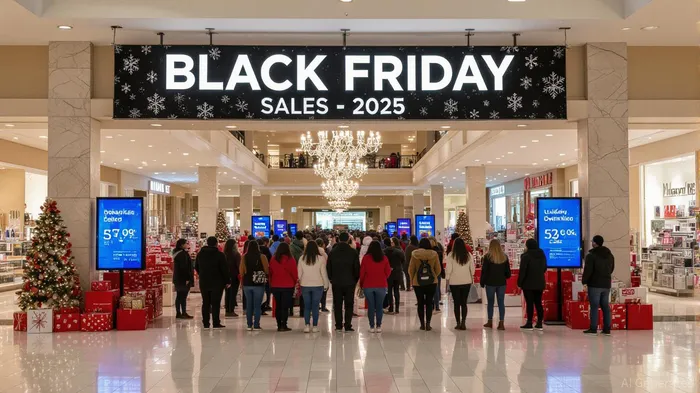
The National Retail Federation (NRF) reported that 186.9 million shoppers participated in holiday shopping from Thanksgiving through Cyber Monday 2025, a 1.9% increase from 2024. This growth, despite closures on Thanksgiving Day, highlights the adaptability of both retailers and consumers. By consolidating activity into Black Friday and the following weekend, retailers capitalized on extended hours and early openings, demonstrating operational flexibility as a key driver of sector resilience.
Consumer Behavior and Spending Priorities
Consumer preferences during Thanksgiving 2025 further underscored the sector's robustness. Online shopping accounted for 71% of Black Friday activity, with Amazon dominating Cyber Week transactions. Meanwhile, 36% of shoppers prioritized Small Business Saturday, reflecting a growing emphasis on local commerce. This bifurcated approach-combining digital convenience with community support-suggests a maturing retail ecosystem capable of balancing efficiency and emotional value.
Spending patterns also revealed strategic consumer behavior. While 80% of shoppers cited rising living costs as a constraint, 70% remained motivated by discounts. Gift cards emerged as a popular solution, with 43% of shoppers allocating an average of $171.32 per person to these flexible instruments. This trend indicates a shift toward pragmatic spending, where consumers seek to maximize value without sacrificing the spirit of gift-giving.
Economic Pressures and Retail Adaptability
Arizona's retail sector navigated macroeconomic headwinds with notable agility. Despite a 2.7% annual increase in food inflation, Thanksgiving meal costs for 10 people fell by 25% compared to 2024, driven by competitive pricing from Walmart, Target, and Aldi. Retailers absorbed some cost pressures to maintain affordability, a strategy that likely preserved consumer confidence and spending momentum. Grocery sales grew 4.08% year-over-year, while overall holiday retail sales are projected to exceed $1 trillion for the first time.
The PwC 2025 Holiday Outlook noted that 84% of consumers expected to reduce holiday spending, with Gen Z anticipating a 23% cut. Yet, Arizona's data contradicts this pessimism: foot traffic and sales figures suggest that consumers are reallocating budgets rather than curtailing spending entirely. This adaptability-shifting toward essentials, gift cards, and digital platforms-highlights the sector's capacity to absorb economic shocks.
Conclusion: A Leading Indicator for Investors
Arizona's Thanksgiving 2025 experience reinforces the holiday shopping season's role as a leading indicator of retail sector health. The interplay of strategic store closures, traffic redistribution, and consumer pragmatism demonstrates a sector that is both resilient and responsive. For investors, this signals an industry capable of navigating macroeconomic volatility through innovation and customer-centric adjustments. As the holiday season progresses, continued monitoring of these trends will be critical for assessing long-term retail sector trajectories.

Delivering real-time insights and analysis on emerging financial trends and market movements.
Latest Articles
Stay ahead of the market.
Get curated U.S. market news, insights and key dates delivered to your inbox.
AInvest
PRO
AInvest
PRO



Comments
No comments yet