
Consumer Recall Events and Retail Supply Chain Risk: Assessing the Financial and Reputational Impact of Product Recalls on Major Retailers and Suppliers


 Aime Summary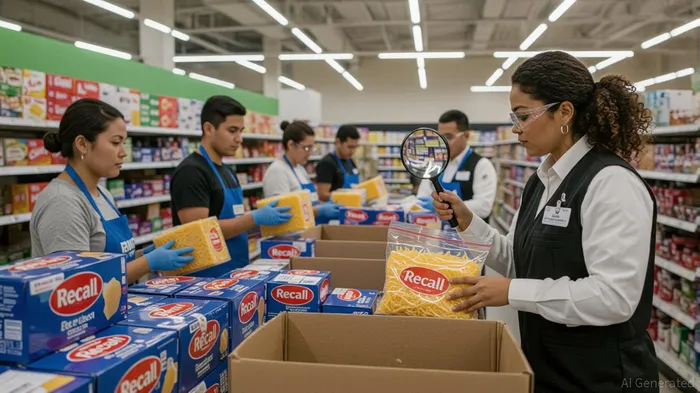
Financial Impact: Revenue Loss and Operational Costs
The scale of the recall-spanning 31 U.S. states and Puerto Rico-suggests significant financial exposure for the retailers involved. According to a report by , the affected products included shredded mozzarella, Italian-style blends, and pizza-style cheese blends, . This prolonged shelf life means the recall's financial impact will likely persist beyond the initial announcement. Retailers typically absorb the cost of recalls through product refunds, inventory write-offs, and expedited supplier settlements. For example, Walmart and Target, which rely heavily on private-label margins, may face revenue erosion from returned goods and lost sales as consumers shift to alternative brands or products according to Yahoo Finance analysis.
While specific financial figures for Q4 2025 remain undisclosed, the recall's magnitude implies operational costs could run into the millions. A Yahoo Finance analysis notes that such events often trigger increased scrutiny of supplier contracts, potentially leading to renegotiated terms or higher insurance premiums for retailers. Additionally, the cost of reputational damage-measured in long-term customer trust-could prove more insidious. , a trend that may amplify in an era of heightened social media scrutiny.
Reputational Risk: Trust and Brand Loyalty
Reputational harm is a critical but often underestimated consequence of product recalls. The FDA's reclassification of the recall from a voluntary action to a Class II event in December 2025 signaled heightened regulatory concern, potentially eroding consumer confidence in the affected retailers' quality controls. Although Aldi, Walmart, and Target acted swiftly to remove products from shelves, the association with metal contamination-a hazard perceived as preventable-risks undermining their value propositions as providers of affordable, reliable staples.
The recall also exposes the fragility of private-label strategies, which account for a growing share of U.S. grocery sales. For instance, . A recall of this scale could disrupt supply chain efficiencies and force retailers to invest in more rigorous supplier audits, diverting resources from growth initiatives according to AllRecipes analysis.
Regulatory Responses and Supplier Accountability
The FDA's enforcement actions highlight the regulatory risks for both retailers and suppliers. Great Lakes Cheese Co., the supplier at the center of the recall, faces potential penalties, though no fines have been publicly disclosed as of December 2025 according to the FDA report. The agency's decision to upgrade the recall classification underscores its focus on proactive risk mitigation, a trend likely to intensify in response to congressional pressure for stricter food safety laws. Retailers, meanwhile, may face increased liability if investigations reveal lapses in supplier oversight.
For investors, the incident raises questions about the adequacy of due diligence processes in retail supply chains. , emphasizing the need for robust supplier vetting and real-time monitoring systems.
Market Reactions and Investor Implications
Though stock price data for Q4 2025 is not yet available, historical precedents suggest short-term volatility is likely. For example, the 2021 J.M. . While Walmart, Target, and Aldi are larger and more diversified, their shares could still experience downward pressure if the recall is perceived as a systemic failure. Investors should also monitor the broader market for sector-wide impacts, as recalls often trigger increased insurance costs and regulatory scrutiny across the industry according to Reuters reporting.
Conclusion: Lessons for Retailers and Investors
The 2025 shredded cheese recall serves as a cautionary tale for retailers navigating complex global supply chains. For investors, the event underscores the importance of evaluating a company's supplier risk management frameworks, insurance coverage, and contingency planning. Retailers that invest in vertical integration, blockchain-based traceability, or AI-driven quality control systems may gain a competitive edge in mitigating future recall risks.
As the FDA and Congress continue to tighten food safety regulations, the financial and reputational costs of recalls will likely rise. Retailers and suppliers must prioritize transparency and accountability to protect both consumer trust and shareholder value in an increasingly litigious and socially conscious market.

Delivering real-time insights and analysis on emerging financial trends and market movements.
Latest Articles
Stay ahead of the market.
Get curated U.S. market news, insights and key dates delivered to your inbox.
AInvest
PRO
AInvest
PRO



Comments
No comments yet