
Consumer Goods Sector Volatility: Supply Chain Risks and Brand Equity Erosion in the Wake of Product Recalls


 Aime Summary
Supply Chain Vulnerabilities: A Systemic Weakness
The cheese recall originated from contamination during the manufacturing process, likely linked to raw material suppliers. This aligns with broader industry trends where globalized, multi-tiered supply chains amplify exposure to quality control lapses. According to a report by the U.S. Food and Drug Administration, over 70% of food recalls between 2010 and 2025 were traced to supplier-related issues. For companies like Walmart and Target, which rely heavily on private-label brands, the inability to fully audit or monitor third-party suppliers creates a latent risk.
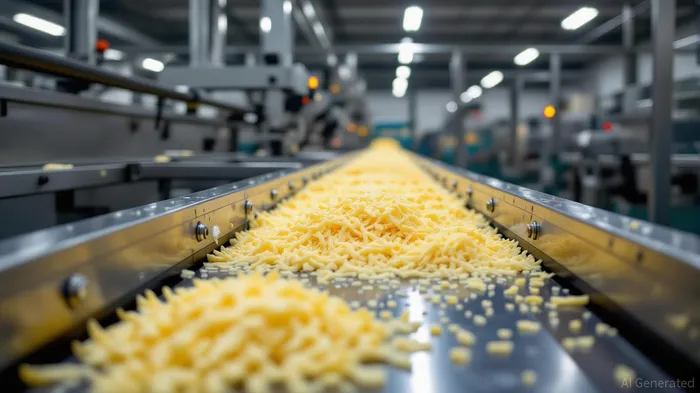
The Great Lakes Cheese Co. case exemplifies how a single supplier failure can ripple across multiple retailers. The affected products were distributed under diverse brand names-Walmart's Great Value, Target's Good & Gather, and Aldi's Happy Farms- across 31 states and Puerto Rico. This geographic and brand-level dispersion complicates containment efforts, as recalls require synchronized communication and logistics to mitigate reputational fallout.
Brand Equity Erosion: Historical Precedents and Investor Implications
While the 2025 cheese recall has yet to yield quantifiable financial data, historical precedents demonstrate the long-term damage such incidents can inflict. The 2009 Peanut Corporation of America salmonella outbreak, for instance, led to a $1 billion industry-wide loss and the company's eventual bankruptcy according to Investopedia. Similarly, Blue Bell Creameries' 2015 listeria recall resulted in a 37% workforce reduction and a 60% decline in market share as reported by Food Dive. These cases illustrate that brand equity erosion is not merely a short-term PR challenge but a structural threat to profitability.
Investors must scrutinize companies with weak crisis management frameworks. The 2025 recall saw retailers advising consumers to discard or return products, a standard response. However, public sentiment, as noted in media analyses, has shifted toward "recall fatigue," with consumers expressing distrust in food safety oversight. For brands with limited differentiation-such as private-label offerings-the lack of a premium pricing buffer exacerbates vulnerability. Aldi, for example, has built its reputation on affordability, but this strategy may backfire if consumers perceive cost-cutting as a trade-off for safety.
Investment Risks: Fragmented Networks and Limited Resilience
The cheese recall also underscores the perils of fragmented supplier networks. Great Lakes Cheese Co.'s reliance on multiple raw material providers-a common practice in cost-driven industries- likely contributed to the contamination risk. For investors, this raises questions about due diligence practices. Companies that prioritize supplier cost efficiency over transparency may face recurring recalls, as seen in the 2010 Wright County Egg salmonella outbreak, which sickened 1,900 people according to a public health study.
Moreover, the absence of immediate financial data on Walmart, Target, and Aldi post-recall does not negate long-term risks. Studies show that food safety events can reduce a company's stock value by 10–30% within weeks, with recovery taking months or years. The 2025 incident, coupled with prior recalls (e.g., Target's 2023 frozen vegetable recall), suggests a pattern of systemic risk for retailers with sprawling supplier ecosystems.
Conclusion: Strategic Considerations for Investors
For the consumer goods sector, the 2025 cheese recall is a microcosm of broader challenges. Investors should prioritize companies with:
1. Robust supplier audits and traceability systems to preempt contamination risks.
2. Proactive crisis communication strategies to preserve consumer trust.
3. Brand equity diversified beyond price competition, enabling resilience during recalls.
Conversely, firms with opaque supply chains, reactive crisis management, and undifferentiated brands face heightened volatility. As the FDA intensifies regulatory scrutiny and consumer expectations for transparency rise, the ability to navigate product recalls will become a defining factor in long-term investment success.

Delivering real-time insights and analysis on emerging financial trends and market movements.
Latest Articles
Stay ahead of the market.
Get curated U.S. market news, insights and key dates delivered to your inbox.
AInvest
PRO
AInvest
PRO



Comments
No comments yet