
Consumer Goods Sector Volatility: Implications of Major Shredded Cheese Recall


 Aime Summary
Supply Chain Risks: Centralization and Cost Pressures
The recall originated from a centralized production model at Great Lakes Cheese, one of the largest private-label cheese manufacturers in the U.S. This concentration amplified the recall's reach, as contaminated products were distributed under multiple brand names, including Walmart's Great Value, Target's Good & Gather, and Aldi's Happy Farms according to ABC News. Such dependency on a single supplier exposes retailers to systemic risks, particularly when cost-cutting measures or global economic pressures compromise quality control as research shows.
Expert analyses suggest that 2025's recall trends reflect broader industry challenges. A report by the Consumer Research Council notes that while the number of recall events has declined, the scale of individual recalls has increased, often due to cost-driven production strategies and global sourcing complexities according to the report. For instance, the Great Lakes Cheese incident was exacerbated by internal screening failures and delayed regulatory escalation, illustrating how fragmented oversight can exacerbate supply chain disruptions 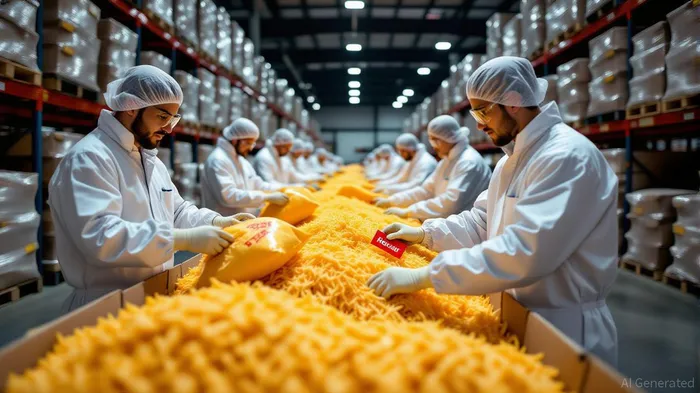 as data indicates.
Brand Reputation and Consumer Trust
The recall's impact on brand reputation is multifaceted. , they still erode consumer confidence. Social media sentiment analysis reveals growing "," with consumers expressing frustration over frequent food safety incidents and demanding stricter accountability from both regulators and manufacturers according to stocktwits. This erosion of trust is particularly damaging for private-label brands, which rely on retailer credibility to compete with national brands as reported by NBC Chicago.
Recovery strategies must prioritize transparency and proactive communication. The FDA's recommendation to discard or return affected products, coupled with retailers' refund policies, aimed to mitigate harm as NPR reports. However, long-term resilience requires systemic improvements, such as enhanced supplier audits, , and diversified sourcing. Companies that invest in these measures-such as those adopting -will likely outperform peers in volatile markets according to investing.com.
Investor Sentiment and Stock Performance
Despite the recall's magnitude, immediate stock price impacts for Walmart, Target, and Aldi remain unclear. While no explicit data on Q4 2025 stock movements is available, broader market trends suggest resilience. Walmart, for example, , reflecting confidence in its operational execution according to Nasdaq. Target, however, , signaling softer consumer demand amid recall-related uncertainty as Yahoo Finance reports. Aldi's performance, though not directly quantified, aligns with a broader retail trend where value-focused players attract both price-sensitive and affluent shoppers according to Telsey Group.
Investor sentiment appears to favor companies with agile supply chains and strong brand equity. TreeHouse FoodsTHS--, a supplier to multiple retailers, saw its stock surge despite a Q3 2025 earnings miss, illustrating how market confidence can be driven by strategic adaptability rather than short-term setbacks as investing.com reports. Conversely, firms with opaque supply chains or weak crisis management face heightened volatility.
Long-Term Resilience: Lessons for the Food Sector
The 2025 cheese recall serves as a case study in supply chain and reputational risk management. Companies best positioned to withstand similar disruptions will likely exhibit three traits:
1. Diversified Supplier Networks: Reducing reliance on single-source producers to mitigate cascading failures.
2. Proactive Quality Assurance: Investing in real-time monitoring and to detect contamination early.
3. Transparent Communication: Engaging consumers and regulators with clear, timely updates to rebuild trust post-crisis according to AllRecipes.
For investors, the key takeaway is that food sector equities must be evaluated not just on current earnings but on their capacity to navigate systemic risks. Retailers with robust supplier vetting processes and strong brand loyalty-such as those leveraging customer data for personalized trust-building-will likely outperform in an era of increasing recall frequency according to Yahoo Finance.
Conclusion
The 2025 shredded cheese recall underscores the interconnectedness of supply chain integrity, brand reputation, and investor confidence. While the immediate financial impact on Walmart, Target, and Aldi remains ambiguous, the incident highlights the need for structural reforms in food production and distribution. As the sector grapples with rising costs and regulatory scrutiny, companies that prioritize resilience over short-term efficiency will emerge as long-term leaders. For investors, this means scrutinizing not just quarterly reports but the broader risk management frameworks that underpin sustainable growth.

Delivering real-time insights and analysis on emerging financial trends and market movements.
Latest Articles
Stay ahead of the market.
Get curated U.S. market news, insights and key dates delivered to your inbox.




Comments
No comments yet