
Consumer Goods Sector Volatility Amid Food Safety Crises: Supply Chain Risks and Brand Resilience in the Dairy Industry


 Aime Summary
The Recall: A Case Study in Supply Chain Vulnerability
The contamination-linked to metal fragments from supplier raw materials-affected products sold under multiple private-label brands, including Walmart's Great Value, Target's Good & Gather, and Aldi's Happy Farms according to findings. While the FDA classified the risk as causing "temporary or medically reversible adverse health consequences," the scale of the recall exposed systemic vulnerabilities in supplier oversight and quality assurance protocols according to reports. For retailers, the incident amplified concerns about third-party supplier risks, particularly in a sector where cost pressures often drive sourcing decisions according to market analysis.
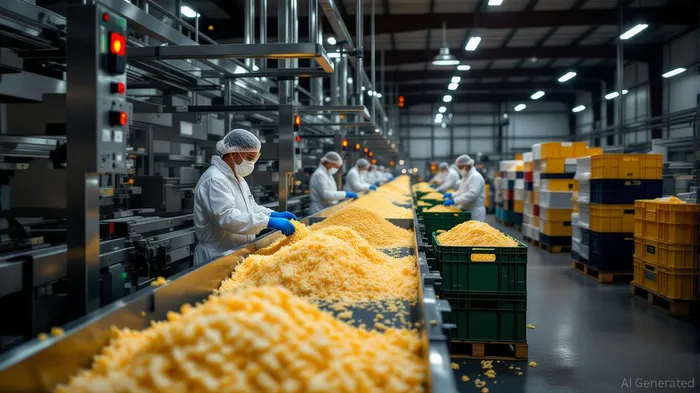
Investor reactions, though muted in the short term, revealed underlying anxieties. While no direct financial impact on stock prices was reported, the recall added to a year of food safety crises, including radioactive shrimp and exploding wine bottles, which collectively eroded consumer trust according to market data. Analysts noted that the dairy industry's reliance on complex, globalized supply chains increases exposure to contamination risks, with recalls becoming a "cost of doing business" for major players according to industry research.
Brand Resilience: Mitigating Reputational Damage
Retailers like Aldi, WalmartWMT--, and TargetTGT-- responded swiftly, leveraging established recall protocols to remove affected products and communicate with customers. Aldi, for instance, emphasized transparency in its response, aligning with its broader commitment to safety standards according to corporate statements. However, according to consumer reports.
The incident also underscored the importance of brand differentiation. Private-label brands, while cost-effective, often bear the brunt of quality control scrutiny. For example, Walmart's Great Value and Target's Good & Gather, both sold in highly competitive markets, faced reputational risks that could deter price-sensitive shoppers. Analysts suggest that retailers must balance cost efficiency with investments in supplier audits and traceability systems to protect brand equity according to retail analysis.
Investor Focus: Supply Chain Innovation as a Defense Mechanism
Post-recall, investor attention has shifted to how companies are addressing systemic risks. Emerging technologies are at the forefront of mitigation strategies. , such as , are being adopted to enable real-time tracking of contamination sources, reducing recall scope and duration according to industry reports. Additionally, , addressing two critical pain points in dairy supply chains according to food safety research.
Investors are also scrutinizing companies' adoption of and . These tools not only enhance safety but also align with consumer demand for transparency and sustainability. For instance, Walmart and Target have been cited for integrating HPP into their processing lines, a move that could differentiate their private-label offerings in a crowded market according to industry reports.
The Road Ahead: Balancing Risk and Resilience
While the 2025 cheese recall did not trigger immediate financial losses for major retailers, it served as a wake-up call for the dairy industry. The incident reinforced the need for proactive risk management, particularly as climate change, geopolitical tensions, and regulatory scrutiny intensify supply chain pressures. For investors, the key differentiator will be companies that prioritize resilience over short-term cost savings, investing in technology and supplier partnerships that align with long-term sustainability goals according to market analysis.
In the coming quarters, the focus will likely shift to how effectively retailers can rebuild consumer trust. Companies that transparently communicate their safety measures and demonstrate agility in responding to crises-such as Aldi's swift product removal protocols-will likely outperform peers in regaining market confidence according to industry analysis.

Delivering real-time insights and analysis on emerging financial trends and market movements.
Latest Articles
Stay ahead of the market.
Get curated U.S. market news, insights and key dates delivered to your inbox.
AInvest
PRO
AInvest
PRO



Comments
No comments yet