
Consumer Goods Sector Volatility: Assessing the Impact of Recent Shredded Cheese Recalls on Retail and Food Brands


 Aime Summary
Dual Recalls: Listeria and Metal Fragments
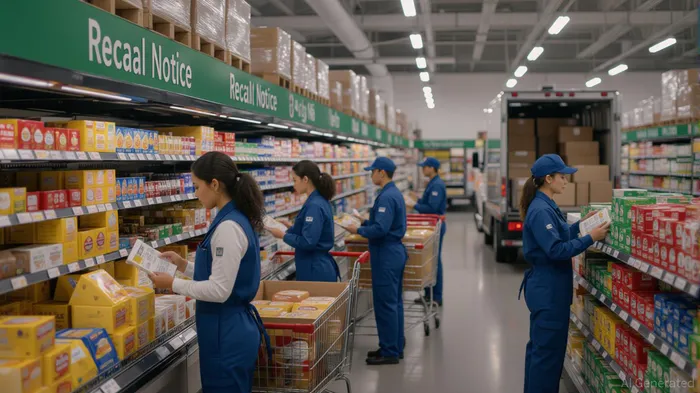 In November 2025, Middlefield Original Cheese Co-Op issued a recall for multiple shredded cheese products, including Organic Gouda, Pepper Jack, and Monterey Jack, due to contamination with as reported by the FDA. The FDA reported that the contamination was detected through internal testing and traced to environmental factors in the production process. Affected products, distributed in Ohio, Minnesota, Wisconsin, and Texas, were removed from retail shelves and dining halls, with sell-by dates extending into early 2026.
Simultaneously, Great Lakes Cheese Co.-a separate entity-initiated a Class II recall for shredded cheese products due to potential metal fragments according to Cleveland 19. This recall, , Target, and Aldi, was prompted by contamination from raw material suppliers. The FDA classified the risk as low, noting that exposure might cause temporary or reversible health effects.
Supply Chain Disruptions: Costs and Logistical Hurdles
Both recalls have triggered significant supply chain disruptions. Middlefield's recall required the removal . states and Puerto Rico, , restocking, . For Great Lakes, the recall involved , .
Experts warn that such incidents amplify operational costs, , , . For instance, Middlefield has suspended operations . These actions, while necessary, disrupt production timelines and strain supplier relationships.
Brand Equity at Risk: Trust and Long-Term Reputational Damage
The Middlefield recall poses a more severe threat to brand equity due to the gravity of Listeria contamination. As noted by food safety experts, Listeria monocytogenes can cause life-threatening infections in vulnerable populations, . , prompted calls for stricter .
In contrast, the Great Lakes recall. Retailers like Walmart and Target, , according to food safety news. However, , potentially exacerbating consumer uncertainty.
Investment Implications: Navigating Risk and Resilience
For investors,
1. Operational Vulnerabilityas reported by the FDA.
2. Brand Resilienceaccording to FDA reports.
Experts recommend that investors prioritize companies with robust food safety protocols, , as experts note. For instance, , as the FDA has observed.
Conclusion
The recent cheese recalls serve as a cautionary tale for the consumer goods sector. , , . For investors, . As the sector navigates these challenges, .

Delivering real-time insights and analysis on emerging financial trends and market movements.
Latest Articles
Stay ahead of the market.
Get curated U.S. market news, insights and key dates delivered to your inbox.


AInvest
PRO
AInvest
PRO



Comments
No comments yet