
Consumer Goods Sector Volatility: Assessing the Impact of Food Safety Crises on Brand Value and Investor Sentiment


 Aime Summary
The 2025 Shredded Cheese Recall: A Systemic Shock
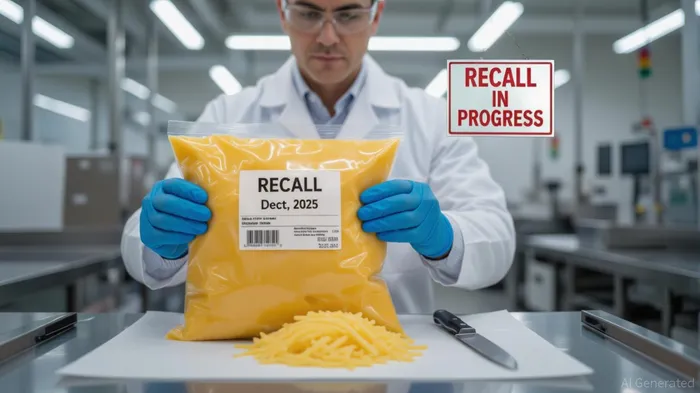
The recall, initially voluntary and later reclassified as a by the FDA, highlighted the cascading risks of contamination in food production. Metal fragments in shredded cheese posed a threat of internal injury, . states and Puerto Rico. The affected products, sold under Aldi's "Happy Farms," Target's "Good & Gather," and Walmart's "Great Value," underscored the vulnerability of private-label brands, which rely on third-party manufacturers for cost efficiency. While no illnesses were reported, triggered immediate consumer alerts and operational disruptions.
Short-Term Stock Volatility: The Investor's Dilemma
Though precise stock price drops for Great Lakes Cheese Co. or its retail partners remain unquantified in available data, the recall's announcement likely intensified market volatility. Historical precedents suggest that food safety crises often lead to sharp but temporary declines in stock valuations, particularly for smaller suppliers. For instance, Great Lakes Cheese Co., a mid-sized producer, faced heightened scrutiny over its supply chain protocols, potentially deterring short-term investors. Meanwhile, retailers like Aldi, Target, and WalmartWMT--, with their diversified portfolios and stronger brand buffers, may have experienced muted stock reactions. However, the absence of concrete trading data underscores the need for caution in extrapolating from this case alone according to market analysis.
Long-Term Brand Equity: The Trust Deficit
The true cost of such recalls lies in their erosion of consumer trust. noted , a sentiment amplified by the cheese recall's prominence. For private-label brands, which derive their value from perceived parity with premium offerings, the fallout is particularly acute. Aldi, for example, has long leveraged its reputation for affordability and quality; a single high-profile recall risks undermining years of brand-building. Similarly, Walmart and Target face the challenge of reassuring customers that their cost-saving strategies do not compromise safety.
Strategic Resilience: Lessons for Investors
The crisis highlights the importance of supply chain transparency and crisis management in mitigating reputational damage. Great Lakes Cheese Co.'s swift recall and collaboration with the FDA-despite the reputational hit-demonstrate the value of proactive responses. For investors, this underscores the need to assess companies not only by their current performance but by their preparedness for systemic shocks. Diversification across suppliers and robust quality assurance protocols are critical for long-term resilience.
Conclusion: Navigating the New Normal
The 2025 cheese recall serves as a microcosm of broader challenges in the consumer goods sector. While short-term stock volatility is inevitable, the long-term survival of brands hinges on their ability to rebuild trust through transparency and accountability. For investors, the lesson is clear: in an era of heightened consumer awareness, the true measure of a company's value lies not just in its products, but in its capacity to safeguard the trust that underpins them.

Delivering real-time insights and analysis on emerging financial trends and market movements.
Latest Articles
Stay ahead of the market.
Get curated U.S. market news, insights and key dates delivered to your inbox.
AInvest
PRO
AInvest
PRO



Comments
No comments yet