
Consumer Goods Sector Risk Management: Navigating Supply Chain and Product Safety Crises


 Aime Summary
The Erosion of Brand Value in Product Safety Crises
Product recalls, particularly those involving staple items like cheese, pose a direct threat to brand equity. The shredded cheese recall, . states and Puerto Rico, forced retailers to remove private-label products such as Walmart's Great Value, Target's Good & Gather, and Aldi's Happy Farms from shelves according to retail sources. While no illnesses were reported, consumer trust-a fragile asset in the food industry-was inevitably strained. A report by Bloomberg notes that frequent recalls have led to a "trust crisis," with shoppers expressing frustration over food safety and even vowing to avoid packaged goods temporarily according to market analysis.
For retailers, the fallout extends beyond immediate sales losses. Private-label brands, which rely on perceived quality and affordability, face reputational damage when linked to safety issues. This recall, for instance, disrupted supply chains and prompted costly inventory adjustments, compounding operational pressures according to industry reports.
Investor Sentiment and Stock Volatility: A Mixed Picture
Despite the scale of the recall, concrete financial data on stock price fluctuations or quarterly sales figures for Walmart, Target, or Aldi post-incident remains elusive. However, broader market trends suggest that food safety crises can trigger short-term volatility. Reuters highlights that investor sentiment in the sector often hinges on perceived corporate responsibility and crisis response according to financial analysis. Retailers that act swiftly-such as issuing clear recall notices and offering refunds-may mitigate long-term damage, but the absence of transparency in this case left room for speculation.
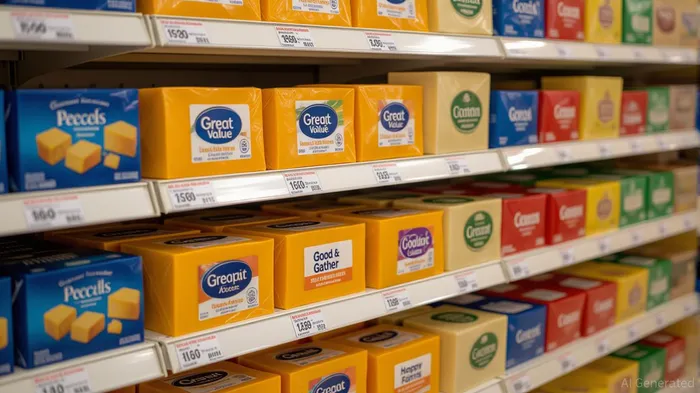 The lack of direct financial impact data does not diminish the significance of such events. As noted by , systemic risks like supply chain disruptions and regulatory scrutiny can amplify sector-wide uncertainty, even if individual companies appear resilient according to industry experts. For investors, this underscores the need to evaluate not just quarterly earnings but also a company's preparedness for reputational and operational shocks.
Sector Volatility and Systemic Risks
The cheese recall exemplifies how supply chain complexities can amplify sector-wide risks. Great Lakes Cheese Co. Inc., a key supplier to multiple retailers, became a single point of failure, exposing the fragility of concentrated distribution networks. Such events highlight the importance of diversification and redundancy in sourcing strategies. A report by the Economic Times emphasizes that companies reliant on single suppliers or narrow geographic footprints are particularly vulnerable to cascading disruptions according to industry analysis.
Moreover, -such as the FDA's shift from Class I to Class II-introduce additional uncertainty. While these classifications aim to communicate risk levels, they can also fuel public skepticism, especially when inconsistent or delayed. This recall's reclassification, for example, sparked debates about the adequacy of oversight, further complicating investor assessments according to media reports.
Strategic Positioning for Long-Term Resilience
To navigate these challenges, investors and corporate leaders must prioritize three pillars of risk management:
- Supply Chain Diversification: Reducing reliance on single suppliers or regions can buffer against localized crises. Retailers should invest in multi-sourcing strategies and real-time monitoring tools to detect anomalies early.
- Proactive Quality Assurance: Enhanced testing protocols and transparency in production processes can preempt recalls. Companies that publicly share safety metrics-such as zero-incident certifications-may attract risk-averse investors.
- Crisis Communication: Swift, clear communication during recalls is critical. Retailers that provide real-time updates and transparent root-cause analyses (e.g., Great Lakes Cheese's acknowledgment of metal fragment risks) can preserve consumer trust according to .
For investors, equity portfolios should favor companies with robust risk management frameworks. Metrics such as supply chain resilience scores, recall history, and ESG (environmental, social, governance) ratings can guide decision-making. Additionally, hedging against sector volatility through diversified holdings-such as a mix of grocery retailers, food manufacturers, and logistics providers-can mitigate exposure to isolated crises.
Conclusion
The 2025 shredded cheese recall serves as a stark reminder of the interconnected risks facing the consumer goods sector. While the immediate financial impact on retailers like Walmart, Target, and Aldi remains unclear, the broader implications for brand value, investor sentiment, and sector volatility are undeniable. By adopting proactive risk management strategies and prioritizing transparency, companies can turn these challenges into opportunities to strengthen long-term resilience. For investors, the lesson is clear: in an era of heightened supply chain and product safety scrutiny, preparedness is the ultimate competitive advantage.

Delivering real-time insights and analysis on emerging financial trends and market movements.
Latest Articles
Stay ahead of the market.
Get curated U.S. market news, insights and key dates delivered to your inbox.
AInvest
PRO
AInvest
PRO



Comments
No comments yet