
Consumer Goods Safety Risks and Brand Resilience: How Product Recalls Test Retail and Food Sector Stocks


 Aime Summary
The Recall's Immediate Fallout: A Test of Brand Trust
The scale of this recall-spanning 31 U.S. states and Puerto Rico-highlights the systemic risks inherent in large-scale food production. For Aldi, Target, and Walmart, the crisis underscores how a single supplier's failure can ripple across their private-label portfolios. Consumers, already wary of frequent recalls in 2025 from radioactive shrimp to shattering wine bottles, are growing increasingly skeptical. Social media has been flooded with frustration, with some shoppers vowing to avoid packaged foods altogether according to .
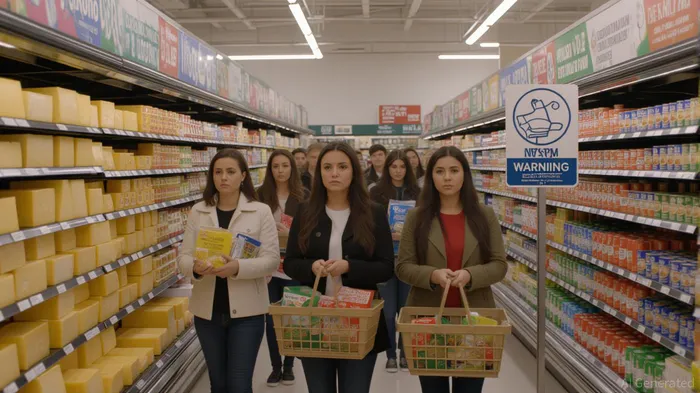
Investor confidence, however, has shown mixed signals. Walmart, for instance, has leveraged its reputation as a value-driven retailer to mitigate fallout. Analysts like DA Davidson and JPMorgan have upgraded their price targets for Walmart, citing its strong e-commerce growth and leadership continuity. , reflecting optimism about its ability to weather such crises. In contrast, Target's stock has been more volatile. , driven by concerns over margin pressures and structural challenges. While the cheese recall isn't explicitly cited as the cause, it contributes to a narrative of eroding consumer trust, particularly in a market where shoppers are increasingly price-sensitive according to .
Brand Resilience: Lessons from the Recall
Walmart's response to the crisis offers a blueprint for brand resilience. The company's aggressive discounting strategies and digital ecosystem have helped it retain price-conscious shoppers, even amid supply chain hiccups according to industry reports. Zacks analysts note that Walmart's scale and operational discipline give it a competitive edge over Target, which faces higher reinvestment costs to restore its market position according to . Meanwhile, Aldi, though less scrutinized in stock analyses, has historically relied on its low-cost model to absorb such shocks. However, repeated recalls could erode its "value-for-money" brand identity, particularly if consumers perceive its private-label products as riskier according to consumer surveys.
For investors, the key takeaway is clear: brand resilience isn't just about crisis management-it's about proactive supply chain oversight and transparent communication. The FDA's Class II designation for this recall (serious but non-fatal risks) spared these retailers from the worst-case scenario, but the reputational damage is still significant. As one analyst put it, "A single recall can't derail a $600 billion company, but it can expose vulnerabilities in a sector where margins are already razor-thin".
The Bigger Picture: Recall Fatigue and Sector-Wide Risks
The 2025 cheese recall is part of a troubling trend. From food to consumer goods, recalls are becoming more frequent and severe, testing the patience of both shoppers and investors. For the food sector, this means higher costs for quality control and supplier vetting. For retailers, it's a reminder that private-label brands-while profitable-are also a double-edged sword. A supplier's misstep can quickly become a brand's liability.
Investors should also watch for indirect impacts. Target's recent earnings slump, for example, highlights how broader (like inflation and wage stagnation) can amplify the effects of a recall. When consumers are already cautious, a crisis like this can accelerate shifts in .
What's the Takeaway for Investors?
Here's the bottom line: Retail and food sector stocks are inherently cyclical, but add a layer of volatility that's hard to predict. Walmart's recent upgrades suggest that scale and operational agility can insulate companies from short-term shocks. Target, on the other hand, needs to prove it can reinvest effectively without sacrificing margins. For Aldi, the challenge is maintaining its value proposition in an era of recall fatigue.
In the long run, the winners will be those that prioritize supply chain transparency and brand trust. As the FDA's latest warning makes clear, the cost of complacency is no longer just regulatory fines-it's a loss of that no amount of discounting can fully recover.

Delivering real-time insights and analysis on emerging financial trends and market movements.
Latest Articles
Stay ahead of the market.
Get curated U.S. market news, insights and key dates delivered to your inbox.
AInvest
PRO
AInvest
PRO



Comments
No comments yet