
Consumer Goods Industry Volatility: Navigating Risks in Food Safety Crises


 Aime Summary
The consumer goods sector, particularly the packaged food industry, has long grappled with the dual pressures of maintaining operational efficiency and ensuring product safety. Recent events, such as the 2025 shredded cheese recall involving Great Lakes Cheese Co. Inc., underscore the fragility of even the most sophisticated supply chains and the cascading financial and reputational risks posed by food safety crises. This analysis examines how such incidents reshape investor perceptions, strain brand equity, and test the resilience of supply chain strategies, using the Great Lakes Cheese case as a lens to explore broader industry vulnerabilities and adaptive measures.
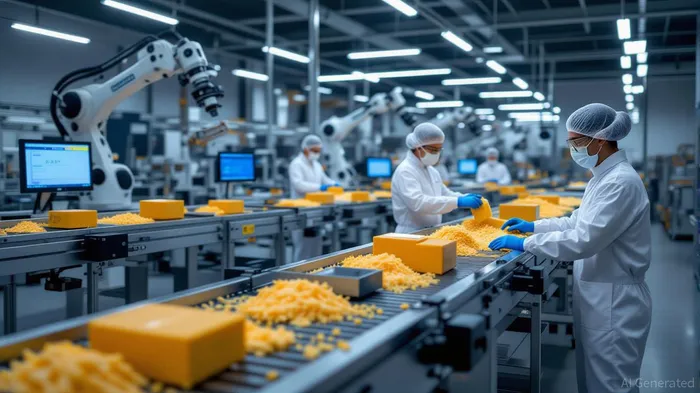
The Great Lakes Cheese Recall: A Case Study in Systemic Risk
In October 2025, Great Lakes Cheese Co. Inc., a leading private-label cheese producer, initiated a voluntary recall . The FDA later reclassified the recall as a Class II event, indicating that the products could cause temporary or medically reversible health effects, such as internal lacerations or dental damage. The affected products, . states and Puerto Rico, were sold under multiple brand names, including Aldi's Happy Farms, Walmart's Great Value, and Target's Good & Gather according to reports.
The scale of the recall-spanning 263,000 cases of cheese-highlighted the interconnectedness of modern food supply chains and the operational costs of quality control failures. According to a report by , the incident disrupted Great Lakes Cheese's production and distribution networks, forcing the company to halt shipments and initiate a costly recall process. While the firm had previously invested in advanced supply chain technologies, such as the Logility Decision Intelligence Platform, to optimize forecasting and inventory management, the recall exposed vulnerabilities in its supplier oversight and equipment maintenance protocols according to industry analysis.
Investor Confidence and Stock Price Volatility
Food safety crises often trigger immediate investor skepticism, as they threaten both short-term earnings and long-term brand value. In the case of Great Lakes Cheese, the recall likely exacerbated concerns about operational reliability, particularly for a company whose products are sold under major retail banners. Although specific stock price data for the firm is not publicly available (as it is a private entity), broader industry trends suggest that such events can lead to significant valuation declines. For example, a 2023 Bloomberg analysis .
Retailers like WalmartWMT-- and TargetTGT--, which carried the recalled products, also faced indirect risks. A Reuters report noted that such incidents can erode consumer trust in retail brands, prompting shifts in purchasing behavior and increased scrutiny of supplier vetting processes. For publicly traded companies, these dynamics often translate into heightened volatility, as investors weigh the costs of reputational damage against the potential for operational recovery.
Supply Chain Resilience: Lessons from the Crisis
The Great Lakes Cheese recall underscores the critical role of supply chain resilience in mitigating food safety risks. Historically, the company had leveraged advanced planning systems to maintain a 99% service level while managing lean inventory. However, the contamination traced to raw material suppliers revealed gaps in its risk management framework. Post-recall, the firm's response-voluntary product withdrawal, collaboration with the FDA, and supplier audits-demonstrated a commitment to transparency.
Experts emphasize that long-term profitability in the packaged food sector hinges on proactive risk mitigation. A highlighted that companies with robust supplier verification programs and real-time contamination detection systems are 30% less likely to face large-scale recalls. For Great Lakes Cheese, the incident may accelerate investments in predictive analytics and supplier diversification, aligning with industry trends toward decentralized production and blockchain-based traceability.
Rebuilding Brand Value: The Path Forward
Recovering from a food safety crisis requires more than operational fixes; it demands a strategic reengagement with consumers and investors. Great Lakes Cheese's ability to rebuild trust will depend on its transparency in addressing root causes and its commitment to preventive measures. For instance, the company could adopt enhanced supplier contracts with stricter quality controls or invest in consumer education campaigns to reaffirm product safety.
Investors, meanwhile, must assess whether such incidents reflect systemic industry challenges or isolated missteps. The 2025 recall aligns with a broader pattern of food safety issues in the sector, from Listeria outbreaks in dairy products to Salmonella contamination in poultry. As such, portfolios in the consumer goods space should prioritize firms with demonstrable resilience-those that integrate redundancy into their supply chains, prioritize supplier collaboration, and maintain agile crisis response protocols.
Conclusion
The Great Lakes Cheese recall serves as a cautionary tale for the packaged food industry, illustrating how even minor lapses in quality control can escalate into major financial and reputational crises. For investors, the incident reinforces the importance of scrutinizing companies' risk management frameworks and supply chain adaptability. In an era of increasing regulatory scrutiny and consumer awareness, the ability to navigate food safety challenges will remain a defining factor in long-term profitability and market stability.

Delivering real-time insights and analysis on emerging financial trends and market movements.
Latest Articles
Stay ahead of the market.
Get curated U.S. market news, insights and key dates delivered to your inbox.




Comments
No comments yet