
Consumer Goods Industry Volatility: Assessing Risks and Opportunities Amid Product Recalls


 Aime Summary
Retailer Reputations and Brand Equity: A Double-Edged Sword
The cheese recall, attributed to Great Lakes Cheese Co. and Ambriola Co., exposed vulnerabilities in supply chain oversight. The FDA classified the metal fragment incident as a Class II recall, indicating moderate health risks, while in Pecorino Romano cheeses posed severe threats to vulnerable populations. Retailers distributing these products-spanning 31 U.S. states and Puerto Rico-faced immediate consumer backlash, with social media amplifying frustrations over perceived negligence.
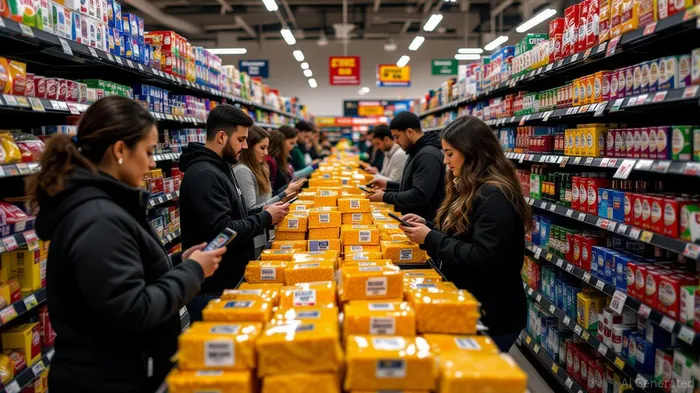 Brand equity, long a buffer against such crises, proved uneven in its effectiveness. For instance, Walmart and Target, despite their scale, struggled to mitigate , as consumers questioned their due diligence in supplier vetting. Conversely, companies with established reputations for quality, such as those emphasizing and transparency, fared better in retaining customer loyalty. This dichotomy highlights the importance of proactive in an era where a single recall can erode decades of goodwill.
Investor Sentiment and Stock Performance: Short-Term Volatility, Long-Term Lessons
The recall's financial toll extended beyond direct costs. While no illnesses were reported, the incident , reflecting broader industry trends of cost-cutting and regulatory rollbacks. For investors, the recall period (October–December 2025) revealed mixed signals. United Natural Foods (UNFI), for example, , . In contrast, , .
The J.M. Smucker Company (SJM) demonstrated resilience despite a Q1 2026 earnings miss, . These divergent outcomes underscore the need for investors to differentiate between companies with agile and those reliant on short-term cost savings.
Industry-Wide Safety Protocols: From Reactive to Proactive
The 2025 recalls accelerated shifts in safety protocols. Companies are now prioritizing , , and integrated (QMS) to detect contamination earlier. For example, UNFI's lean daily management approach has enhanced , while SJM's updated "Hold" protocol suspends product release upon a single .
However, persist. and the removal of CPSC commissioners have weakened oversight, incentivizing companies to adopt voluntary and stringent internal testing. This trend favors firms like UNFI, , demonstrating the value of diversified .
Actionable Strategies for Investors: Hedging and Opportunity
To navigate recall-driven volatility, investors should:
1. : Avoid overconcentration in companies with opaque supply chains. Instead, prioritize firms with transparent supplier audits and .
2. Invest in : Companies like UNFI, with robust QMS and a focus on , offer resilience against .
3. Monitor : Firms with proactive , such as those entering larger supply chains, are better positioned to mitigate . According to industry reports, firms are shifting focus from frequency to scale.
4. Leverage : Undervalued stocks like SJM (P/E discount) and LW (fair value estimates) present long-term opportunities, reforms hold.
Conclusion: Balancing
The 2025 cheese recall serves as a and a catalyst for innovation. While short-term volatility is inevitable, the industry's shift toward digital quality control and proactive risk management creates opportunities for discerning investors. By focusing on companies with robust and diversified supply chains, investors can hedge against recall risks while capitalizing on undervalued assets poised for recovery.

Delivering real-time insights and analysis on emerging financial trends and market movements.
Latest Articles
Stay ahead of the market.
Get curated U.S. market news, insights and key dates delivered to your inbox.




Comments
No comments yet