
U.S. Consumer Confidence and Sector Rotation: Navigating the Shift from Discretionary to Defensive
 Aime Summary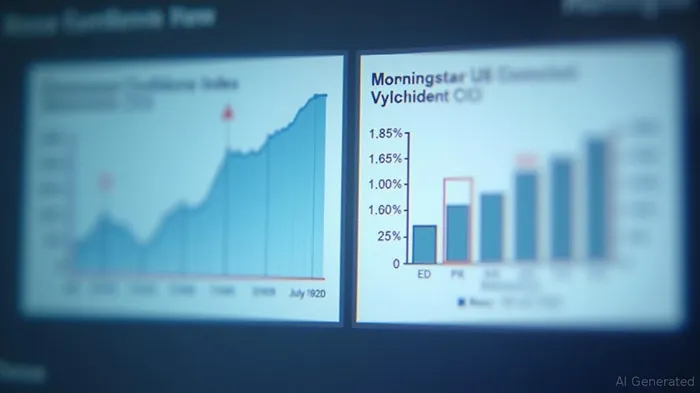
The U.S. economy is at a crossroads. Consumer confidence, a barometer of economic health, has shown a tentative rebound in July 2025, rising to 97.2 after a rocky first half of the year. Yet, beneath the surface, the data tells a more nuanced story. While the Expectations Index—a forward-looking component of the Consumer Confidence Index—improved by 4.5 points to 74.4, it remains stubbornly below the 80 threshold often associated with recessionary risk. Meanwhile, the Present Situation Index dipped to 131.5, signaling lingering pessimism about current economic conditions. This duality—cautious optimism about the future but skepticism about the present—has triggered a significant reallocation of capital across sectors, with investors pivoting from discretionary to defensive plays.
The PCSI Paradox: Why Rising Confidence Doesn't Always Signal a Green Light
The July 2025 data reveals a paradox: consumer confidence is stabilizing, yet the broader market is favoring defensive sectors. This divergence is driven by two key factors. First, consumers remain wary of tariffs and their inflationary ripple effects. Despite a slight easing in 12-month inflation expectations to 5.8%, the specter of higher prices for essentials like food and shelter continues to weigh on spending. Second, the labor market, while still robust (unemployment at 4.1%), is showing cracks. The percentage of consumers reporting jobs as “hard to get” has climbed to 18.9%, the highest since March 2021. This duality—strong employment but weak job availability—has led to a recalibration of risk tolerance among investors.
The sector rotation is stark. The MorningstarMORN-- US Consumer Cyclical Index, which tracks discretionary stocks like TeslaTSLA--, ChipotleCMG--, and Ulta BeautyULTA--, has underperformed the broader market by nearly 5 percentage points since January 2025. In contrast, defensive sectors such as utilities, healthcare, and consumer staples have gained traction. WalmartWMT-- and CostcoCOST--, for instance, have shown resilience despite weak guidance from the former, while grocers like KrogerKR-- and Albertson's have benefited from a shift toward essential spending.
The Mechanics of Rotation: Tariffs, Rates, and Risk Aversion
The shift from discretionary to defensive is not arbitrary. It is a response to macroeconomic forces that have reshaped investor priorities.
Tariff Uncertainty: The delayed implementation of tariffs in Q2 2025 briefly reversed a stock market freefall, but the threat of higher import costs remains. Discretionary sectors—particularly those reliant on global supply chains (e.g., automotive, retail)—are disproportionately exposed. For example, Tesla's stock has fallen over 16% in 2025, reflecting concerns about margin compression from tariffs and slowing demand for electric vehicles.
Interest Rates and Borrowing Costs: A 10-year Treasury yield hovering near 4.6% has made fixed income more attractive, pushing investors toward dividend-paying stocks and stable cash flows. Defensive sectors, with their predictable earnings and low volatility, have benefited. Meanwhile, high-growth discretionary stocks—often reliant on cheap debt—are under pressure.
Consumer Behavior: The data underscores a shift in spending patterns. While consumers are slightly more optimistic about future income and job prospects, they are less willing to splurge on big-ticket items. Purchasing intentions for cars and homes have declined, and vacation spending is down. Instead, demand is concentrated in essentials, a trend that favors consumer staples and healthcare.
Strategic Implications for Investors
For investors, the key lies in balancing caution with opportunity. Here's how to navigate the evolving landscape:
Overweight Defensive Sectors: Defensive stocks—particularly those in utilities, healthcare, and consumer staples—are likely to remain in favor until consumer confidence crosses the 80 threshold. Companies with strong pricing power (e.g., Coca-ColaKO--, Procter & Gamble) and resilient demand (e.g., Walmart, Costco) offer downside protection.
Monitor PCSI for Tactical Shifts: A sustained rise in the Expectations Index above 80 could signal a reacceleration in discretionary spending. Investors should watch for improvements in employment data and a decline in inflation expectations. If these trends materialize, sectors like travel, hospitality, and retail could rebound.
Diversify into International Equities: The MSCIMSCI-- EAFE Index's 11.21% year-to-date gain highlights the appeal of international markets, which offer diversification and more attractive valuations. Emerging markets, in particular, could benefit from a global shift in capital.
Hedge Against Volatility: Defensive sectors are not immune to market corrections. Investors should consider hedging with high-quality bonds or cash equivalents, especially as the Federal Reserve's policy path remains uncertain.
The Road Ahead: A Delicate Balance
The U.S. consumer remains a critical driver of economic growth, but their sentiment is a double-edged sword. While the July PCSI data suggests a tentative stabilization, the broader economic environment—marked by inflation, tariffs, and high rates—continues to favor defensive positioning. For now, investors should prioritize sectors with strong cash flows and low sensitivity to macroeconomic shocks. However, the door is not closed to discretionary plays. A sustained improvement in consumer confidence, coupled with a moderation in inflation, could reignite demand for cyclical stocks. Until then, the market's rotation toward defense is a prudent, if not entirely comfortable, strategy.
In the end, the lesson is clear: in a world of uncertainty, adaptability is the investor's greatest asset.

Stay ahead of the market.
Get curated U.S. market news, insights and key dates delivered to your inbox.






Comments
No comments yet