
U.S. Consumer Confidence Hits 3-Year Low Amid Tariff and Inflation Fears
Consumer sentiment took a sharp hit in March, with the Conference Board’s Consumer Confidence Index falling to 92.9, down from 100.1 in February and well below economists’ expectations of 94.2. This marks the fourth consecutive monthly decline and the lowest reading since February 2021. Most notably, the Expectations Index—used to gauge consumers’ short-term outlook for income, business, and labor market conditions—plunged to 65.2, a 12-year low and significantly below the recession-signaling threshold of 80. While the Present Situation Index, which reflects current economic conditions, slipped more modestly to 134.5, the widening gap between present and future assessments underscores growing unease among consumers navigating a complex economic landscape.
The data reveal a broad-based pullback in optimism. Consumers over age 55 were the most pessimistic, but sentiment also declined for those aged 35 to 54. While younger consumers under 35 saw a slight increase in confidence, it wasn’t enough to offset the downturn elsewhere. Households across income levels reported lower confidence, with the exception of those earning more than $125,000 annually. Tariffs and inflation emerged as key concerns. Average 12-month inflation expectations rose to 6.2% in March from 5.8% in February, driven by persistent concerns over the cost of everyday goods like eggs and other household staples. Additionally, consumers expressed rising fears over trade policies: more than one-third of survey respondents found it difficult to predict future inflation, and write-in responses highlighted growing anxiety about tariffs and economic uncertainty.
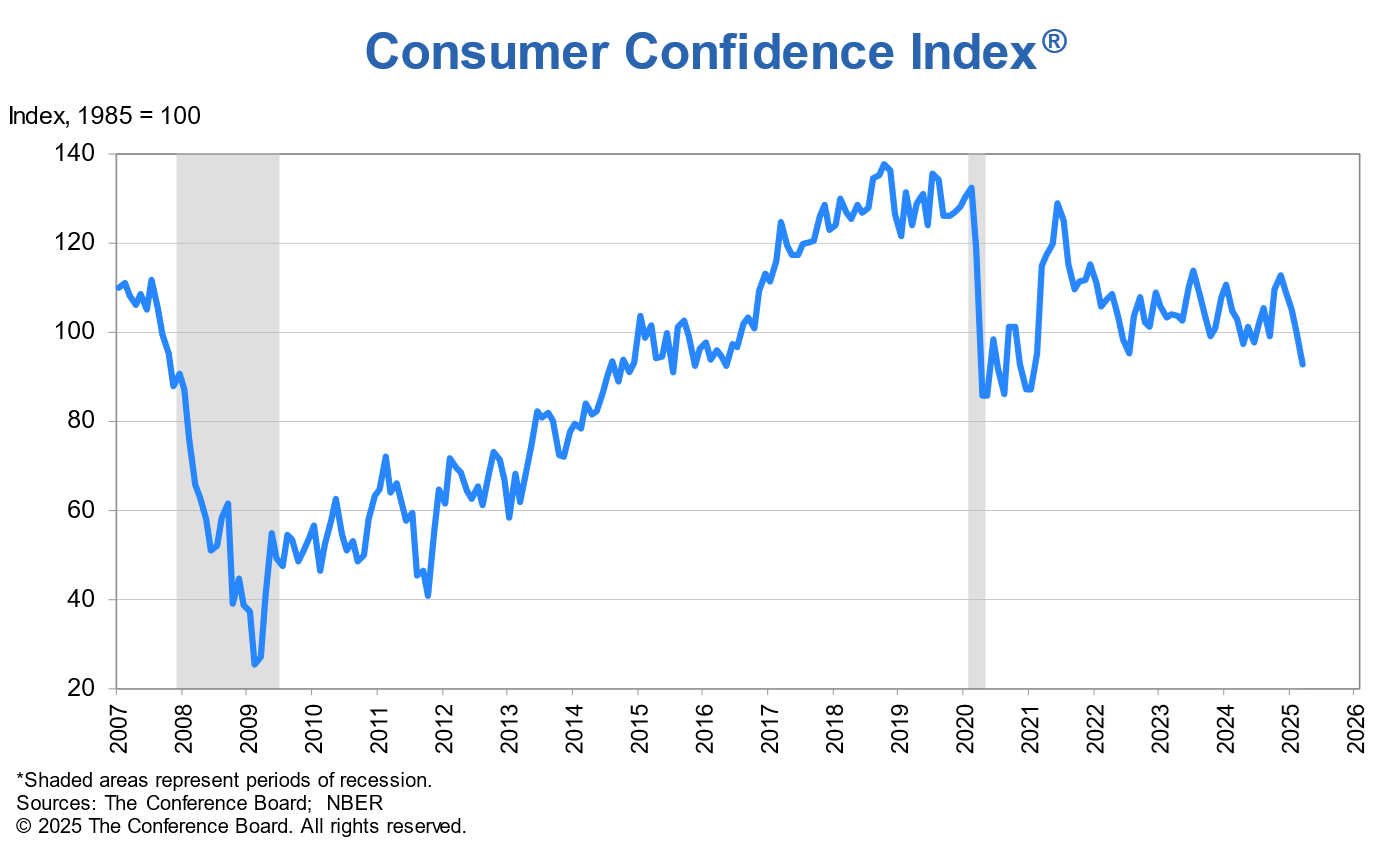
This weakness in consumer sentiment comes amid a broader divergence between soft and hard data, a point raised last week by Federal Reserve Chair Jerome Powell during the March FOMC meeting. Powell noted that while surveys like consumer confidence have grown more pessimistic, they have not been corroborated by “hard” data such as job gains, retail sales, or industrial production. Still, the consistency and breadth of the decline in sentiment indicators can't be ignored. Consumers’ expectations for income, employment, and business conditions are deteriorating, and even their outlook on stock prices has shifted sharply. For the first time since late 2023, more consumers now expect the market to fall than rise, a signal that anxiety is beginning to influence financial behavior.
Companies are echoing this sentiment. Over the past few weeks, a number of firms have used earnings calls to highlight consumer caution, noting more deliberate spending behavior and increased price sensitivity. The March consumer confidence report reinforces those warnings and will likely keep expectations for the Q1 earnings season low. While there was some surprise in the data—such as a modest rise in purchasing intentions for big-ticket items like appliances, potentially driven by pre-tariff buying—most signals point toward restraint. On a six-month moving average basis, home and auto buying plans declined, and while vacation plans ticked up slightly, spending on entertainment is set to contract.
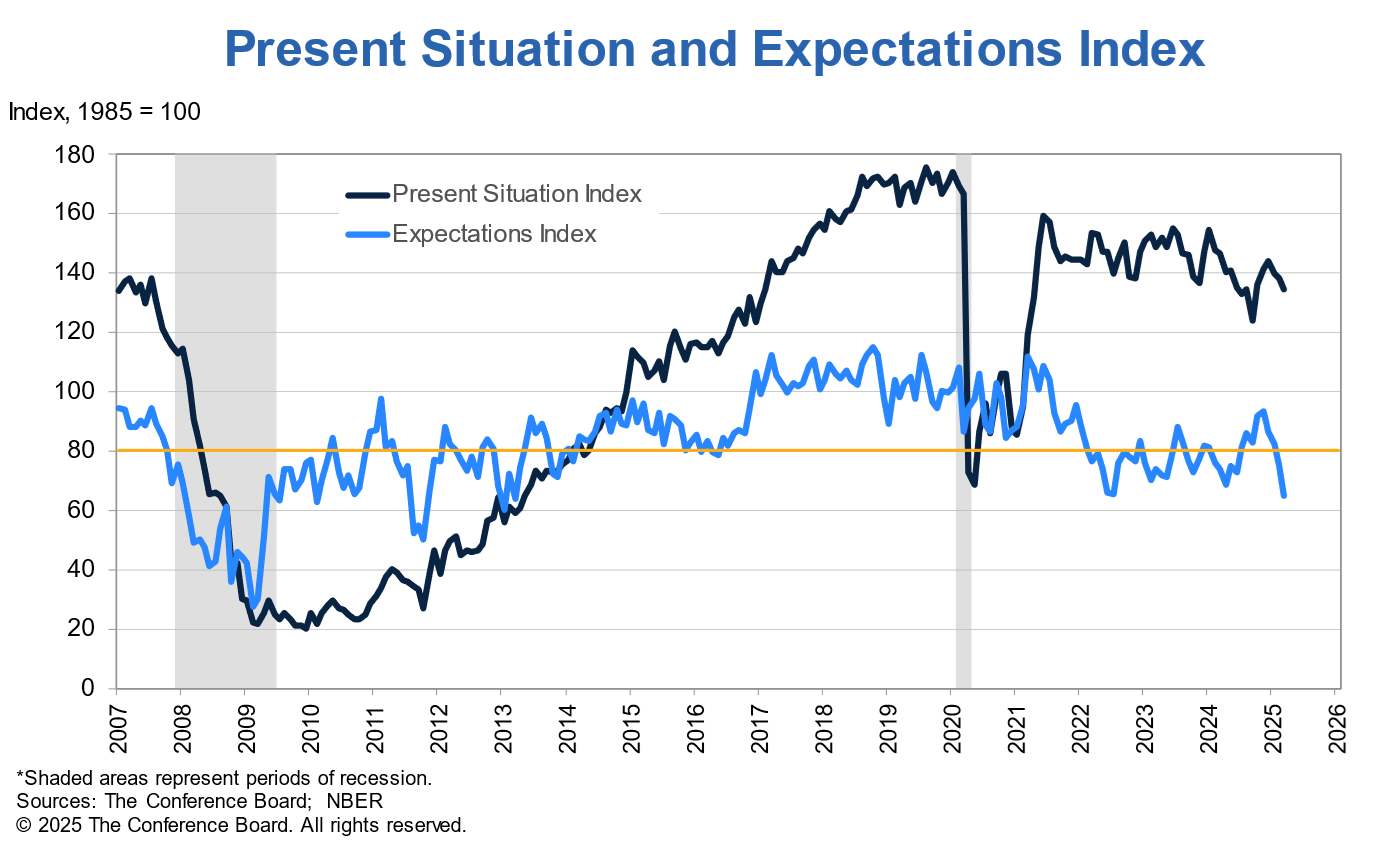
Financial markets reacted to the report with minor losses, though the overall reaction was muted. With the S&P 500 coming off recent gains, investors seemed to take the data in stride, perhaps anticipating that the Fed will remain cautious on tightening policy further. Nonetheless, the persistent deterioration in consumer sentiment adds a layer of uncertainty to the economic outlook. As policymakers and market participants digest the implications of tariffs, elevated inflation, and subdued confidence, the data suggest that consumers are proceeding with increasing caution. For an economy still trying to recalibrate from post-pandemic distortions, such fragile sentiment could serve as both a warning and a constraint on near-term growth.

Senior Analyst and trader with 20+ years experience with in-depth market coverage, economic trends, industry research, stock analysis, and investment ideas.
Latest Articles
Stay ahead of the market.
Get curated U.S. market news, insights and key dates delivered to your inbox.






Comments
No comments yet