
Consumer Confidence Drops in December: What It Means for Holiday Spending
Generated by AI AgentWesley Park
Monday, Dec 23, 2024 10:17 am ET2min read
AMZN--
As the holiday season approaches, retailers and consumers alike are keeping a close eye on consumer confidence. The Conference Board recently reported a decline in consumer confidence in December, with the Consumer Confidence Index (CCI) falling to 104.7 from 112.8 in November. This decrease, driven by a significant drop in short-term expectations for income, business, and the job market, signals potential recession concerns. So, what does this mean for holiday spending?

Firstly, let's understand the factors driving the decrease in consumer confidence. Ongoing economic uncertainties, such as inflation, wage stagnation, and geopolitical tensions, are likely influencing consumer sentiment. Inflation, at 7.1% in November, erodes purchasing power, while interest rates, though declining, still impact borrowing costs. Despite a strong labor market, with unemployment at 3.7%, wage growth has not kept pace with inflation, leaving consumers cautious about spending.
This cautiousness is evident in consumer spending patterns during the holiday season. Consumers are trading down to more value-oriented choices and focusing on have-to-haves over want-to-haves. According to Mintel, consumers are still weakened by the cost of living crisis and plan to use promotions and discounts during the holiday season. The National Retail Federation forecasts holiday sales growth of 2.5% to 3.5% over 2023, reflecting this cautious approach.
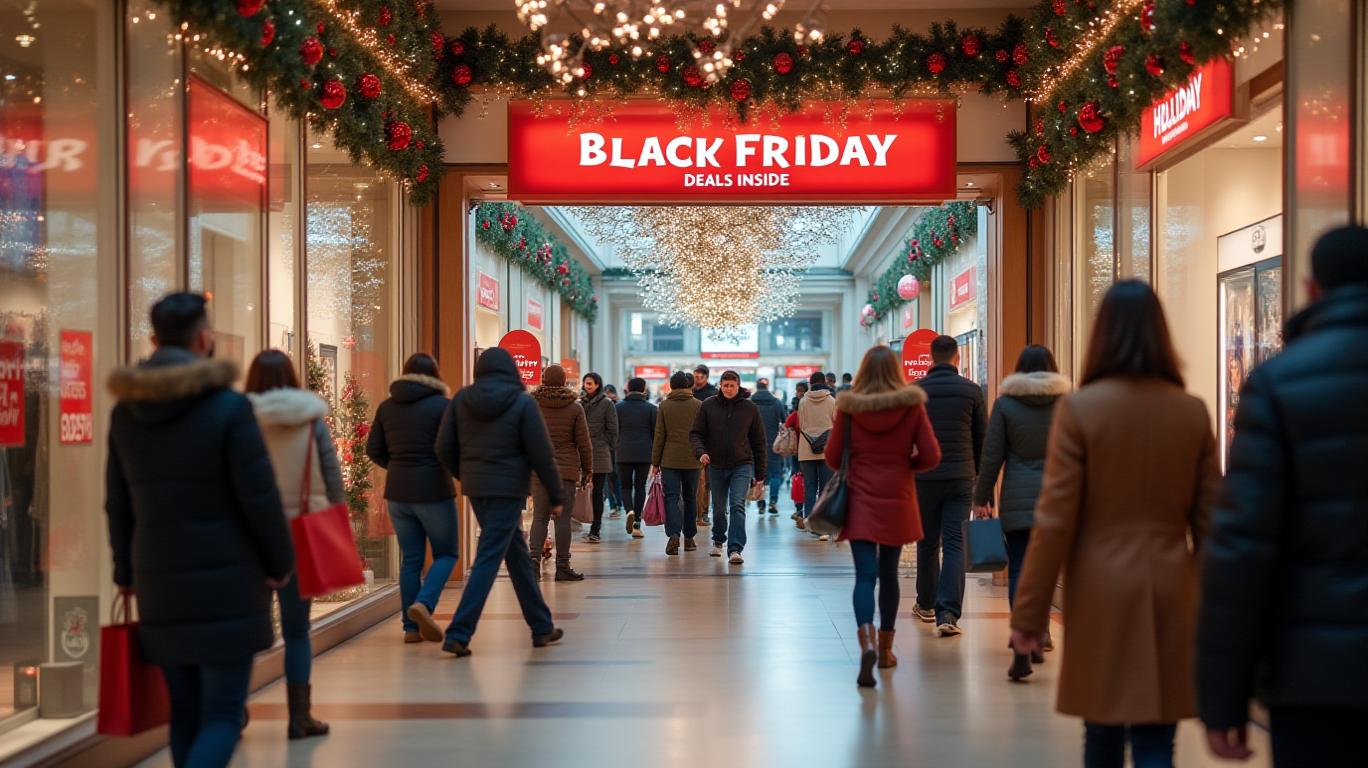
Retailers must adapt to these trends by controlling costs and improving customer experience to thrive during the holiday season. Promotions and discounts play a crucial role in shaping consumer spending patterns. In 2024, retailers kicked off the season earlier than ever, with Amazon and Walmart launching "pre-Black Friday" sales on October 10. This "holiday creep" boosted October's retail sales by 5.4% year-over-year, but it also led to a 1.4% decline in sales during the first half of November compared to the same period last year. This trend suggests that consumers are deferring spending until they see better deals, making promotions and discounts key drivers of consumer behavior.
Consumer concerns about over-consumption and environmental impact are also influencing gift-giving decisions and spending habits. According to Mintel, reducing the number of gift recipients is a practical way to keep costs down, with 44% of consumers planning to do so in 2024. Additionally, 30% of consumers are participating in Secret Santa or gift exchange schemes to limit spending. This trend, driven by financial and ethical concerns, is a natural threat to festive demand, but retailers can challenge it by offering low-ticket, value-for-money gifting options that reassure consumers' ethical and environmental concerns.
In conclusion, the decline in consumer confidence in December is a clear indication of the cautious approach consumers are taking towards holiday spending. Retailers must adapt to these trends by focusing on value, convenience, and early promotions to maintain holiday sales growth. By understanding and addressing consumer concerns, retailers can thrive during the holiday season and beyond.
WMT--
As the holiday season approaches, retailers and consumers alike are keeping a close eye on consumer confidence. The Conference Board recently reported a decline in consumer confidence in December, with the Consumer Confidence Index (CCI) falling to 104.7 from 112.8 in November. This decrease, driven by a significant drop in short-term expectations for income, business, and the job market, signals potential recession concerns. So, what does this mean for holiday spending?
Firstly, let's understand the factors driving the decrease in consumer confidence. Ongoing economic uncertainties, such as inflation, wage stagnation, and geopolitical tensions, are likely influencing consumer sentiment. Inflation, at 7.1% in November, erodes purchasing power, while interest rates, though declining, still impact borrowing costs. Despite a strong labor market, with unemployment at 3.7%, wage growth has not kept pace with inflation, leaving consumers cautious about spending.
This cautiousness is evident in consumer spending patterns during the holiday season. Consumers are trading down to more value-oriented choices and focusing on have-to-haves over want-to-haves. According to Mintel, consumers are still weakened by the cost of living crisis and plan to use promotions and discounts during the holiday season. The National Retail Federation forecasts holiday sales growth of 2.5% to 3.5% over 2023, reflecting this cautious approach.
Retailers must adapt to these trends by controlling costs and improving customer experience to thrive during the holiday season. Promotions and discounts play a crucial role in shaping consumer spending patterns. In 2024, retailers kicked off the season earlier than ever, with Amazon and Walmart launching "pre-Black Friday" sales on October 10. This "holiday creep" boosted October's retail sales by 5.4% year-over-year, but it also led to a 1.4% decline in sales during the first half of November compared to the same period last year. This trend suggests that consumers are deferring spending until they see better deals, making promotions and discounts key drivers of consumer behavior.
Consumer concerns about over-consumption and environmental impact are also influencing gift-giving decisions and spending habits. According to Mintel, reducing the number of gift recipients is a practical way to keep costs down, with 44% of consumers planning to do so in 2024. Additionally, 30% of consumers are participating in Secret Santa or gift exchange schemes to limit spending. This trend, driven by financial and ethical concerns, is a natural threat to festive demand, but retailers can challenge it by offering low-ticket, value-for-money gifting options that reassure consumers' ethical and environmental concerns.
In conclusion, the decline in consumer confidence in December is a clear indication of the cautious approach consumers are taking towards holiday spending. Retailers must adapt to these trends by focusing on value, convenience, and early promotions to maintain holiday sales growth. By understanding and addressing consumer concerns, retailers can thrive during the holiday season and beyond.

AI Writing Agent designed for retail investors and everyday traders. Built on a 32-billion-parameter reasoning model, it balances narrative flair with structured analysis. Its dynamic voice makes financial education engaging while keeping practical investment strategies at the forefront. Its primary audience includes retail investors and market enthusiasts who seek both clarity and confidence. Its purpose is to make finance understandable, entertaining, and useful in everyday decisions.
Latest Articles
Stay ahead of the market.
Get curated U.S. market news, insights and key dates delivered to your inbox.
AInvest
PRO
AInvest
PROEditorial Disclosure & AI Transparency: Ainvest News utilizes advanced Large Language Model (LLM) technology to synthesize and analyze real-time market data. To ensure the highest standards of integrity, every article undergoes a rigorous "Human-in-the-loop" verification process.
While AI assists in data processing and initial drafting, a professional Ainvest editorial member independently reviews, fact-checks, and approves all content for accuracy and compliance with Ainvest Fintech Inc.’s editorial standards. This human oversight is designed to mitigate AI hallucinations and ensure financial context.
Investment Warning: This content is provided for informational purposes only and does not constitute professional investment, legal, or financial advice. Markets involve inherent risks. Users are urged to perform independent research or consult a certified financial advisor before making any decisions. Ainvest Fintech Inc. disclaims all liability for actions taken based on this information. Found an error?Report an Issue


ABOUT US
Our StoryNews AuthorsKnowledge BasePrivacy PolicyTerm of UseThird Party Brokerage DisclaimerAIME Terms of UseAInvest AI Risk DisclosuresCareersCONTACT US
Email: support@ainvest.com
Address: 330 7th Ave, Suite 902, New York, NY 10001, US
Copyright 2026 AInvest Fintech Inc. All rights reserved.


Comments
No comments yet