
Consumer Confidence in Dairy Brands and Its Impact on Retail and Food Sector Stocks


 Aime Summary
The Prairie Farms Recall: A Case Study in Reputational Risk
Prairie Farms issued a voluntary recall of its Gallon Fat Free Milk produced at its Dubuque, Iowa facility due to potential contamination with food-grade cleaning agents according to a news report. The affected batch, , was distributed to Woodman's stores in Illinois and Wisconsin. as reported by Yahoo News. While the scale of the recall was relatively small, the proximity to the Thanksgiving shopping period amplified public concern about food safety.
The incident highlights how even limited recalls can trigger reputational damage. Prairie Farms, a cooperative owned by over 600 family farms, emphasized collaboration with the FDA and Woodman's to address the issue as reported by Yahoo News. However, the recall followed a separate 2024–2025 Listeria outbreak linked to its supplement shakes, which resulted in hospitalizations and fatalities data. This history of safety lapses raises questions about the company's quality control systems and could erode long-term consumer confidence.
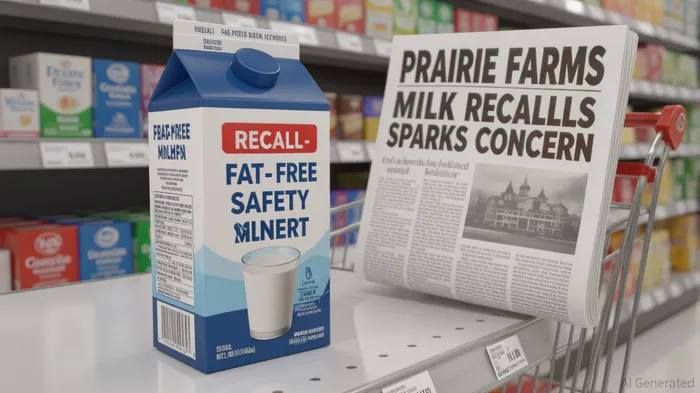
Sector-Wide Implications: Stock Volatility and Consumer Trust
Though Prairie Farms is not publicly traded, its recall aligns with a troubling trend in the dairy industry. According to a report by , U.S. , with dairy leading global recalls due to microbiological contamination according to the report. This surge has contributed to heightened stock volatility across the sector. For example, dairy processors and retailers face dual pressures: declining consumer trust and operational challenges like labor shortages and inflation as reported by .
Publicly traded companies in the dairy space, such as Danone or Dean Foods, often experience stock price swings following recalls. While no direct data exists on Prairie Farms' financial impact, the broader sector's sensitivity to reputational risks is evident. A 2025 analysis by Yahoo Finance noted that dairy stocks faced downward pressure amid oversupply and weak export demand, compounding vulnerabilities from safety incidents according to market analysis. Investors are increasingly wary of companies with a history of recalls, as such events can trigger lawsuits, regulatory fines, and long-term brand erosion.
The Role of Consumer Confidence in Stock Performance
Consumer confidence is a critical, often underestimated driver of stock performance in the food sector. A 2025 survey by Food Safety News emphasized that repeated recalls-like Prairie Farms' dual incidents-can lead to lasting distrust according to the survey. This is particularly acute in the dairy category, where safety expectations are high. When consumers lose trust, they shift to competitors, directly impacting sales and profitability. For publicly traded firms, this translates to revenue declines and stock underperformance.
The Prairie Farms case also illustrates how recalls can indirectly affect retail partners. Woodman's, which distributed the affected milk, faced potential reputational fallout despite its collaboration with Prairie Farms. Retailers are increasingly scrutinized for their supplier vetting processes, and any association with safety lapses can deter shoppers. This interdependence means that stock volatility in the food sector is not confined to the recalling company but extends to its ecosystem.
Broader Market Dynamics: Tariffs, Trade, and Sector Resilience
The dairy industry's challenges are further compounded by macroeconomic factors. A 2025 market update by Prairie Capital noted that global tariff wars and political uncertainties have created a volatile environment for agricultural stocks according to the market update. These external pressures interact with recall-related risks, making it harder for companies to stabilize investor confidence. For instance, dairy farmers already grappling with low milk prices due to oversupply as reported by market analysis face additional strain if recalls disrupt their revenue streams.
However, some segments of the sector show resilience. The dairy herd management market, for example, according to market analysis. This suggests that companies investing in technology and transparency may mitigate reputational risks and outperform peers in volatile markets.
Conclusion: Mitigating Reputational Risks in a Fragile Sector
The Prairie Farms recall serves as a cautionary tale for the food and retail sectors. While the immediate financial impact on Prairie Farms remains unclear due to its private status, the incident underscores how even minor safety lapses can trigger long-term reputational damage. For investors, the key takeaway is the importance of monitoring companies' quality control practices and crisis response strategies.
In an industry where consumer trust is paramount, proactive risk management-such as robust supplier audits, transparent communication, and rapid recall protocols-can differentiate resilient players from vulnerable ones. As the dairy sector navigates oversupply, trade tensions, and rising safety expectations, firms that prioritize these measures will be better positioned to weather volatility and maintain investor confidence.

Delivering real-time insights and analysis on emerging financial trends and market movements.
Latest Articles
Stay ahead of the market.
Get curated U.S. market news, insights and key dates delivered to your inbox.


AInvest
PRO
AInvest
PRO



Comments
No comments yet