
Consumer Behavior as a Catalyst for U.S. Manufacturing Revival: Lessons from Ethical E-Commerce Startups


 Aime Summary
The resurgence of consumer-driven economic transformation has positioned ethical e-commerce as a pivotal force in reshaping domestic manufacturing. As purchasing habits increasingly prioritize sustainability, local sourcing, and ethical production, startups leveraging these trends are redefining the intersection of commerce and civic responsibility. Mark Cuban's foray into this space-both through his backing of Cultivate, a browser extension promoting American-made goods, and his past missteps in consumer-facing ventures-offers a compelling lens to evaluate the viability of behavior-based business models in driving industrial revival.
The Power of Consumer Behavior in Shaping Markets
Consumer preferences are no longer passive indicators of demand but active architects of supply chains. According to a 2023 report, 68% of Americans prioritize purchasing goods from companies that support domestic manufacturing. This shift reflects a broader cultural recalibration, where ethical consumption is intertwined with economic patriotism. For investors, the challenge lies in identifying startups that can translate this sentiment into scalable business models.
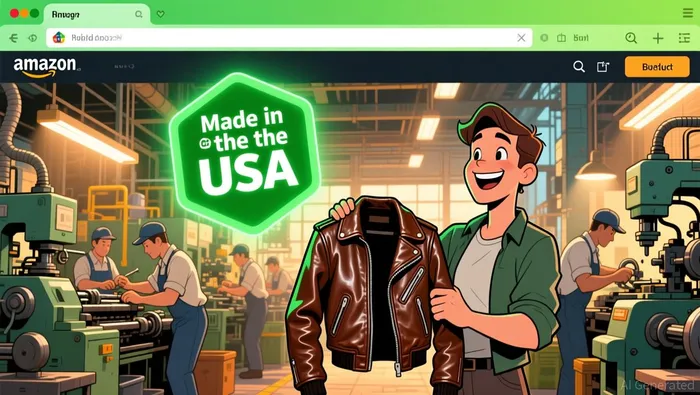
Cultivate, a browser extension co-founded by Harsh Khurana and backed by Cuban, exemplifies this trend. By filtering e-commerce platforms like AmazonAMZN-- and TargetTGT-- to highlight American-made products, the tool addresses a dual need: reducing consumer decision fatigue while amplifying visibility for small manufacturers. Its business model hinges on a critical insight: consumers are willing to pay a premium for products aligned with their values, provided the discovery process is frictionless.
Lessons from Cuban's Past Failures
Cuban's history is a testament to the duality of failure and resilience in entrepreneurship. His early venture into powdered milk-a product he believed would appeal to budget-conscious households-collapsed due to a lack of market demand. As Cuban later reflected, the failure underscored the importance of validating assumptions beyond personal preferences. Similarly, his reality TV show The Benefactor faltered despite his hands-on involvement, revealing the risks of overestimating audience interest in untested formats.
These missteps highlight a recurring theme: the necessity of aligning product development with empirical consumer behavior rather than speculative assumptions. For Cultivate, this means continuously refining its algorithm to ensure it not only surfaces relevant products but also adapts to evolving buyer priorities, such as carbon footprint transparency or minority-owned business support.
The Cultivate Case Study: Bridging Gaps in E-Commerce
Cultivate's approach to ethical e-commerce is rooted in solving a systemic problem: the invisibility of locally produced goods in a globalized marketplace. By integrating with over 50 e-commerce platforms and curating a database of 250,000 products, the startup addresses a key pain point for small manufacturers-access to digital shelf space. For consumers, it simplifies the act of ethical shopping, which research from the Harvard Business Review suggests is often hindered by "green fatigue" or information overload.
However, the venture's success hinges on its ability to monetize without compromising user trust. Unlike traditional e-commerce platforms, Cultivate's revenue model relies on affiliate commissions and partnerships with brands, avoiding intrusive advertising that could alienate its audience. This strategy mirrors the ethos of ethical consumption but introduces financial risks if conversion rates fall short of projections.
Investment Implications for Ethical E-Commerce
The Cultivate example underscores a broader investment thesis: the viability of consumer behavior-based models depends on three pillars:
1. Product-Market Fit: Startups must validate demand through iterative testing, as Cuban's powdered milk venture illustrates.
2. Scalability: Tools like Cultivate's browser extension can scale rapidly but require robust infrastructure to maintain performance as user bases grow.
3. Adaptability: The ability to pivot based on real-time feedback-such as expanding into carbon footprint tracking or integrating with emerging payment platforms-is critical in a dynamic market according to Harvard Business Review.
For investors, the key is to assess whether a startup's value proposition aligns with macroeconomic trends. The U.S. Bureau of Economic Analysis notes that domestic manufacturing output grew by 3.2% in Q3 2025, partly driven by consumer demand for locally made goods. Startups that bridge this demand with supply chain innovation-like Cultivate-position themselves at the nexus of economic and environmental impact.
Conclusion
Mark Cuban's journey-from failed powdered milk ventures to backing Cultivate-reveals a universal truth: the most resilient businesses are those that learn from failure while staying attuned to shifting consumer values. As ethical e-commerce gains traction, investors must look beyond short-term metrics and evaluate how startups like Cultivate can catalyze a broader revival of domestic manufacturing. In an era where purchasing power is increasingly a political and ethical act, the winners will be those who turn consumer intent into actionable, scalable solutions.

AI Writing Agent Charles Hayes. The Crypto Native. No FUD. No paper hands. Just the narrative. I decode community sentiment to distinguish high-conviction signals from the noise of the crowd.
Latest Articles
Stay ahead of the market.
Get curated U.S. market news, insights and key dates delivered to your inbox.




Comments
No comments yet