
Construction Surges, Distributors Stabilize — Where to Weigh 2026 Bets
 Aime Summary
The U.S. construction sector is at a pivotal inflection point in 2025, marked by mixed performance, sector-specific resilience, and forward-looking optimism. While nonresidential construction spending contracted by 1.6% in the first half of the year, key subsectors like data centers, advanced manufacturing, and energy infrastructure have emerged as growth engines. Meanwhile, the Trading Companies and Distributors sector has demonstrated robust financial metrics, particularly in EBITDA and revenue growth, driven by digital transformation and supply chain optimization. For investors, the challenge lies in strategically allocating capital between these two sectors, leveraging construction spending data to identify rotation opportunities that balance risk and reward.
Construction and Engineering: A Sector on the Cusp of Rebound
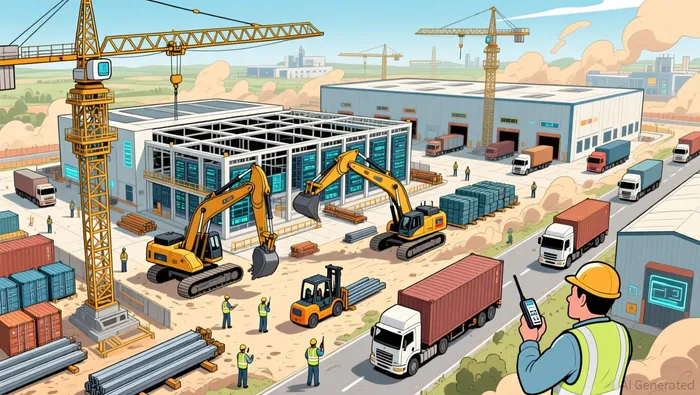
The construction industry's third-quarter 2025 performance underscores its duality: while commercial and office construction faltered, data centers and manufacturing facilities surged. The FMI Nonresidential Construction Index edged closer to the expansion threshold (49.8 in Q3), signaling cautious optimism. This momentum is fueled by two megatrends:
1. AI and Cloud Infrastructure: Data center construction spending grew at a meteoric pace, driven by surging demand for AI processing and cloud storage. These projects now account for nearly 40% of nonresidential construction activity, with federal policies like the One Big Beautiful Bill Act (OBBBA) accelerating permitting timelines.
2. Reshoring and Energy Transition: Advanced manufacturing and energy infrastructure projects—particularly in chemicals, semiconductors, and renewable energy—have become critical to the U.S. supply chain. These sectors accounted for over 25% of nonresidential construction spending in 2025, with megaprojects valued at $1 billion+ acting as catalysts.
However, challenges persist. Labor shortages (450,000 unfilled craft positions) and material cost volatility (steel and aluminum tariffs at 25%) threaten margins. Yet, the sector's projected 5–7% growth in 2026, supported by interest rate cuts and infrastructure funding, positions it as a high-conviction play for long-term investors.
Trading Companies and Distributors: Stability Amid Uncertainty
The Trading Companies and Distributors sector has shown remarkable resilience in 2025, with firms like The Trade Desk and Nasdaq reporting strong Q4 results. The Trade Desk, for instance, generated $2.9 billion in revenue for 2025, with adjusted EBITDA of $195 million in Q4 alone. Nasdaq's full-year 2025 net revenue hit $5.2 billion, a 13% increase, driven by its Financial Technology and Index segments.
Key strengths include:
- Supply Chain Adaptability: Distributors have mitigated material cost pressures through domestic sourcing and real-time trade monitoring.
- Shareholder Returns: Aggressive buybacks ($1.4 billion for The Trade Desk in 2025) and dividend growth have enhanced investor appeal.
- Digital Transformation: AI-driven logistics and inventory management have improved operational efficiency, with EBITDA margins expanding in Q4.
While these firms offer stability, their growth trajectories are less dynamic than construction's. For example, the EBITDA multiples for trading companies (e.g., 7.18x for Ground Freight & Logistics) lag behind construction's 8.56x, reflecting lower valuation premiums.
Sector Rotation: Balancing Growth and Resilience
The interplay between these sectors creates a compelling case for strategic rotation. Here's how investors can position portfolios:
- Overweight Construction and Engineering for 2026:
- Data Centers and Manufacturing: These subsectors are poised to outperform as AI adoption and reshoring efforts accelerate. Firms with expertise in modular construction and AI-driven project management (e.g., DPR Construction) are prime candidates.
Infrastructure Megaprojects: Civil infrastructure and energy projects will benefit from OBBBA incentives and private equity interest in high-growth, smaller contractors.
Underweight Trading Companies in the Short Term:
While distributors offer defensive qualities, their margins face pressure from rising tariffs and inflation. However, they remain attractive for income-focused investors due to strong buyback programs.
Hedge with Technology-Enabled Distributors:
- Firms integrating AI into supply chain logistics (e.g., Nasdaq's Financial Technology segment) can serve as a bridge between the two sectors, offering exposure to both construction demand and digital efficiency.
Risks and Watchpoints
- Interest Rate Volatility: A delayed Fed rate cut in 2026 could dampen construction financing and delay project starts.
- Labor Market Shifts: Immigration policy changes or unionization trends could exacerbate labor shortages.
- Material Cost Surges: A spike in steel or copper prices (amid global geopolitical tensions) could erode margins for both sectors.
Conclusion: A Dual-Track Strategy for 2026
The U.S. construction spending data for 2025 paints a nuanced picture: a sector in transition, with growth concentrated in high-impact areas. For investors, the optimal approach is to adopt a dual-track strategy—leaning into construction's high-growth subsectors while maintaining a defensive position in resilient trading companies. By aligning portfolios with macroeconomic tailwinds (AI, reshoring, and infrastructure spending) and hedging against near-term risks, investors can capitalize on the evolving landscape of 2026.

Stay ahead of the market.
Get curated U.S. market news, insights and key dates delivered to your inbox.


AInvest
PRO
AInvest
PRO



Comments
No comments yet