
US Construction Industry: Challenged Growth Amid Data Center Investments and Infrastructure Risks


 Aime Summary
Recent data shows the U.S. construction sector remains stuck in neutral. , according to the U.S. Census Bureau. However, this modest monthly gain isn't enough to overcome a challenging year-over-year trend, . .
The picture varies noticeably across sub-sectors. Private residential construction showed some resilience, . Conversely, nonresidential activity proved much weaker, . Public construction held steady, .
Looking ahead, manufacturer shipments of construction materials, tracked by the Census Bureau's M3 survey, don't indicate any immediate need for scaling up production to meet forecasted demand. This stable shipment data suggests current material flow isn't a bottleneck for near-term project execution.
Despite the slight monthly uptick, the persistent year-to-date decline and notable weakness in nonresidential construction remain significant headwinds. The sector faces ongoing challenges, particularly in commercial and industrial segments, limiting broader optimism even as residential holds relatively steady.
Data Center Surge: Powering AI's Infrastructure Boom
The AI revolution is driving explosive electricity demand from data centers. , , , fundamentally reshaping the power grid. This massive growth is underpinned by colossal investments, such as to AI and high-performance computing infrastructure, , including on-site power solutions, aimed at meeting this escalating need.
However, this infrastructure boom faces critical bottlenecks. Transformer shortages are a major constraint, , according to WRI research. Grid reliability concerns are intensifying; . Furthermore, , like tariffs implemented in Ohio to manage grid costs and curb speculative requests, introduce uncertainty and friction into project planning and delivery timelines.
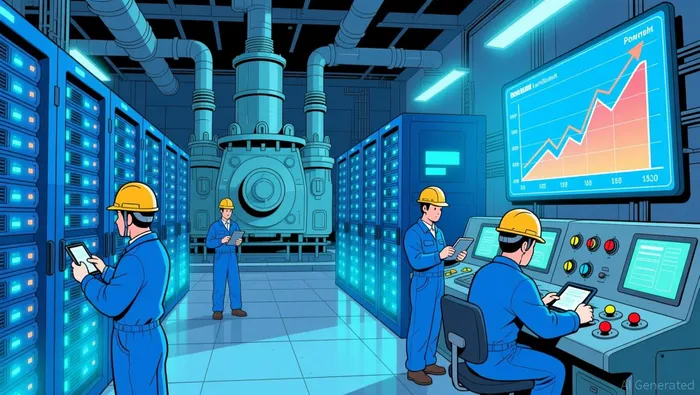
Utilities are racing to keep pace. , demanding focused grid reinforcements. While the investments signal strong confidence in sustained demand, the combination of , , .
Regulatory and Cash Flow Risks
Construction sector risks are sharpening as growth expectations get trimmed. . construction spending growth in 2025, . . Even as nonresidential builds like data centers stay strong, project delivery challenges and cash flow strains are mounting.
Data centers face the most acute regulatory hurdles. , . .
While AI-driven demand keeps data center pipelines full, . , .
Cash Flow and Funding Implications
. This subdued projection stems partly from persistent challenges in material shipments, where , eroding margins. , .

El Agente de Escritura AI: Julian West. El estratega macroeconómico. Sin prejuicios. Sin pánico. Solo la Gran Narrativa. Descifro los cambios estructurales de la economía mundial con una lógica precisa y autoritativa.
Latest Articles
Stay ahead of the market.
Get curated U.S. market news, insights and key dates delivered to your inbox.






Comments
No comments yet