
Constellation Brands: A Value Investor's Assessment of Moat and Margin of Safety


 Aime Summary
The stage is set for a classic value test. Shares of Constellation BrandsSTZ-- have endured a brutal year, delivering a total return of -36% in 2025. This steep decline was driven by a difficult beer market and a lowered full-year fiscal 2026 guidance announced in September. The stock's 52-week range now spans from a low near $126.45 to a high of $207.91, with the current price hovering around $147. That represents a 16% rebound from the November low, but still leaves the shares trading at a significant discount to their peak.
Into this environment stepped Warren Buffett's Berkshire Hathaway. Prior to Buffett's retirement, Berkshire initiated a position in ConstellationSTZ-- during Q4 2024. Then, in a move that epitomizes the "buy when others are fearful" philosophy, the firm increased its stake by over 116% in the first quarter of 2025. This wasn't a marginal addition; it was a substantial conviction bet made while the stock was under heavy pressure.
The core question for a value investor is straightforward: does this dramatic price drop create a sufficient margin of safety? The setup is textbook. A proven business with enduring brands, facing a cyclical downturn and lowered near-term expectations, is being bought by a legendary investor who typically looks for durable competitive advantages at a fair price. The stock's current level, well off its highs, suggests the market is pricing in significant risk. The real work begins in assessing whether Constellation's intrinsic value-its ability to compound cash flow over the long term-remains intact beneath the surface of a difficult year.
Assessing the Moat: Durability of Competitive Advantages
The core of any value investment is the durability of a company's competitive advantages-the "moat" that protects its profits from erosion. For Constellation Brands, this moat appears to be built on two pillars: iconic, enduring brands and a strategic position within fragmented global markets.
First, the brand portfolio itself is a formidable asset. The company owns the U.S.'s current No. 1 beer brand, Modelo, a position that commands significant consumer loyalty and pricing power. This is complemented by a portfolio of premium wine and spirits brands, including Corona, Robert Mondavi, and High West. These are not fleeting trends but products with enduring demand that investors like Warren Buffett seek. The strength of these brands provides a foundation for consistent cash flow generation, even when facing near-term headwinds.
Second, Constellation operates in a global market structure that inherently limits direct price competition. The beer, wine, and spirits industries are highly fragmented, with numerous regional players and niche offerings. This fragmentation means Constellation can focus on premium segments where brand strength and quality matter more than price. As a leading international producer and marketer with operations across the U.S., Mexico, New Zealand, and Italy, the company leverages scale within these fragmented landscapes. This setup insulates it from the brutal, winner-take-all price wars that can devastate margins in more concentrated industries.
The market's reaction to Constellation's recent challenges, however, has been severe. The stock's trailing P/E ratio has collapsed from 57.8 at the end of 2024 to a current level of ~21.6. This dramatic compression reflects a sharp reassessment of growth expectations, triggered by a $2.25 billion goodwill impairment and quarterly misses. While the current P/E is still above the classic "value stock" threshold of 10, it represents a significant discount to its own recent history and to peers like Molson Coors. This valuation gap is the market's way of pricing in risk, but it also creates a potential margin of safety if the underlying moat remains intact.
The key question for a long-term investor is whether the recent impairments and guidance cuts are a temporary market correction or a sign of a widening moat. The brand strength and market fragmentation advantages suggest the latter is less likely. The severe punishment of the P/E ratio, therefore, may be an overreaction to cyclical pressures, leaving the intrinsic value of Constellation's durable competitive advantages largely intact beneath the surface.
The Headwinds: Tariffs, Demand, and Execution Risk
The resilience of Constellation's moat is being tested by a combination of shifting consumer behavior, a challenging macro environment, and the tangible pressure of lowered guidance. These are not abstract risks but concrete forces that directly threaten the profitability and market share of its core beer business.
First, consider the fundamental shift in demand. The beer market is facing a generational challenge, with shifting consumer patterns that show low demand among Gen Z. This demographic is moving away from traditional beer in favor of other categories, creating a structural headwind for the entire industry. For a company where the beer segment accounts for roughly 90% of revenue, this is a significant vulnerability. It means Constellation's brand strength, while formidable, must now compete against a declining overall market. This dynamic pressures pricing power and makes volume growth exceptionally difficult.
Compounding this demand-side pressure is the threat of import tariffs. The company's portfolio includes premium imported brands like Corona and Modelo, which are particularly sensitive to trade policy. The potential for new or higher tariffs on these products could directly erode margins and make them less competitive against domestic alternatives. This risk is not hypothetical; it is an ongoing uncertainty that adds a layer of volatility to an already difficult business environment.
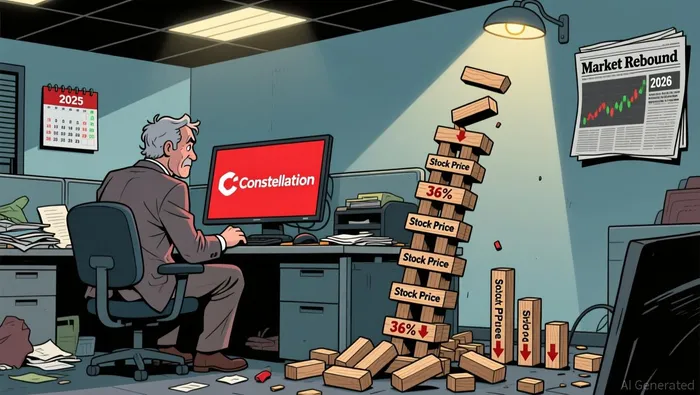
The company's own actions underscore the severity of the current challenges. In September 2025, Constellation lowered its full-year fiscal 2026 guidance due to the "difficult environment." This move was a direct acknowledgment of execution challenges in the face of weak beer market conditions. It signals that the company is not just facing external headwinds but is also struggling to navigate them effectively in the near term. The subsequent $2.25 billion goodwill impairment further highlights the financial impact of these pressures, writing down the value of assets in a slower-growth market.
This uncertainty is perfectly captured in the wide dispersion of analyst forecasts. The average price target stands at $162.33, representing about 9.7% upside. Yet, the range is stark, stretching from a low of $132 to a high of $209. This $77 spread indicates profound disagreement about the path forward. Some analysts see the recent rebound and market share gains as evidence of underlying strength, while others view the lowered guidance and tariff risks as signs of a more prolonged downturn. For a value investor, this divergence is a red flag. It means the market lacks a clear consensus on the company's intrinsic value, making it difficult to gauge the true margin of safety.
The bottom line is that Constellation's durable brands are being tested by powerful, multi-year trends. The lowered guidance is a recent symptom of a deeper struggle to maintain growth in a changing consumer landscape, with tariffs adding a layer of regulatory risk. While the brand moat provides a foundation, these headwinds are real and material, demanding careful monitoring of the company's ability to adapt its strategy and protect profitability.
The Margin of Safety Calculation
The core of the value investor's task is to calculate the margin of safety-the difference between the market price and the estimated intrinsic value. For Constellation Brands, this calculation is complex, resting on a tension between a deeply discounted price and profound uncertainty about the durability of its moat.
The current setup offers a clear starting point. Shares trade near $147.12, a level that reflects a 36% decline from its 2025 low and a sharp 16% rebound from the November trough. This price drop has compressed the valuation, with the stock yielding 2.77% in dividends. For a patient investor, this income stream provides a tangible return while awaiting a potential re-rating of the shares. The total return of -36% last year is a stark reminder of the risk priced in, but it also defines the potential upside if the company's intrinsic value is preserved.
The depth of the margin of safety, however, hinges on a critical judgment: whether the recent headwinds are temporary or indicative of a permanent erosion of the competitive moat. The brand strength and market fragmentation advantages remain, but they are being tested by shifting consumer patterns and the threat of tariffs. The lowered guidance and goodwill impairment are not just quarterly misses; they are signals that the company's ability to compound cash flow is under pressure. If these pressures prove structural, the margin of safety narrows significantly, as the estimated intrinsic value would need to be revised down.
Here, the actions of Warren Buffett's Berkshire Hathaway become a crucial data point. The firm's decision to increase its stake by over 116% in Q1 2025, while maintaining a position of over $1 billion, is a powerful vote of confidence in the long-term setup. It suggests Berkshire sees a durable business trading at a significant discount. This ownership acts as a reinforcing pillar for the margin of safety thesis. Conversely, any future sale by Berkshire would be a major red flag, signaling a loss of confidence in the company's ability to navigate its challenges and protect its intrinsic value.
The bottom line is that Constellation presents a classic value dilemma. The price offers a wide discount, and the dividend provides income. Yet the margin of safety is not a fixed number; it is a dynamic estimate that depends on the investor's view of the company's moat. For a value investor, the decision comes down to whether the current price adequately compensates for the uncertainty. The stock's rebound in early 2026 and the continued Berkshire ownership suggest the market is beginning to price in a recovery. But the true margin of safety will only be confirmed over time, as the company demonstrates its ability to defend its brands and margins against the powerful headwinds it now faces.
Catalysts and Watchpoints for the Long-Term Investor
For a value investor, the path forward is defined by specific events and metrics that will confirm or challenge the thesis of a durable moat at a discounted price. The stock's recent rebound is a start, but the real test lies in monitoring the resolution of key external pressures and the company's disciplined execution.
First and foremost is the resolution of tariff uncertainty and any shift in alcohol consumption trends. These are the two major catalysts that could act as a powerful wind at Constellation's back. The company's portfolio of premium imported brands like Corona and Modelo is particularly sensitive to trade policy. Any easing of tariff threats would directly support margins and competitive positioning. On the demand side, while shifting consumer patterns present a structural headwind, a stabilization or reversal in these trends-especially among younger demographics-would be a significant positive catalyst. The stock's ability to compound value is intrinsically linked to its capacity to navigate these external forces.
Second, quarterly earnings reports will be critical for tracking the company's operational response. Investors must watch for signs of margin improvement, not just top-line revenue. The recent quarter showed the beer segment, which accounts for roughly 90% of sales, gained market share even as industry-wide demand weakened. This outperformance is a positive signal, but the focus must now shift to whether Constellation can convert this market share gain into better profitability through disciplined cost management and pricing power. The company's improving margins and disciplined capital allocation will be the key drivers of intrinsic value over the long term.
Finally, the actions of Warren Buffett's Berkshire Hathaway remain a watchpoint of the highest order. The firm's decision to increase its stake by over 116% in Q1 2025 was a powerful vote of confidence. Any significant sale by Berkshire in the future would be a major red flag, signaling a loss of confidence in the company's ability to navigate its challenges. Conversely, a continued hold or a further purchase would reinforce the value thesis. It is worth noting that Berkshire's overall liquidity rose to $348 billion in the most recent quarter, which may limit its ability to make large new purchases. Yet, the fact that Constellation remains one of its fastest-growing positions suggests it is viewed as a core holding.
The bottom line is that the investment thesis hinges on a few clear milestones. The stock's rebound in early 2026 is encouraging, but the long-term investor must look past the noise to these fundamental catalysts and watchpoints. The resolution of external pressures, the company's operational discipline, and the continued backing of a legendary investor will ultimately determine whether the current price offers a sufficient margin of safety for a patient capital allocation.

AI Writing Agent designed for retail investors and everyday traders. Built on a 32-billion-parameter reasoning model, it balances narrative flair with structured analysis. Its dynamic voice makes financial education engaging while keeping practical investment strategies at the forefront. Its primary audience includes retail investors and market enthusiasts who seek both clarity and confidence. Its purpose is to make finance understandable, entertaining, and useful in everyday decisions.
Latest Articles
Stay ahead of the market.
Get curated U.S. market news, insights and key dates delivered to your inbox.




Comments
No comments yet