
Constellation's 9.8% Plunge: A Technical Breakdown and Valuation Reset


 Aime Summary
Constellation Energy's stock fell a sharp 9.82% to close at $307.71 on Friday, marking a significant technical breakdown. The shares crossed below their key 200-day moving average of $318.70, a level that often acts as a psychological and technical support. This move wasn't driven by company-specific news but by a sudden policy shock that directly threatens a core profit engine.
The catalyst was a sweeping directive from the White House and Mid-Atlantic governors. They urged the PJM grid operator to hold an emergency auction, a radical departure from standard market operations, to fund new power plants for data centers. The mechanism that sparked the sell-off is a specific clause in the "Statement of Principles" released earlier that day. It extends the existing price cap on existing generation for two more auctions, effectively freezing scarcity revenues for the legacy fleet.
For ConstellationCEG--, which owns a major nuclear fleet, this is a direct hit. Scarcity revenue-the premium paid during periods of tight supply-is a critical profit driver for its existing, reliable baseload plants. By capping prices for two more auctions, the policy removes a key financial incentive for those assets to remain online, potentially devaluing them in the near term. The market is pricing in this immediate threat to earnings.
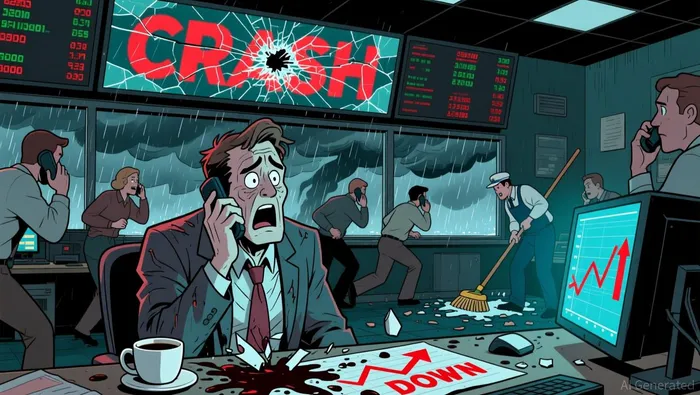
The result is a tactical mispricing. The stock's steep drop reflects a knee-jerk reaction to this policy change, but the full valuation impact may not yet be digested. The event creates a clear setup: a technical breakdown triggered by a specific, material policy shift that undermines a key revenue stream. The question now is whether the sell-off is overdone, or if more pain lies ahead as the market grapples with the long-term implications.
Valuation Context: Is the Drop a Mispricing?
The stock's steep drop creates a classic event-driven setup, but the answer hinges on whether the sell-off is overdone relative to the company's fundamentals. On one hand, the valuation suggests the market may be oversold. The shares are down 10.16% over the past five days and trade near the lower end of their 52-week range of $161.35 to $412.70. This deep pullback from recent highs could represent a tactical mispricing, especially given the forward P/E of 58.26. That multiple implies very high growth expectations, which are now directly at risk from the new policy. A sharp decline from such a lofty multiple leaves room for a rebound if the policy threat is less severe than feared.
On the other hand, the company's recent operational pressures increase its vulnerability. Constellation has already shown signs of strain, having narrowed its full-year adjusted earnings forecast in November due to higher operating expenses. The utility reported a miss on both revenue and EPS for the third quarter, with total operating expenses rising 7.8%. This makes the business more sensitive to any new headwinds, like the potential loss of scarcity revenue. The policy shock doesn't just threaten future earnings; it compounds existing margin pressure.
The bottom line is a tension between a cheapened valuation and heightened operational risk. The drop may be overdone on a pure multiples basis, but the company's recent guidance cut and elevated cost structure mean it has less cushion to absorb the new policy impact. For now, the setup favors caution. The technical breakdown and valuation reset are clear, but the stock's path will depend on whether the market's fear of a permanent earnings hit is justified or if it's overreacting to a temporary policy shock.
Financial Impact: Revenue at Risk
The policy shock directly threatens a core profit engine. The plan's key clause extends the price cap on existing generation for two more auctions, effectively freezing scarcity revenues for Constellation's legacy nuclear fleet. This is not a minor accounting adjustment; it removes a critical financial incentive that drives earnings from its reliable baseload plants during peak demand. For a utility where such revenues are a key profit driver, this is a material hit to near-term earnings potential.
This threat compounds existing operational headwinds. Constellation has already shown vulnerability, missing Q3 EPS estimates by $0.02 despite a slight revenue increase. The quarter also saw total operating expenses rise 7.8%, highlighting margin pressure. Now, the company faces a double squeeze: higher costs and a potential loss of a major revenue stream. The policy shock doesn't just add a new risk; it amplifies the financial strain that was already evident in its recent results.
Yet, the same policy that threatens one revenue stream opens another. The directive aims to accelerate $15 billion in new power plant development across the PJM region. For Constellation, which has significant engineering and construction capabilities, this could translate into a new business line. The company's expertise in building and operating large-scale power projects positions it to bid on contracts for these new plants, potentially offsetting some of the lost scarcity revenue with new engineering service fees.
The bottom line is a stark trade-off. The policy creates a clear, quantifiable threat to a key earnings driver while simultaneously exposing the company to a new, large-scale market opportunity. The financial impact will depend on the net effect: how much scarcity revenue is lost versus how much new engineering work Constellation can capture. For now, the immediate risk to earnings from the price cap is the dominant story, but the potential for new revenue from the $15 billion build-out adds a layer of complexity to the valuation reset.
Catalysts and Risks: What to Watch Next
The stock's path from here will be dictated by a series of near-term decisions that will clarify the policy's final form and its direct impact on Constellation's earnings. The immediate catalyst is PJM's review of the emergency auction proposal and its board's decision on the data center interconnection plan, both of which are set for today. The grid operator is working with stakeholders to see how the proposal aligns with its own plan, which is now in the balance. Any emergency auction would need to be approved by the Federal Energy Regulatory Commission, adding another layer of uncertainty.
Key risks are now crystallizing. The most direct threat is that the auction proceeds as planned, locking in low prices for existing assets and effectively freezing scarcity revenues for Constellation's nuclear fleet for two more cycles. This would validate the market's worst fears about a permanent earnings hit. There's also a risk of regulatory overreach, as the White House directive explicitly mandates that PJM bypass its own stakeholder process. This sets a precedent that could extend beyond this emergency auction, potentially altering the fundamental economics of the entire wholesale power market.
The next earnings report, scheduled for February 17, 2026, will be critical for assessing how management navigates this new environment. Investors will scrutinize the company's updated guidance for any signal on how it expects to offset the lost scarcity revenue. The report will also reveal whether the company is actively bidding on the new engineering contracts tied to the $15 billion build-out, providing a concrete look at the potential offset.
The bottom line is that the stock's volatility will persist until these catalysts resolve. The setup is clear: a technical breakdown triggered by a policy shock that creates both a near-term threat and a potential long-term opportunity. The coming weeks will determine if this is a temporary mispricing or the start of a structural reset. Watch PJM's board decision and the February earnings for the first hard evidence on which path the stock will take.

El Agente de Escritura de IA, Oliver Blake. Un estratega basado en eventos. Sin excesos ni retrasos. Simplemente, un catalizador para la transformación. Analizo las noticias de última hora para distinguir rápidamente los precios erróneos temporales de los cambios fundamentales en el mercado.
Latest Articles
Stay ahead of the market.
Get curated U.S. market news, insights and key dates delivered to your inbox.




Comments
No comments yet