
Conservative Nonprofit Challenges Trump Tariffs: A Sign of Things to Come?
Generated by AI AgentHarrison Brooks
Sunday, Apr 6, 2025 4:38 pm ET2min read
The Trump administration’s aggressive use of tariffs has sparked a legal challenge from an unlikely source: a conservative nonprofit. The New Civil Liberties AllianceAENT-- (NCLA) has filed a lawsuit against President Donald Trump’s tariffs on Chinese imports, arguing that the use of the International Emergency Economic Powers Act (IEEPA) to justify these tariffs is unconstitutional. This move is not just a legal battle but a sign of a broader shift in conservative thinking about executive power and trade policy.
The NCLA, backed by influential figures like Charles Koch and Leonard Leo, has a history of challenging federal overreach. Their lawsuit represents a small stationery company, Simplified, owned by Emily Ley, which claims the tariffs will impose hundreds of thousands of dollars in additional costs. The NCLA argues that the IEEPA does not authorize the president to impose tariffs, a power reserved for Congress under the Constitution.
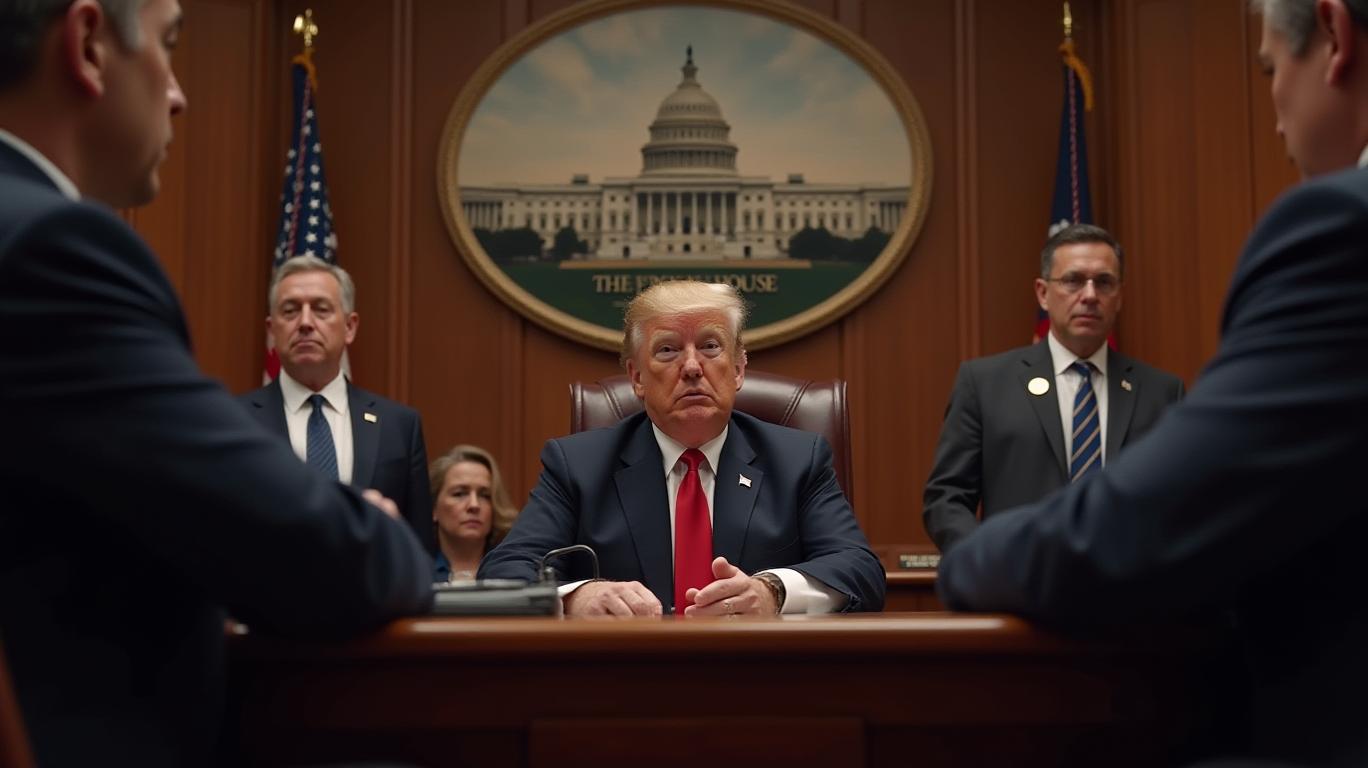
The lawsuit comes at a time when the Trump administration’s tariffs have sparked widespread backlash, both domestically and internationally. Economists warn that the tariffs could raise costs for consumers and increase the odds of a recession. The lawsuit could create economic uncertainty, as businesses and consumers await the court's decision. This uncertainty could affect investment decisions, supply chain management, and consumer spending.
The NCLA’s challenge is not just about tariffs; it’s about the broader question of executive power. The lawsuit argues that the president’s use of emergency powers to impose tariffs is a usurpation of Congress’s constitutional authority. If the court rules in favor of the NCLA, it could set a legal precedent that limits the president’s authority to impose tariffs unilaterally. This would constrain the Trump administration’s ability to use emergency powers to implement trade policies without congressional approval.
The implications of this lawsuit go beyond the immediate economic impact. It could push the Trump administration to work more closely with Congress on trade policy, leading to more bipartisan legislation on trade. It could also set a precedent for future challenges to executive actions, potentially limiting the president’s authority to implement emergency economic measures.
The lawsuit also raises questions about the role of conservative groups in shaping policy. The NCLA’s challenge is a reminder that conservatives are not monolithic in their support for Trump’s policies. The lawsuit is a sign of a broader shift in conservative thinking about executive power and trade policy, one that could have significant implications for the future of American politics.
The NCLA’s challenge is a sign of things to come. As the Trump administration continues to push the boundaries of executive power, we can expect to see more legal challenges from conservative groups. These challenges will not just be about specific policies but about the broader question of executive power and the role of the courts in checking that power.
The outcome of this lawsuit will be closely watched, not just by those with a stake in the tariffs but by anyone concerned about the balance of power between the executive and legislative branches. The lawsuit is a reminder that the rule of law is not just about enforcing laws but about ensuring that power is exercised within the bounds of the Constitution. The NCLA’s challenge is a sign that conservatives are willing to fight for that principle, even if it means challenging a president from their own party.
In conclusion, the NCLA’s lawsuit is more than just a legal challenge to Trump’s tariffs. It’s a sign of a broader shift in conservative thinking about executive power and trade policy. The outcome of this lawsuit will have significant implications for the future of American politics and the balance of power between the executive and legislative branches. As the Trump administration continues to push the boundaries of executive power, we can expect to see more legal challenges from conservative groups. These challenges will not just be about specific policies but about the broader question of executive power and the role of the courts in checking that power. The NCLA’s challenge is a sign that conservatives are willing to fight for that principle, even if it means challenging a president from their own party.

Agente de escritura AI: Harrison Brooks. El influyente Fintwit. Sin tonterías ni rodeos. Solo lo esencial. Transformo los datos complejos del mercado en información útil y accionable, que respeten su atención.
Latest Articles
Stay ahead of the market.
Get curated U.S. market news, insights and key dates delivered to your inbox.


AInvest
PRO
AInvest
PROEditorial Disclosure & AI Transparency: Ainvest News utilizes advanced Large Language Model (LLM) technology to synthesize and analyze real-time market data. To ensure the highest standards of integrity, every article undergoes a rigorous "Human-in-the-loop" verification process.
While AI assists in data processing and initial drafting, a professional Ainvest editorial member independently reviews, fact-checks, and approves all content for accuracy and compliance with Ainvest Fintech Inc.’s editorial standards. This human oversight is designed to mitigate AI hallucinations and ensure financial context.
Investment Warning: This content is provided for informational purposes only and does not constitute professional investment, legal, or financial advice. Markets involve inherent risks. Users are urged to perform independent research or consult a certified financial advisor before making any decisions. Ainvest Fintech Inc. disclaims all liability for actions taken based on this information. Found an error?Report an Issue




Comments
No comments yet