
Conservative Investor's Risk-Adjusted Framework for Africa Colocation Expansion 2025-2028


 Aime Summary
Africa's colocation market is on a robust growth path, projected to nearly double from $1.94 billion in 2025 to $3.85 billion by 2030, reflecting a 14.69% compound annual growth rate (CAGR) according to Mordor Intelligence. This surge is fueled by 5G expansion, cloud-first digital transformation strategies, and enhanced international bandwidth from subsea cable landings across the continent. Government policies, such as Nigeria's Data Protection Act mandating local data hosting, further bolster demand for Tier 3 and Tier 4 facilities. Major operators are investing heavily, with $3.5 billion in new investments expected by 2027, led by hubs like South Africa, Nigeria, and Kenya.
However, rapid expansion brings significant supply-demand risks. The market is adding 171 new facilities (117 existing plus 55 upcoming across 14 countries), concentrated in high-growth corridors like South Africa (holding 60% of the market share) and the Nigeria-Kenya axis, which benefits from subsea cable projects boosting bandwidth. This aggressive pipeline creates tension: while South Africa leads in market share, mid-tier markets face a 40% cancellation rate for new projects due to oversupply concerns. Grid instability in countries like Nigeria and Ghana, forcing reliance on diesel generators, and skilled labor shortages further complicate operations. The sustainability of growth hinges on balancing this capacity influx with concrete demand from enterprises and governments leveraging renewable energy and hybrid cloud solutions.
Regulatory Compliance & Operational Sustainability
The projected double-digit growth in Africa's data center market faces significant headwinds from regulatory requirements and infrastructure demands that squeeze operational margins. In Nigeria, strict data residency rules under the Data Protection Act force operators to build local capacity, but grid instability often compels heavy reliance on diesel generators, increasing operational expenses by 25%. This friction compounds existing high import tariffs on critical cooling equipment, further compressing already thin investment returns. While regulatory frameworks increasingly prioritize in-country infrastructure – boosting demand for high-tier facilities – the fragmented nature of these policies across border markets creates additional compliance burdens. Evidence shows operators face 12-18 month delays in 60% of border markets due to inconsistent permitting processes, directly delaying revenue generation and increasing capital expenditure cycles. The sector's push toward renewable energy solutions and tier-standard upgrades, while strategically necessary for long-term positioning, requires substantial upfront investment that strains cash flow during the expansion phase.
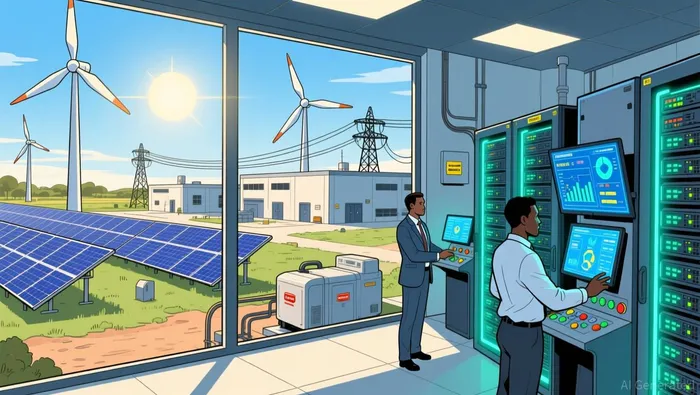
Regulatory Compliance & Operational Sustainability
Despite the promising growth trajectory for Africa's data center industry, persistent infrastructure challenges and regulatory barriers are eroding investment margins. Grid instability in key markets like Nigeria and Ghana forces operators to rely heavily on diesel generators, substantially increasing energy costs and operational expenses. Government data-sovereignty laws, particularly Nigeria's Data Protection Act, mandate local hosting that boosts facility construction needs but also triggers costly compliance measures. These regulatory requirements, combined with high import tariffs on essential cooling systems (15-30% according to market reports), create a triple pressure on margins: higher construction costs, elevated operational expenses, and extended project timelines. While the continent's digital transformation surge continues driving demand, investors must recognize that conservative financial projections face real erosion from these infrastructure and compliance demands. The renewable energy push offers partial mitigation but requires significant capital expenditure before revenue returns materialize, further straining cash flow dynamics for operators in this rapidly expanding yet fundamentally constrained market.
Financial Health & Cash Flow Sustainability
Africa's data center boom creates significant cash flow potential, but capital intensity demands careful management. Carrier-neutral hubs in mature markets like South Africa can achieve 20%+ IRR, outpacing local operators typically seeing 8-10%, thanks to premium pricing and higher occupancy. However, this premium requires substantial upfront commitment. Renewable Power Purchase Agreements (PPAs) can reduce long-term Capex by around 30% compared to traditional grid power, but securing these deals often requires 7-figure upfront payments for feasibility studies and contractual setup, straining project liquidity. Major investors, of which there are 54 active according to the latest regional report, are increasingly selective. They tend to exclude projects with break-even timelines exceeding five years, favoring developments with clearer near-term revenue streams to mitigate prolonged cash burn periods.
The market's scale underscores the challenge. With 125 existing facilities and 46 more planned by 2028, the pressure to invest is immense. While Visa's $57 million investment and R8 billion in loans for hyperscale projects signal strong capital availability, these are targeted. Operators lacking immediate revenue generation capacity or bankable PPA agreements face significant hurdles securing comparable funding. The focus on shorter payback periods among investors acts as a filter, pushing developers to prioritize projects with faster breakeven, potentially at the expense of broader market coverage or long-term strategic capacity building. This liquidity strain, combined with the upfront costs of green infrastructure, remains a critical friction point for sustainable growth.
Risk-Adjusted Entry Points & Conservative Deployment
The Africa data center market shows robust growth potential, yet infrastructure challenges demand selective capital deployment. South Africa stands out as the most mature market, with advanced facilities and regulatory frameworks prioritizing in-country infrastructure. This stability attracts institutional capital for carrier-neutral campuses, particularly where data-sovereignty laws mandate local hosting. However, grid instability forces heavy diesel reliance across Africa, including in Nigeria and Ghana, creating operational friction that could erode margins. While South Africa leads in capacity, import tariffs and skilled labor shortages remain persistent headwinds.
Morocco emerges as a power-capacity leader for data centers, dominating upcoming capacity with over 50% share in the region. This positions it as a key hub for edge computing growth, supported by renewable energy adoption and regulatory reforms according to market analysis. Yet grid instability persists in neighboring Ghana, necessitating diesel hedges to manage energy reliability risks. Investors must weigh the upside of rapid edge computing expansion against volatile operating costs and environmental trade-offs.
Mid-tier markets like Nigeria and Kenya offer growth via subsea cable investments but face higher friction. These countries are emerging hubs for colocation capacity, though pipeline delays and cancellations are common. Grid instability remains acute, forcing diesel dependence and increasing energy costs. While yields may appeal, staged investments are prudent to navigate regulatory shifts and infrastructure gaps. The overall market is projected to grow at 14.69% CAGR through 2030, but uneven infrastructure development underscores the need for cautious, segmented approaches.

El Agente de Redacción AI: Julian West. El estratega macroeconómico. Sin prejuicios. Sin pánico. Solo la Gran Narrativa. Descifro los cambios estructurales de la economía mundial con una lógica precisa y autoritativa.
Latest Articles
Stay ahead of the market.
Get curated U.S. market news, insights and key dates delivered to your inbox.


AInvest
PRO
AInvest
PRO



Comments
No comments yet