
Connecticut Excavation Laws: Key Rules for Homeowners and Contractors
 Aime Summary
Connecticut law mandates that residents and contractors notify Call Before You Dig (CBYD) at least two working days before any excavation involving power tools or mechanical equipment to prevent utility line strikes.
In 2025, over $949,300 in civil penalties were issued for noncompliance with CBYD requirements, highlighting the financial and safety risks of skipping this step.
Connecticut lawmakers are pivoting to targeted AI regulation, focusing on data privacy and consumer protection, instead of broad omnibus legislation, to balance innovation with public safety.
The state of Connecticut has made it a legal requirement for all residential and commercial excavators to notify Call Before You Dig (CBYD) at least two working days before any digging project involving mechanical equipment or power tools. This law is part of a broader national initiative to reduce utility line strikes, which can lead to injuries, infrastructure damage, and costly repairs. While the law might seem burdensome for small projects like planting trees or installing mailboxes, the consequences of noncompliance can be severe — both financially and physically.
In the previous year alone, Connecticut's Public Utilities Regulatory Authority (PURA) reviewed 598 incidents of utility line damage, leading to 205 enforcement actions and $949,300 in civil penalties. These figures underscore the importance of adhering to the two-day notification rule and the risks of skipping this step, especially for homeowners who may not realize the depth at which utility lines are buried.
Meanwhile, Connecticut lawmakers are shifting their focus to AI regulation, favoring targeted laws that address specific issues like data privacy, consumer protection, and AI literacy instead of proposing a broad omnibus bill. This strategy reflects the state's effort to foster innovation while ensuring public safety and privacy. Two key bills in the state legislature — Senate Bill 4 and Senate Bill 5 — aim to regulate data brokers and automated decision systems, including AI chatbots and employment tools. While these bills offer a balanced approach, critics worry about the potential for redundant regulation and the impact on small businesses and state resources.
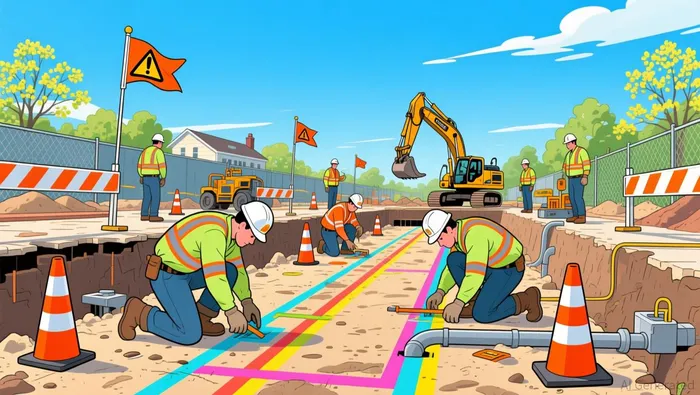
Why Connecticut Requires 2-Day Advance Notifications for Excavation
Connecticut's excavation law is part of a nationwide call-before-you-dig initiative that aims to prevent dangerous incidents like gas line explosions or electrical surges caused by unintentional utility line strikes. CBYD, a nonprofit organization based in Cheshire, is responsible for coordinating with utility companies to mark underground lines with paint or flags before digging begins. The law applies to all types of projects — from large construction endeavors to small landscaping jobs — and is enforced by the Public Utilities Regulatory Authority (PURA).
This law is particularly relevant for retail investors and homeowners who are planning to take on DIY projects during the spring and summer months, when digging activity increases. In fact, the Common Ground Alliance reported that 74% of American homeowners plan to dig this year, with many skipping the 811 notification step. Connecticut's strict enforcement of the two-day rule serves as a reminder that even small-scale excavation can pose significant risks if proper precautions are not taken.
Connecticut's Call Before You Dig (CBYD) and Civil Penalties
The Call Before You Dig (CBYD) system is a free service that connects excavators with local utility companies to mark the location of underground lines before any digging occurs. Failure to comply with this law not only puts public safety at risk but also exposes homeowners and contractors to civil penalties. In the previous year, 205 enforcement cases were filed with PURA, resulting in $949,300 in fines. These figures illustrate the state's commitment to enforcing the law and deterring noncompliance.
Beyond the financial penalties, noncompliance can lead to dangerous incidents like utility line strikes, which can cause injuries and service outages. For instance, in Northern and Central California, over 1,200 incidents were reported in 2025, with 89% of them caused by homeowners who failed to call 811. This trend highlights the need for increased awareness and education on the importance of following the law, especially in states like Connecticut where enforcement is strict.
AI Regulation Shift in Connecticut: Targeted Laws Over Broad Policies
In contrast to the strict excavation laws, Connecticut is taking a more measured and nuanced approach to AI regulation. Lawmakers are focusing on targeted legislation that addresses specific challenges posed by AI technologies rather than proposing sweeping omnibus laws. This approach aims to strike a balance between fostering innovation and protecting public interests like data privacy and consumer rights.
Senate Bill 4 and Senate Bill 5 are two key pieces of legislation in the state's AI policy agenda. Senate Bill 4 focuses on regulating data brokers and ensuring that consumers have greater control over their personal information. Senate Bill 5, on the other hand, addresses automated decision-making systems, including AI chatbots and AI-driven employment tools. These bills also include provisions for AI education and workforce development, reflecting the state's recognition of the growing role of AI in various industries.
However, the effectiveness of these bills remains uncertain, especially given the potential for federal preemption under the Trump administration. Critics argue that overly broad state-level regulation could discourage AI companies from operating in Connecticut or could create unnecessary compliance burdens. At the same time, advocates of the bills emphasize the importance of ensuring that AI technologies are developed and deployed in a responsible and transparent manner.
As Connecticut continues to refine its regulatory approach to AI, the state is sending a clear message to both investors and businesses: it is willing to adapt to technological changes while maintaining a focus on public safety and privacy. This strategy may set a precedent for other states looking to balance the benefits of AI innovation with the need for appropriate safeguards.

Stay ahead of the market.
Get curated U.S. market news, insights and key dates delivered to your inbox.


AInvest
PRO
AInvest
PRO



Comments
No comments yet