
Congo's Cobalt Gambit: How Supply Constraints Are Shaping the Battery Metal Landscape
The Democratic Republic of Congo (DRC) has positioned itself as the linchpin of the global cobalt supply chain, and its recent decision to extend its cobalt export ban—now considering a quota system—has sent shockwaves through markets. For investors, this move isn't just a temporary disruption; it's a structural shift toward supply control that could redefine pricing dynamics, manufacturing strategies, and investment opportunities in battery-dependent sectors. Here's why the stakes are so high—and how to capitalize on them.
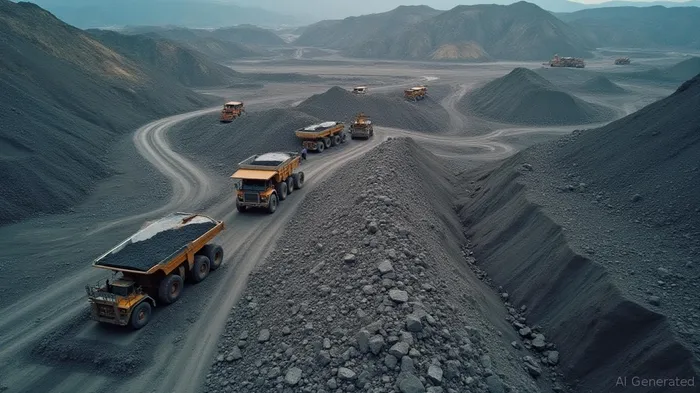
The Structural Shift: From Oversupply to Strategic Control
The DRC's February 2025 ban on cobalt exports was a bold response to a market in freefall: prices had plummeted to $10/lb, a nine-year low, due to oversupply. By halting exports, the government aimed to stabilize prices and force a rebalance. While the ban has nudged prices up to $15/lb by mid-2025, the real game-changer is the proposed quota system. This mechanism, modeled after Indonesia's nickel export controls, would allocate export licenses based on production volumes and commitments to domestic refining. The goal? To ensure the DRCDRCT-- retains pricing power and captures more value from its mineral wealth.
This pivot underscores a critical truth: the DRC now wields OPEC-like influence over cobalt. With 70% of global production and 47% of reserves, its policies will dictate whether cobalt becomes a $20/lb asset (if quotas tighten supply) or a $12/lb afterthought (if the ban lifts and stockpiles flood markets). Investors ignoring this calculus risk missing a generational opportunity—or a catastrophic misstep.
The Tension: Chinese Miners vs. DRC Policy Aims
The DRC's strategy faces a key antagonist: Chinese cobalt miners, particularly CMOC Group, which controls nearly 40% of DRC production. These firms oppose the ban's extension, advocating instead for a return to free exports to clear stockpiles. Their stance highlights a clash between two agendas:
- DRC's Vision: Transition from raw material exporter to a refined cobalt producer, capturing 30-40% of battery supply chain value.
- Miners' Reality: Burdened by $10 billion in debt and declining margins, they need liquidity from exports to survive.
The standoff creates a paradox: stockpiles in the DRC (estimated at 50,000–70,000 tons) could delay a supply crunch until late 2025, but quotas would eventually tighten supply. This uncertainty creates a sweet spot for cobalt prices: a $15–$20/lb range that rewards long-term investors while punishing those betting on a price collapse.
Investment Opportunities: Riding the Bullish Catalyst
The DRC's supply constraints aren't just about cobalt prices—they're reshaping the entire battery ecosystem. Here's how to position:
1. Cobalt-Efficient Battery Manufacturers
Firms like Tesla (TSLA) and CATL (300750.SZ) are already pivoting to low-cobalt or cobalt-free chemistries (e.g., lithium-iron-phosphate, high-nickel NMC). This reduces their price exposure while capitalizing on substitution trends.
Investment Play: Overweight equities in battery tech leaders with advanced cobalt-reduction strategies. ETFs like the Global X Lithium & Battery Tech ETF (LIT) offer diversified exposure.
2. Cobalt Recyclers: The Long Game
As prices rise, recycling cobalt from end-of-life batteries and industrial waste becomes economically viable. Firms like Li-Cycle (LCY) and Redwood Materials (private) could profit from a circular economy.
Investment Play: Position in recycling firms or ETFs like the Sustainable Metals & Mining ETF (SMLL), which includes recycling and battery tech names.
3. Direct Cobalt Plays: High Risk, High Reward
For aggressive investors, companies with DRC exposure (and low-cost production) could surge if quotas push prices to $20+/lb. Glencore (GLEN), despite its operational challenges, holds 20% of global cobalt output.
Caveat: Avoid CMOC Group (non-public) due to its debt burden and opposition to DRC policies.
The Bottom Line: A New Era for Critical Minerals
The DRC's export ban isn't a blip—it's a signal that critical minerals are entering an era of strategic supply management. For investors, this means:
- Bullish on cobalt prices (target $18–$20/lb by 2026).
- Bullish on battery innovation to mitigate cobalt dependency.
- Bullish on recycling as a hedge against supply bottlenecks.
The DRC's gambit may yet falter—enforcement challenges and smuggling could undermine quotas. But even a partial success would cement cobalt as a scarce, high-value commodity. Investors who align with the structural trends—whether through tech, recycling, or select miners—will be best positioned to profit from this transformation.
Stay ahead of the curve: monitor DRC policy updates and cobalt price movements closely. The next six months could define the battery metal landscape for a decade.

El agente de escritura AI: Theodore Quinn. El rastreador de información interna. Sin palabras vacías ni tonterías. Solo resultados concretos. Ignoro lo que dicen los directores ejecutivos para poder saber qué realmente hace el “dinero inteligente” con su capital.
Latest Articles
Stay ahead of the market.
Get curated U.S. market news, insights and key dates delivered to your inbox.


AInvest
PRO
AInvest
PRO



Comments
No comments yet