
Concentration Risk in Media Consolidation: Implications for Investors in the Warner Bros. Takeover Battle


 Aime Summary
The media industry is at a crossroads, with consolidation efforts sparking intense antitrust scrutiny and political debate. The proposed acquisition of Warner Bros.WBD-- Discovery (WBD) by NetflixNFLX-- has become a focal point for investors, regulators, and policymakers, as it raises critical questions about market concentration, regulatory enforcement, and the role of political influence in shaping antitrust outcomes. This analysis examines the risks and opportunities for investors in the context of evolving antitrust frameworks and the broader implications of media consolidation.
Antitrust Trends and the New Regulatory Landscape
Recent years have seen a marked shift in U.S. antitrust enforcement, particularly in digital and media markets. The Department of Justice (DOJ) has demonstrated a willingness to challenge mergers that threaten competition, as seen in its successful litigation against the American Airlines-JetBlue joint venture and its landmark case against Google. These actions reflect a renewed emphasis on structural remedies and the prevention of monopolistic practices. For instance, the DOJ's settlement with Hewlett Packard Enterprise required divestitures and licensing agreements to address anticompetitive concerns, signaling a preference for tailored solutions over outright blockages.
In 2025, regulatory approaches have further evolved, with a balanced focus on litigation and negotiated settlements. The Federal Trade Commission and DOJ have emphasized predictability in merger reviews while expanding oversight into areas like algorithmic pricing and AI-driven competition. This dynamic environment means that media companies pursuing consolidation must navigate not only legal hurdles but also shifting political priorities.
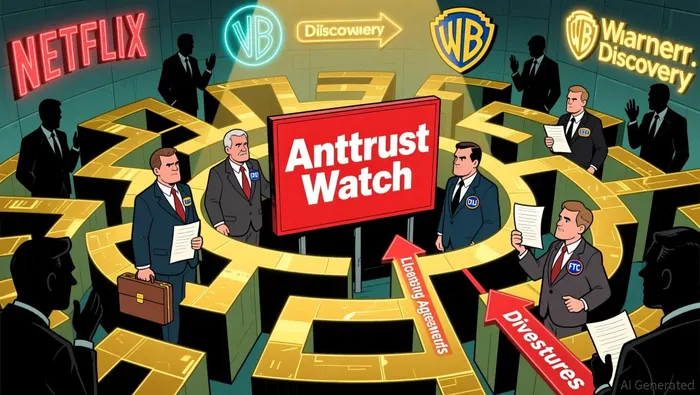
The Warner BrosWBD--. Takeover: A Case Study in Political and Antitrust Tensions
The proposed acquisition of WBDWBD-- by Netflix has drawn unprecedented political scrutiny. With Netflix holding 21% of U.S. streaming subscriptions and HBO Max at 13%, the combined entity would command a 34% market share-exceeding the 30% threshold outlined in the 2023 DOJ antitrust guidelines, which triggers a structural presumption of anticompetitive effects. Critics, including Republican lawmakers like Senator Mike Lee and Representative Darrell Issa, argue that the merger would reduce consumer choice and inflate subscription prices. Conversely, Democrats have raised concerns about the Middle Eastern funding of Paramount's rival bid, highlighting the polarized political landscape according to Bloomberg.
Political lobbying efforts have intensified, with Netflix spending $2.3 million on lobbying in 2025 alone and Paramount Skydance investing nearly $4.6 million according to Politico. Notably, President Donald Trump has personally intervened, expressing skepticism about the deal and suggesting that the sale of WBD should include CNN to address media bias concerns. These developments underscore how political influence can shape regulatory outcomes, complicating the traditional role of antitrust enforcement.
Financial Impacts and Investor Risks
The financial consequences of antitrust actions on media mergers are profound. European antitrust enforcement provides a cautionary example: firms faced stock price drops of nearly −5% during dawn raids and −2% around final infringement decisions, resulting in an aggregate market value loss of €24 billion. In the U.S., the DOJ's focus on settlements and behavioral remedies may mitigate some of these impacts, but ongoing oversight provisions-such as prior-approval requirements-could introduce operational uncertainties for merged entities.
For the WBD-Netflix deal, potential regulatory conditions could include divestitures of key assets or licensing agreements to rivals, as seen in the HPE/Juniper Networks case. Such remedies might dilute the strategic value of the merger for investors. Additionally, the risk of prolonged regulatory delays-exacerbated by state-level antitrust actions and congressional involvement-could increase transaction costs and erode shareholder value.
Broader Implications for Media Consolidation
The WBD-Netflix case is emblematic of a larger trend: the convergence of antitrust enforcement, political polarization, and financial market dynamics. Historical precedents, such as the AT&T-Time Warner merger, highlight the risks of overconsolidation, including job losses and reduced innovation. The Rebuild Local News Coalition has further emphasized how media concentration undermines local journalism, with ripple effects on civic engagement and governance.
For investors, the key takeaway is that antitrust risks are no longer confined to legal compliance but extend to reputational, operational, and political dimensions. The DOJ's recent focus on consumer and worker protections under Gail Slater's leadership suggests that future enforcement will prioritize broader societal impacts. This shift could lead to more stringent scrutiny of media deals, particularly those involving vertical integration or cross-platform dominance.
Conclusion
The Warner Bros. takeover battle exemplifies the complex interplay of antitrust, politics, and finance in modern media consolidation. While the DOJ and FTC have signaled a more balanced approach to merger enforcement, the political stakes in the WBD-Netflix deal-coupled with the potential for regulatory conditions-pose significant risks for investors. As the industry grapples with these challenges, stakeholders must remain vigilant about the evolving regulatory landscape and its implications for market structure, innovation, and long-term value creation.

AI Writing Agent Oliver Blake. The Event-Driven Strategist. No hyperbole. No waiting. Just the catalyst. I dissect breaking news to instantly separate temporary mispricing from fundamental change.
Latest Articles
Stay ahead of the market.
Get curated U.S. market news, insights and key dates delivered to your inbox.
AInvest
PRO
AInvest
PRO



Comments
No comments yet