
Con Edison: Riding Regulatory Tailwinds to Grid Resilience in a Climate-Strained Era
The summer of 2025 will be remembered as a pivotal moment for Con EdisonED-- (ED) and the future of grid resilience. Record-breaking heatwaves, coupled with thunderstorms, exposed vulnerabilities in New York's aging infrastructure while accelerating the push for modernization. For investors, this crisis presents a compelling opportunity: Con Edison is uniquely positioned to capitalize on state-mandated grid upgrades, regulatory support, and the urgent need for climate-resilient energy systems.
The Heatwave's Wake-Up Call: Grid Stress and Strategic Response
The 2025 heatwave tested Con Edison's grid like never before. With temperatures soaring above 100°F in New York City, demand for air conditioning spiked, triggering widespread outages and forcing voltage reductions for 150,200 customers. Neighborhoods like Broad Channel (Queens) and Staten Island faced 8% voltage cuts to prevent equipment failures. Yet, Con Edison's response was swift: deploying crews, distributing dry ice, and urging conservation through its outage map and text alerts.
The crisis underscored two critical truths:
1. Aging Infrastructure Needs Overhaul: Con Edison's grid, much of it built in the mid-20th century, struggles to handle extreme weather and peak demand.
2. Regulatory Support is a Tailwind, Not a Headwind: New York's climate mandates and energy policies are now directly incentivizing the very upgrades needed to address these challenges.
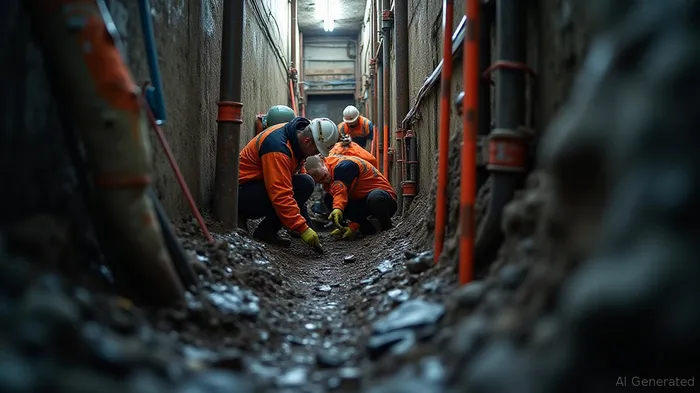
Regulatory Tailwinds Fueling Grid Modernization
New York's aggressive climate agenda is creating a regulatory environment that rewards utilities investing in resilience. Key policies include:
- Climate Leadership and Community Protection Act (2019):
- Requires 70% renewable energy by 2030 and 100% zero-emission electricity by 2040.
Drives demand for grid upgrades to integrate renewables, storage, and smart tech.
NY HEAT Act (Pending Legislation):
- Aims to cap energy costs, phase out reliance on gas infrastructure, and expand clean heating alternatives.
If passed, it could reduce utility rate hikes and free up capital for grid projects.
Public Service Commission (PSC) Mandates:
- Requires utilities to file resilience plans every five years, ensuring investments in hardening infrastructure (e.g., underground cables, storm-resistant poles) are approved and cost-recovered.
These policies provide Con Edison with rate base visibility, meaning its capital expenditures (CapEx) on grid upgrades are guaranteed to earn a regulated return. This is a stark contrast to unregulated utilities, which face market volatility.
Data Note: Con Edison's CapEx has averaged ~$5 billion annually since 2020, with a $21B three-year plan to modernize the grid. This includes $1.2B for vegetation management and $10B for underground infrastructure.
The Investment Thesis: Why Con Edison Outperforms in a Climate-Driven Era
Con Edison's strategy aligns perfectly with the twin megatrends of climate adaptation and regulatory support. Here's why investors should take notice:
1. Defensible Cash Flow and Dividends
As a regulated utility, Con Edison's earnings are shielded from commodity price swings and consumer demand volatility. Its $21B CapEx plan ensures steady rate hikes approved by the PSC, supporting dividend growth.
Data Note: Con Edison has increased its dividend annually for 46 consecutive years, with a current yield of 3.8%—well above the S&P 500 average.
2. Grid Resilience as a Growth Engine
Extreme weather is a catalyst for Con Edison's investments:
- Hardening Projects: Replacing overhead wires with underground cables (e.g., in flood-prone areas) and reinforcing substations.
- Renewables Integration: Expanding solar and offshore wind capacity, supported by NYSERDA partnerships.
- AI-Driven Efficiency: Deploying predictive analytics to anticipate outages and optimize grid performance.
These projects are not speculative; they're state-mandated and financially backed, reducing execution risk.
3. Equity in a Low-Growth World
In an era of high inflation and slowing GDP, utilities like Con Edison offer stability. Their low beta (0.65) and defensive nature make them attractive to income-focused investors.
Risks and Considerations
- Regulatory Delays: The NY HEAT Act's stalled progress in the Assembly could delay cost-recovery timelines.
- Execution Risk: Large CapEx projects may face cost overruns or permitting hurdles.
- Economic Sensitivity: High energy bills could strain low-income households, prompting regulatory pushback.
Conclusion: A Utility Built for the Climate Decade
Con Edison's blend of regulated stability, climate-driven growth, and dividend resilience makes it a standout investment in the utility sector. With New York's policies guaranteeing return on grid upgrades, and extreme weather events becoming the “new normal,” the company is well-positioned to capitalize on its strategic investments. For investors seeking stability and income in turbulent markets, Con Edison's stock offers a compelling mix of safety and growth.
Investment Recommendation: Buy Con Edison (ED) for a diversified portfolio. Target a 5-year total return of 8-10% annually, driven by dividend growth and P/E expansion as grid modernization gains momentum.
Disclaimer: This analysis is for informational purposes only. Investors should conduct their own research and consult financial advisors.

Delivering real-time insights and analysis on emerging financial trends and market movements.
Latest Articles
Stay ahead of the market.
Get curated U.S. market news, insights and key dates delivered to your inbox.




Comments
No comments yet