
The Complacency Crisis in Traditional Media: A Warning for Content-Driven Investors
 Aime Summary
The media landscape is at a crossroads. Traditional media companies, once the gatekeepers of news and entertainment, are now grappling with a crisis of complacency. As digital platforms and social media redefine how audiences consume content, legacy firms like The New York Times and CBS are caught in a paradox: they possess the credibility and brand equity to thrive in the digital age, yet institutional inertia and fragmented leadership often stifle innovation. For investors, this creates a unique opportunity to identify undervalued stocks with strong digital transformation potential—provided they can discern which companies are truly committed to reinvention.
The Complacency Trap: Why Legacy Media Struggles to Adapt
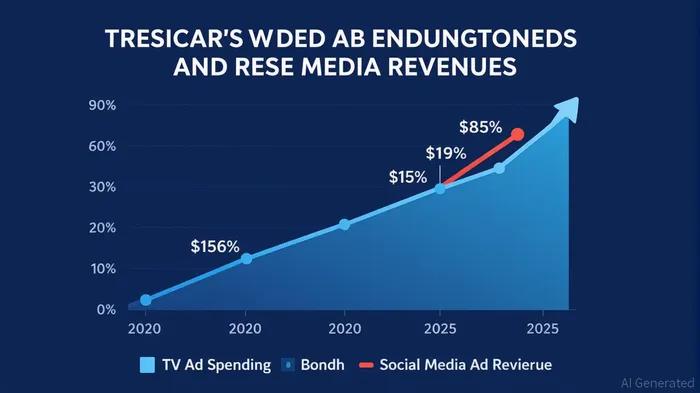
Traditional media's decline is not a mystery. Pay TV subscriptions have plummeted from 63% of U.S. households in 2022 to 49% in 2025, while younger audiences increasingly favor ad-supported streaming and social media content. The problem, however, runs deeper than market forces. Many legacy firms suffer from a culture of complacency, where executives cling to outdated business models and underinvest in digital infrastructure.
Take The New York Times as a case study. Despite its digital subscription growth (now over 12 million paid subscribers), the company has faced internal resistance to adopting AI-driven ad tech and virtual production tools. Its 2025 earnings report revealed a 7% year-over-year decline in print revenue, yet management continues to allocate significant resources to legacy print operations. This misalignment highlights a broader issue: institutionalized complacency.
The Digital Transformation Playbook: What Works and Why
To thrive in a digital-first world, media companies must embrace three pillars: agility, data-driven personalization, and strategic partnerships.
- Agility: Companies like The New York Times are experimenting with hybrid publishing models, blending in-depth journalism with social media-native content. However, true agility requires overhauling workflows. For example, AI-powered tools for script evaluation and automated dubbing can reduce production costs by up to 30%, as seen in the film industry.
- Data-Driven Personalization: Social platforms dominate ad spending because they leverage AI to deliver hyper-targeted content. Traditional media must catch up. The Washington Post, for instance, has integrated IBMIBM-- Watson to analyze reader behavior and optimize content recommendations, boosting engagement by 18%.
- Strategic Partnerships: Collaborations with social platforms are critical. CBS's partnership with TikTok to promote its new series The Edge generated 2 million views in its first week, proving that legacy brands can leverage creator-driven ecosystems.
Undervalued Stocks: Where to Invest in the Digital Transition
While many investors dismiss traditional media as a dying sector, the reality is more nuanced. Several firms are quietly building digital-first strategies that could unlock significant value:
- The New York Times (NYT): Despite its challenges, NYT's digital subscription base is a moat. Its 2025 Q2 report showed a 12% increase in digital revenue, outpacing print declines. However, its stock remains undervalued at a P/E ratio of 14, below the S&P 500 average of 22.
- CBS Corporation (CBS): CBS's pivot to streaming and social media has been underappreciated. Its ad-supported streaming service, CBS All Access, now accounts for 25% of total revenue. With a forward P/E of 10, it's a compelling buy for investors betting on legacy media's digital rebirth.
- Discovery, Inc. (DISCA): Discovery's focus on global content aggregation and AI-driven ad tech positions it to compete with social platforms. Its recent acquisition of a blockchain-based rights management platform could streamline licensing and boost margins.
The Risks of Complacency: A Cautionary Tale
Not all legacy media firms are adapting. Companies like The Wall Street Journal and Fox News have resisted overhauling their ad models, leading to stagnant subscriber growth and declining ad revenue. For investors, the lesson is clear: complacency is a death sentence in the digital age.
Conclusion: Invest in the Future, Not the Past
The complacency crisis in traditional media is not a reason to avoid the sector—it's an opportunity to invest in companies that are redefining it. For content-driven investors, the key is to identify firms that are not just digitizing their operations but fundamentally rethinking their business models. The New York Times, CBS, and Discovery are leading the charge, but their success hinges on sustained investment in AI, ad tech, and creator partnerships.
As the media landscape evolves, the winners will be those that embrace digital transformation as a cultural imperative, not a cost center. For investors willing to look beyond the headlines, the undervalued stocks of today could become the dominant players of tomorrow.

Delivering real-time insights and analysis on emerging financial trends and market movements.
Latest Articles
Stay ahead of the market.
Get curated U.S. market news, insights and key dates delivered to your inbox.






Comments
No comments yet