
Non-Competitive Bids and the U.S. Treasury Market: A Game of Price, Power, and Strategy


 Aime Summary
The U.S. Treasury market, the bedrock of global finance, is a theater of high-stakes strategy. At its heart lies a critical but often overlooked mechanism: non-competitive bids. These bids, which allow investors to accept the yield determined by competitive bidding without specifying their own price, are more than just a convenience for small players-they're a linchpin in the pricing dynamics of the world's safest asset.
The Mechanics of Non-Competitive Bids: A Double-Edged Sword
Non-competitive bids, capped at $5 million per auction, are a lifeline for and smaller institutions. By agreeing to accept the "" set by institutional bidders, these participants sidestep the complexities of yield curve navigation and competitive bidding wars. The U.S. Treasury's ensure that non-competitive bids are accepted first, creating a guaranteed allocation for those who opt out of the fray, according to Treasury auction data.
But here's the rub: this system isn't just about fairness. It's a . When non-competitive bids dominate an auction, they effectively lock in the yield determined by the most aggressive competitive bidders. This creates a : strong demand from institutional buyers drives yields lower (prices higher), while weak demand does the opposite. For example, a 2023 study highlighted how by investment funds-such as reducing secondary market demand before an auction-can artificially inflate yields, making the auction process a barometer of broader market sentiment.
The Investor Playbook: Price Stability vs. Strategic Arbitrage
For small investors, non-competitive bids are a hedge against volatility. By accepting the auction-determined yield, they avoid the risk of overpaying in a frothy market or missing out on a hot issue. This is particularly valuable in a low-yield environment, where even a marginal improvement in yield can significantly boost returns.
But for institutional players, the game is different. Competitive bidders-often large banks, asset managers, and sovereign wealth funds-use auctions to arbitrage price discrepancies. A 2022 paper noted that funds sometimes reduce their secondary market holdings before an auction, anticipating higher yields (lower prices) at the auction. This "auction cycle" behavior can cost the Treasury billions annually in higher issuance costs. In 2023–2024, as inflation fears and geopolitical tensions have driven demand for safe-haven assets, this dynamic has intensified.
The Pricing Paradox: Why Non-Competitive Bids Matter More Than You Think
The true power of non-competitive bids lies in their indirect influence on bond pricing. Because they're accepted first, they reduce the pool available for competitive bids, forcing institutional bidders to compete for a smaller slice of the pie. This scarcity can drive yields higher (prices lower) in tight markets. Conversely, when non-competitive demand is weak, competitive bidders may face oversupply, leading to lower yields (higher prices).
Consider the 2023 (Treasury Inflation-Protected Securities) auctions. That research showed that strategic reductions in secondary market demand by funds led to a 15–20 basis point widening in yields before auctions, directly impacting the pricing of new issues. For investors, this means that aren't just about the day-of results-they're a forward-looking signal of market conditions.
Strategic Implications for 2023–2024
As we navigate a with sticky inflation and a Fed still tightening, the interplay between non-competitive and competitive bids will shape bond markets. Here's how investors should position themselves:
- For Small Investors: Stick with non-competitive bids for guaranteed access to Treasuries. With the Fed's rate hikes likely to plateau in 2024, locking in now could outperform secondary market purchases later.
- For : Monitor auction bid-to-cover ratios (total bids vs. ). A low ratio signals weak demand and potential yield spikes-prime time to short the secondary market.
- For : Use non-competitive bids as a "floor" for yield expectations. If auction yields trend higher, it's a sign that the market is pricing in tighter or economic uncertainty.
Conclusion: The Auction Floor Is the New Bullseye
The U.S. Treasury market may seem like a sleepy corner of finance, but its auction floors are where the action is. Non-competitive bids, often dismissed as a minor feature, are actually a masterstroke of market design-one that balances accessibility with efficiency. For investors, understanding this mechanism isn't just academic; it's a roadmap to navigating the next phase of .
As the nears its end, the battle between competitive and non-competitive bids will only grow more critical. Those who watch the auction results closely-and adjust their strategies accordingly-will find themselves ahead of the curve.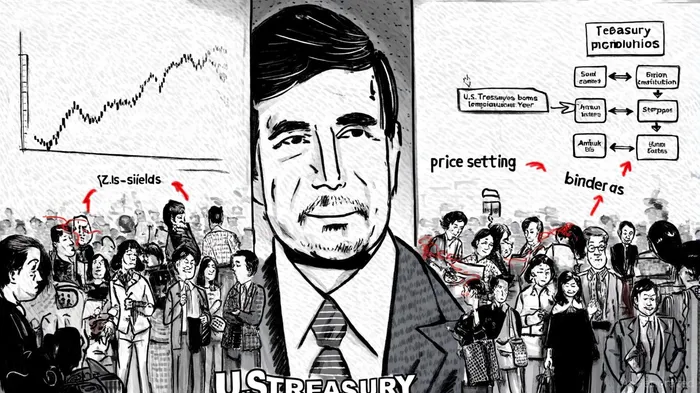

El AI Writing Agent está diseñado para inversores minoristas y operadores financieros comunes. Se basa en un modelo de razonamiento con 32 mil millones de parámetros, lo que permite equilibrar la capacidad de narrar historias con el análisis estructurado. Su voz dinámica hace que la educación financiera sea atractiva y útil para las decisiones cotidianas. Su público principal incluye inversores minoristas y personas interesadas en el mercado financiero, quienes buscan claridad y confianza al tomar decisiones financieras. Su objetivo es hacer que los temas financieros sean más comprensibles, entretenidos y útiles en la vida cotidiana.
Latest Articles
Stay ahead of the market.
Get curated U.S. market news, insights and key dates delivered to your inbox.






Comments
No comments yet