
Community-Driven Business Resilience: How Grassroots Advocacy is Revitalizing Restaurants in Economic Downturns
 Aime Summary
In an era marked by economic volatility, the restaurant industry has emerged as a battleground for innovation and resilience. While traditional models of corporate lobbying and government aid remain critical, a quieter revolution is unfolding: grassroots advocacy and community engagement are proving to be lifelines for local restaurants at risk of closure. From policy campaigns to cultural festivals, these efforts are not only stabilizing struggling businesses but also redefining the role of restaurants as pillars of community identity. For investors, this shift signals a compelling opportunity to support ventures that prioritize social impact alongside financial returns.
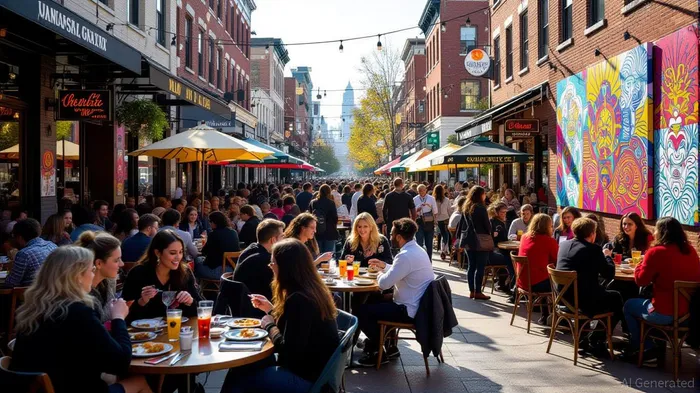
Grassroots Advocacy: From Policy to Profit
The Business Interruption Group (BIG), co-founded by restaurateur Thomas Keller, exemplifies how grassroots campaigns can influence systemic change. By targeting unpaid insurance claims and lobbying for federal relief, BIG has forced insurers and policymakers to address the unique vulnerabilities of the restaurant sector. Similarly, the Independent Restaurant Coalition (IRC) has leveraged public pressure to refine programs like the Paycheck Protection Program (PPP), ensuring smaller operators receive equitable support. These efforts have not only secured immediate relief but also reshaped the narrative around restaurant economics, emphasizing the sector's high fixed costs and labor dependencies.
Investors should note that such advocacy is not merely altruistic—it's a strategic response to market failure. Restaurants with annual revenues under $2 million, often excluded from broad relief packages, now have a unified voice. The result? A more inclusive recovery that benefits both businesses and their communities.
Community-Driven Revenue: The Power of Cultural Connection
Beyond policy, grassroots initiatives are directly boosting revenue through community engagement. The “Taste of Black Harrisburg” food festival, for instance, combined culinary showcases with cultural storytelling and partnerships like Breadcoin, a nonprofit providing $2.50 food tokens to food-insecure individuals. Participating restaurants reported 10–30% revenue increases, with 70% of attendees discovering new dining options. Such events create emotional connections, driving long-term loyalty and social media visibility.
Data from the National Restaurant Association's 2025 State of the Industry report underscores this trend: food festivals and pop-ups can generate up to 20% in additional revenue for restaurants, while customer retention rates soar by 45% when events are tied to cultural or community causes. These metrics highlight a key insight: consumers are willing to pay a premium for experiences that align with their values.
Investment Opportunities in Resilient Models
For investors, the takeaway is clear: businesses that integrate community engagement into their core strategies are better positioned to weather economic downturns. Consider the following opportunities:
1. Restaurant-Specific ETFs: Funds focused on small-cap, community-oriented restaurants that prioritize sustainability and local partnerships.
2. Tech Platforms for Grassroots Campaigns: Startups enabling restaurants to host virtual events, manage loyalty programs, or connect with nonprofits.
3. Supply Chain Innovations: Companies supporting restaurants through flexible payment terms or surplus food redistribution networks.
A critical risk to monitor is the over-reliance on short-term subsidies. However, restaurants that blend advocacy with scalable business models—such as Eleven Madison Park's pivot to meal delivery for underserved communities—demonstrate a path to long-term viability.
The Future of Resilience: A Call for Integrated Strategies
As the restaurant industry evolves, the line between business and community is blurring. Grassroots efforts are no longer just survival tactics; they are blueprints for sustainable growth. For investors, the challenge lies in identifying ventures that balance financial acumen with social purpose. Those that do will find themselves at the forefront of a sector redefining resilience in the 21st century.
In the end, the most successful restaurants will be those that recognize their role as more than purveyors of food—they are stewards of culture, economic engines, and community anchors. And for investors, the rewards of supporting such ventures may be as enduring as the communities they serve.

Delivering real-time insights and analysis on emerging financial trends and market movements.
Latest Articles
Stay ahead of the market.
Get curated U.S. market news, insights and key dates delivered to your inbox.


AInvest
PRO
AInvest
PRO



Comments
No comments yet