
COMEX Silver March 2026 Contracts Face Zero-Inventory Squeeze as Physical Demand Rises


 Aime Summary
The recent price plunge masked a deeper, more structural problem. The market is caught in a classic paper-versus-physical squeeze, where the amount of paper contracts outstanding vastly exceeds the physical metal available for delivery. The numbers reveal the vulnerability.
Registered COMEX inventory sits at a mere 86.13 million ounces. Against this, the open interest for the March 2026 contract stands at 429 million ounces. This creates a stark 4.6:1 ratio between the paper position and the physical supply. In simple terms, there is enough silver861125-- on the books to cover less than one-fifth of the contracts that could theoretically demand delivery.
This imbalance is the root cause of the delivery crunch. It means the exchange's system is mathematically fragile. Even if only a small percentage of the 429 million ounces in open interest decided to take or make physical delivery, the available inventory would be wiped out. The system is designed for offsetting trades, not for a wave of physical settlement. This structural disconnect between paper claims and physical reality is what creates the potential for a forced, chaotic resolution.
The Mechanics of the Recent Volatility
The violent price drop on March 3 was not a fundamental reassessment of silver's value. It was a textbook case of extreme leverage unwinding, triggered by the market's own fragility. The price fell from a high of $96.66 to $81.40 in just 12 hours, a staggering 15.8% intraday decline. This move was accompanied by a 2.35x surge in trading volume, a clear signal of forced liquidations rather than orderly trading.
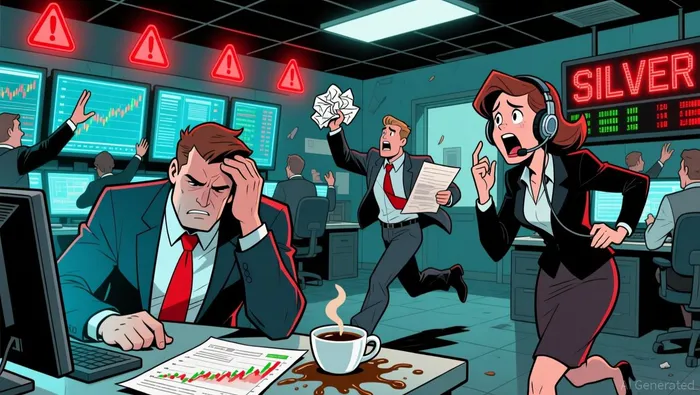
The mechanism was straightforward. A maintenance margin deficit, created by the price drop, forced leveraged positions to sell immediately to cover losses. With paper claims far outstripping physical supply, the system had no buffer. The divergence between the price collapse and record physical deliveries confirms this dynamic. While the price crashed, 5,087 contracts (25.4 million ounces) were delivered through March 2, with over 48% of the standing March contracts already delivered by First Notice Day. This simultaneous front-loading by industrial861072-- users and paper trader exit created a perfect storm for volatility.
The setup was ripe for a cascade. The high price spike earlier in the session, fueled by geopolitical news, had drawn in leveraged bets. When the price reversed, those positions were liquidated at the first sign of a margin call. The result was a sharp, violent unwind that exposed the underlying imbalance. This was not a change in the fundamental supply-demand story; it was a forced correction of a market that had become dangerously overextended.
The Underlying Fundamentals: A Market in Deficit
The paper chaos on the COMEX exchange cannot obscure the reality of the physical market. For the sixth consecutive year, the world silver market is projected to run a deficit, meaning total supply is expected to fall short of total demand. This persistent structural shortfall is the bedrock support for the argument that physical silver will eventually decouple from any frozen paper prices.
Industrial applications account for about 60% of total demand, making them the dominant force in the market. While overall industrial fabrication is forecast to decline slightly in 2026, it remains a powerful anchor for consumption. Key growth areas like data centers, artificial intelligence, and the automotive sector861023-- are expected to support silver use across a range of applications, partially offsetting declines in solar photovoltaics. This ongoing industrial need creates a constant, real-world pressure for physical metal that paper contracts cannot fulfill.
The bottom line is that the deficit projection confirms a market where physical metal is in constant demand. When the COMEX system faces a delivery crunch, as it clearly is, this fundamental imbalance suggests physical silver will not be left behind. Industrial users and holders of physical metal have a direct, non-negotiable need for the atoms. In a squeeze, they will have the upper hand. The paper market may be frozen by margin calls and forced liquidations, but the physical market will be driven by this underlying deficit and the tangible demand it represents.
Catalysts and Risks: What Could Break the Crutch
The immediate catalyst is the delivery cycle for the March contract itself. With registered inventory at just 98 million ounces against open interest of 429 million ounces, the system is mathematically fragile. The risk is a "zero inventory" scenario, where a wave of delivery notices-perhaps from industrial users securing supply861137-- or from paper traders trying to exit before a margin call-could wipe out the remaining physical stock. This would force the exchange to confront a delivery default, potentially triggering a forced settlement or a halt in trading.
Watch the COMEX inventory report for sudden, unexplained drops. A sharp decline in registered stocks not matched by a corresponding increase in eligible or non-registered inventory would be a clear signal that a delivery run is underway. Such a move would confirm the paper-versus-physical imbalance is being resolved through physical settlement, which could force prices higher as the market scrambles to find metal. The daily publication of this data is the most direct window into whether the crunch is accelerating.
The primary risk, however, is a COMEX-managed solution. The exchange could invoke a force majeure clause or waive delivery requirements, allowing the paper market to reset without physical delivery. This would effectively cancel the delivery obligation, leaving leveraged longs holding worthless contracts. In this "zero" outcome, the paper market would collapse, and the physical market would be left to find its own price, decoupled from the frozen futures. This is the binary trade the evidence describes: a "Hero or Zero" scenario where the outcome hinges on whether the exchange chooses to manage the crisis or let it play out.
For now, the setup is clear. The market is balanced on a knife's edge between a physical delivery event that could drive prices higher and a paper-market bailout that would leave leveraged positions worthless. The coming days will test which force prevails.

AI写作助手Cyrus Cole。商品平衡分析师。没有固定的叙事模式,也没有强制性的结论。我会通过权衡供应、需求、库存以及市场行为等因素来分析商品价格的变化趋势,从而判断这种紧张状况是否真实存在,还是仅仅由市场情绪所驱动。
Latest Articles
Stay ahead of the market.
Get curated U.S. market news, insights and key dates delivered to your inbox.


AInvest
PRO
AInvest
PRO



Comments
No comments yet