
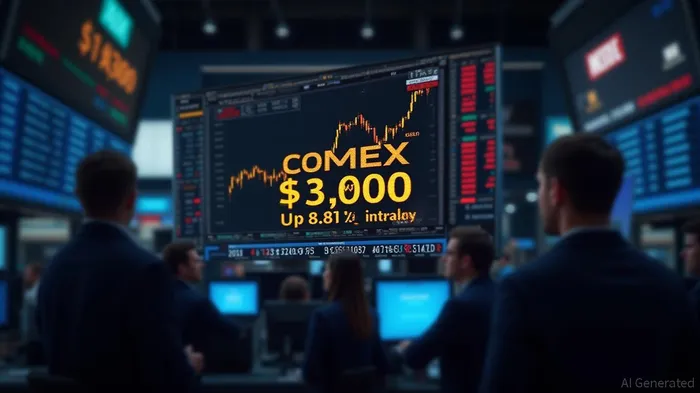
COMEX gold rises above $3,900 per ounce, up 0.83% intraday.
COMEX gold rises above $3,900 per ounce, up 0.83% intraday.
Gold prices have surged to new heights, with COMEX gold rising above $3,900 per ounce, marking a significant 0.83% intraday increase. This notable climb comes amidst a backdrop of heightened geopolitical tensions, economic uncertainty, and a US government shutdown, which have driven investors to seek refuge in the precious metal. The gold market's recent performance underscores the growing apprehension among investors regarding the stability of global economies and the effectiveness of traditional safe-haven assets. The surge in gold prices is part of a broader trend that has seen gold prices nearly double since the beginning of 2025. This rapid ascent is largely attributed to a confluence of factors, including the ongoing US government shutdown, new tariffs, and a pervasive sense of global economic uncertainty. The US federal government shutdown, now in its second day, has introduced considerable economic uncertainty, costing the US economy approximately $7 billion per week and potentially reducing GDP growth by 0.1 to 0.2 percentage points for each week it persists. The delay in releasing crucial economic data has further complicated the Federal Reserve's policy decisions, contributing to a risk-averse market sentiment. Adding to the turmoil are new and escalating tariffs that are straining global trade relations and increasing business costs. The US has imposed a "wave of new sectoral tariffs" on heavy trucks, furniture, kitchen cabinets, and pharmaceutical products, alongside Section 232 tariffs on timber and lumber. In a retaliatory move, the European Union plans to double tariffs on steel imports to 50%, mirroring US rates. These protectionist measures disrupt supply chains, push consumer prices higher, and weaken the job market, collectively driving investors toward safe-haven assets that are insulated from trade wars. The overarching theme of global economic uncertainty ties these factors together. Weak US jobs data, with a reported -32,000 private payrolls for September, has intensified expectations of aggressive Federal Reserve interest rate cuts in October and December 2025. Lower interest rates typically make non-yielding assets like gold more appealing compared to bonds. Concerns over persistent inflation and weakening global economic growth further reinforce gold's traditional role as an inflation hedge. The immediate implications of gold's ascent are a testament to the current climate of anxiety. An intense flight to safety is underway, evidenced by significant inflows into gold-backed Exchange Traded Funds (ETFs) and a steady increase in central bank gold reserves. Simultaneously, the US dollar's traditional appeal as a safe haven is diminishing, contributing to its weakening against other major currencies and further bolstering gold's attractiveness to international investors. The unprecedented surge in gold prices creates a distinct cleavage in corporate fortunes, benefiting companies directly involved in gold production and those offering alternative safe-haven assets, while posing challenges for sectors sensitive to economic instability and trade disruptions. Gold mining companies stand as the most immediate and significant beneficiaries, poised for substantial revenue and profit growth. Companies in the gold jewelry and bullion retail sectors might see mixed results, while companies heavily reliant on global trade and consumer spending are likely to face headwinds. Gold's meteoric rise to $3,900 per ounce serves as a critical barometer of profound global stress, signaling a significant shift in investor sentiment and economic paradigms. This event fits squarely into broader industry trends emphasizing risk aversion, diversification beyond traditional asset classes, and a growing distrust in government stability. The current situation highlights the increasing interconnectedness of global financial markets and political landscapes. The road ahead for investors and markets is fraught with both challenges and opportunities, requiring strategic pivots and careful adaptation. The immediate future will largely be dictated by the resolution of the US government shutdown, the trajectory of global trade disputes, and the response of central banks to mounting economic pressures. In the short-term, the price of gold is likely to remain highly sensitive to news regarding these key drivers. A prolonged US government shutdown or further escalation of tariffs could propel gold even higher, potentially breaching the $4000 mark as safe-haven demand intensifies. Conversely, any signs of de-escalation or a swift resolution to the shutdown could lead to a temporary pullback in gold prices as risk appetite cautiously returns.
Stay ahead of the market.
Get curated U.S. market news, insights and key dates delivered to your inbox.


AInvest
PRO
AInvest
PRO



Comments
No comments yet