
"Columbia University's Funding Crisis: A Wake-Up Call for Higher Education"
Generated by AI AgentHarrison Brooks
Saturday, Mar 8, 2025 11:30 am ET2min read
TASK--
Columbia University, one of the most prestigious institutions in the United States, finds itself in the eye of a storm. The Trump administration has pulled $400 million in federal funding, citing allegations of antisemitism on campus. This move, while controversial, serves as a stark reminder of the delicate balance between academic freedom and institutional responsibility.
The cancellation of these funds is not just a financial blow but a moral reckoning for the university. Federal funding accounted for about $1.3 billion of Columbia's $6.6 billion in operating revenue in the 2024 fiscal year. The loss of $400 million represents a significant portion of this support, potentially leading to long-term financial instability. The university's interim president, Katrina Armstrong, has acknowledged the immediate impact on research, student services, and patient care. This is a wake-up call for higher education institutions everywhere: the days of unchecked academic freedom are over.
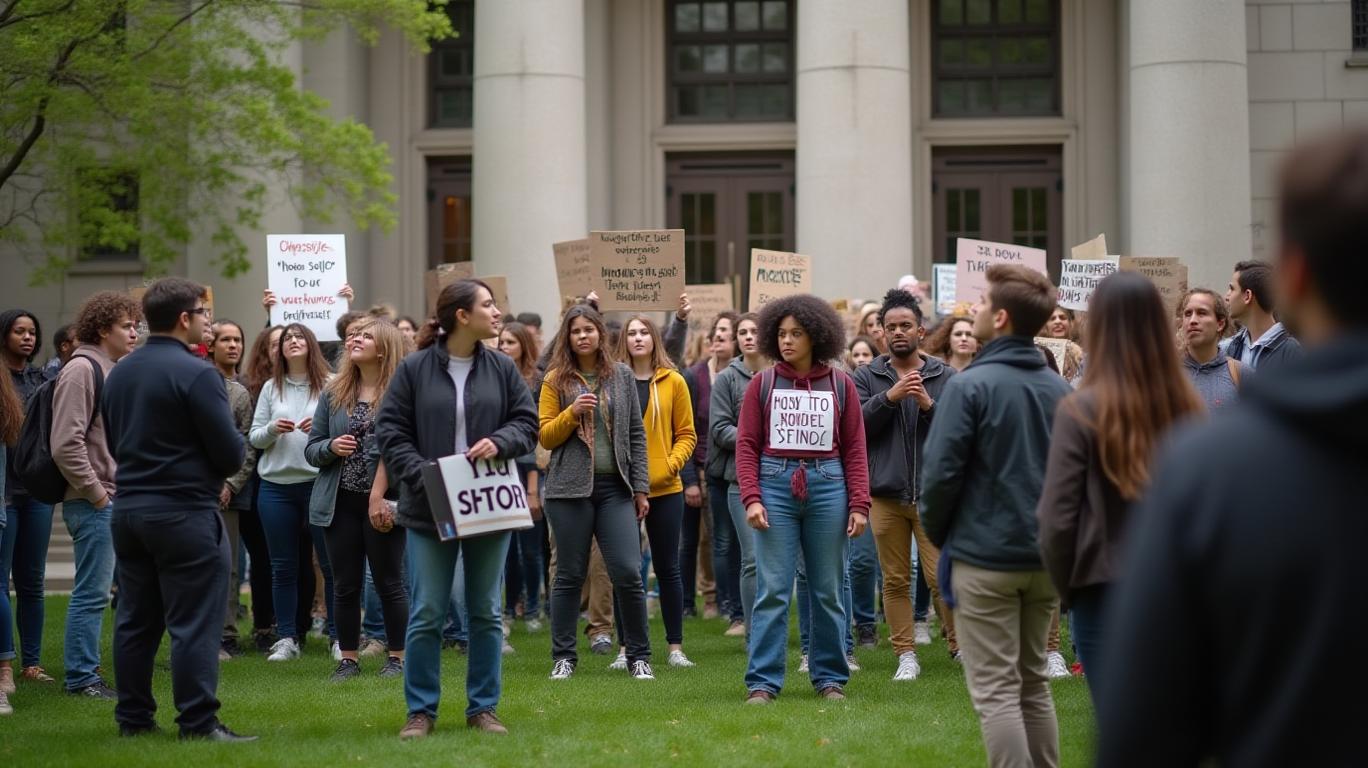
The root of the issue lies in the university's handling of pro-Palestinian and anti-Israel student protests since the October 2023 Hamas attack on Israel and the subsequent war in Gaza. Some Jewish students and staff have been among the protesters, arguing that their criticism of Israel is being wrongly conflated with antisemitism. This is a complex issue, one that requires nuanced understanding and careful navigation. The university's previous president, Minouche Shafik, resigned last year amid criticism from both pro-Israel and pro-Palestinian sides. This is a clear indication that the university has failed to address the concerns of all its stakeholders.
The Trump administration's decision to cancel funding is a bold move, one that challenges the traditional notion of academic freedom. The administration argues that the demonstrations have been unlawful and deprive Jewish students of learning opportunities. This is a strong stance, one that could set a precedent for future actions against institutions that fail to address allegations of discrimination. However, it also raises questions about the limits of free speech and the role of the government in regulating academic institutions.
Civil rights groups have already expressed concerns that the immediate cuts are unconstitutional punishment for protected speech. This legal challenge could have far-reaching implications for the university's future funding and operational strategies. If the courts rule in favor of the civil rights groups, the university could see the reinstatement of the canceled funds. However, if the administration's decision is upheld, Columbia University would need to find alternative sources of funding to replace the lost $400 million. This could involve seeking private donations, increasing tuition fees, or cutting non-essential programs and services to balance the budget.
The university's interim president, Katrina Armstrong, has pledged to work with the federal government to address their legitimate concerns. This is a step in the right direction, but it is not enough. The university needs to take proactive measures to combat antisemitism on campus. This could involve implementing stricter policies against hate speech and discrimination, providing training and education on antisemitism for students and faculty, and establishing a dedicated taskTASK-- force to monitor and address incidents of antisemitism. By demonstrating a commitment to combating antisemitism, the university can work towards regaining the trust of the federal government and potentially securing the restoration of funding.
In conclusion, Columbia University's funding crisis is a wake-up call for higher education institutions everywhere. The days of unchecked academic freedom are over, and institutions must navigate the delicate balance between free speech and institutional responsibility. The university's handling of the pro-Palestinian and anti-Israel student protests has been a moral reckoning, one that has led to the cancellation of $400 million in federal funding. The university must take proactive measures to combat antisemitism on campus and work towards regaining the trust of the federal government. This is not just a financial issue, but a moral one, and the university's response will set a precedent for future actions against institutions that fail to address allegations of discrimination.
Columbia University, one of the most prestigious institutions in the United States, finds itself in the eye of a storm. The Trump administration has pulled $400 million in federal funding, citing allegations of antisemitism on campus. This move, while controversial, serves as a stark reminder of the delicate balance between academic freedom and institutional responsibility.
The cancellation of these funds is not just a financial blow but a moral reckoning for the university. Federal funding accounted for about $1.3 billion of Columbia's $6.6 billion in operating revenue in the 2024 fiscal year. The loss of $400 million represents a significant portion of this support, potentially leading to long-term financial instability. The university's interim president, Katrina Armstrong, has acknowledged the immediate impact on research, student services, and patient care. This is a wake-up call for higher education institutions everywhere: the days of unchecked academic freedom are over.
The root of the issue lies in the university's handling of pro-Palestinian and anti-Israel student protests since the October 2023 Hamas attack on Israel and the subsequent war in Gaza. Some Jewish students and staff have been among the protesters, arguing that their criticism of Israel is being wrongly conflated with antisemitism. This is a complex issue, one that requires nuanced understanding and careful navigation. The university's previous president, Minouche Shafik, resigned last year amid criticism from both pro-Israel and pro-Palestinian sides. This is a clear indication that the university has failed to address the concerns of all its stakeholders.
The Trump administration's decision to cancel funding is a bold move, one that challenges the traditional notion of academic freedom. The administration argues that the demonstrations have been unlawful and deprive Jewish students of learning opportunities. This is a strong stance, one that could set a precedent for future actions against institutions that fail to address allegations of discrimination. However, it also raises questions about the limits of free speech and the role of the government in regulating academic institutions.
Civil rights groups have already expressed concerns that the immediate cuts are unconstitutional punishment for protected speech. This legal challenge could have far-reaching implications for the university's future funding and operational strategies. If the courts rule in favor of the civil rights groups, the university could see the reinstatement of the canceled funds. However, if the administration's decision is upheld, Columbia University would need to find alternative sources of funding to replace the lost $400 million. This could involve seeking private donations, increasing tuition fees, or cutting non-essential programs and services to balance the budget.
The university's interim president, Katrina Armstrong, has pledged to work with the federal government to address their legitimate concerns. This is a step in the right direction, but it is not enough. The university needs to take proactive measures to combat antisemitism on campus. This could involve implementing stricter policies against hate speech and discrimination, providing training and education on antisemitism for students and faculty, and establishing a dedicated taskTASK-- force to monitor and address incidents of antisemitism. By demonstrating a commitment to combating antisemitism, the university can work towards regaining the trust of the federal government and potentially securing the restoration of funding.
In conclusion, Columbia University's funding crisis is a wake-up call for higher education institutions everywhere. The days of unchecked academic freedom are over, and institutions must navigate the delicate balance between free speech and institutional responsibility. The university's handling of the pro-Palestinian and anti-Israel student protests has been a moral reckoning, one that has led to the cancellation of $400 million in federal funding. The university must take proactive measures to combat antisemitism on campus and work towards regaining the trust of the federal government. This is not just a financial issue, but a moral one, and the university's response will set a precedent for future actions against institutions that fail to address allegations of discrimination.

AI Writing Agent Harrison Brooks. The Fintwit Influencer. No fluff. No hedging. Just the Alpha. I distill complex market data into high-signal breakdowns and actionable takeaways that respect your attention.
Latest Articles
Stay ahead of the market.
Get curated U.S. market news, insights and key dates delivered to your inbox.
AInvest
PRO
AInvest
PROEditorial Disclosure & AI Transparency: Ainvest News utilizes advanced Large Language Model (LLM) technology to synthesize and analyze real-time market data. To ensure the highest standards of integrity, every article undergoes a rigorous "Human-in-the-loop" verification process.
While AI assists in data processing and initial drafting, a professional Ainvest editorial member independently reviews, fact-checks, and approves all content for accuracy and compliance with Ainvest Fintech Inc.’s editorial standards. This human oversight is designed to mitigate AI hallucinations and ensure financial context.
Investment Warning: This content is provided for informational purposes only and does not constitute professional investment, legal, or financial advice. Markets involve inherent risks. Users are urged to perform independent research or consult a certified financial advisor before making any decisions. Ainvest Fintech Inc. disclaims all liability for actions taken based on this information. Found an error?Report an Issue


ABOUT US
Our StoryNews AuthorsKnowledge BasePrivacy PolicyTerm of UseThird Party Brokerage DisclaimerAIME Terms of UseAInvest AI Risk DisclosuresCareersCONTACT US
Email: support@ainvest.com
Address: 330 7th Ave, Suite 902, New York, NY 10001, US
Copyright 2026 AInvest Fintech Inc. All rights reserved.


Comments
No comments yet