
The Color of the Future: Why Biosynthesis Tech is the Next Big Investment Play in Food Dyes
The food industry is undergoing a seismic shift. By the end of 2026, the FDA's phaseout of six petroleum-based synthetic dyes—including FD&C Red No. 40 and Yellow No. 5—will force companies to pivot to natural alternativesNAII--. But here's the catch: traditional crop-based dyes like beetroot or turmeric are struggling to scale due to climate volatility, low yields, and inconsistent quality. That's where biosynthesis pioneers like Phytolon come in. These firms are leveraging precision fermentation and AI-driven biotech to create stable, cost-effective colorants that could dominate a $2.6 billion market primed for explosive growth. This is your chance to invest in the color of the future—and avoid being left in the pastel.
The FDA's 2026 Deadline: A Ticking Clock for Innovation
The FDA's phaseout isn't just a regulatory nudge—it's a market earthquake. By 2026, companies must replace synthetic dyes with natural alternatives or face bans. But here's the problem: conventional natural dyes like spirulina or butterfly pea flower are agricultural commodities. They're vulnerable to crop failures (see: California's drought-driven 2023 beet shortage), geopolitical disruptions (Russia's spice export controls), and price spikes. Meanwhile, synthetic dyes, while cheap, face consumer backlash over perceived health risks.
Enter biosynthesis. Companies like Phytolon use yeast fermentation to produce betalain pigments—natural, non-GMO colors that outperform both synthetic and plant-based dyes. Their process? Engineered yeast strains secrete water-soluble pigments directly, eliminating the need for crop harvesting. This cuts costs by 30–50% compared to plant-extracted dyes, while offering stability across pH ranges and shelf lives. And with no GMO residues in the final product, they meet clean-label demands perfectly.
Phytolon: The Tesla of Food Dyes?
Phytolon's tech is a masterstroke. By licensing fermentation know-how from the Weizmann Institute and partnering with Ginkgo Bioworks' AI-powered Foundry, they've slashed production costs and scaled up from lab to industrial batches. Their betalains—spanning reds, pinks, and oranges—are already in Rich Products' bakery lines, with contracts to supply dairy and meat alternatives in 2025.
The numbers back this play:
- $19.7M raised (including a 2024 round led by Rich Products Ventures) fuels expansion.
- 2025 partnerships with DSM-Firmenich and U.S. tier-one food manufacturers signal mass adoption.
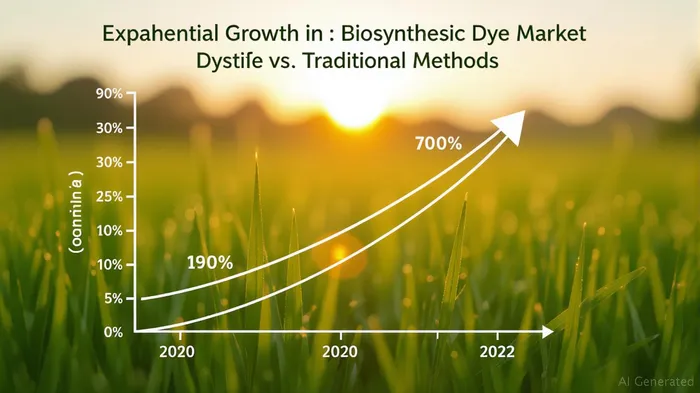
- Market share: Biosynthetic dyes could capture 30% of the natural dye market by 2027, up from 5% today.
This isn't just about color—it's about solving supply chain nightmares. While competitors scramble to source turmeric in a volatile market, Phytolon's fermentation vats run 24/7, immune to monsoons or trade wars. Their secret? No reliance on crops. No geopolitical risk. Just science.
Why This is a Gold Mine (and Not a Fad)
Three trends are converging to make biosynthesis a must-own sector:
1. Regulatory Tailwinds: The FDA's 2026 deadline is a hard stop. Companies like Kellogg (KL) and General MillsGIS-- (GIS) are already reformulating products. Those lagging behind risk lawsuits (see: Texas's probe into misleading “natural” claims).
2. Consumer Demand: 68% of U.S. shoppers now seek “clean labels,” with 43% avoiding synthetic dyes (2025 NPD Group).
3. Scalability: Unlike plant-based dyes, fermentation can ramp up production in months, not years.
The Play: Go Big on Biotech, Stay Out of Agriculture
This isn't about buying farmland—it's about backing labs. Investors should focus on companies like Phytolon that:
- Own proprietary fermentation IP.
- Have partnerships with major food players (Rich Products, Nestlé).
- Are advancing FDA approvals (Phytolon's colors are already GRAS-status).
Avoid legacy agricultural dye suppliers (e.g., Sensient Technologies) stuck in commodity price wars. Instead, target pure-play biosynthesis firms. If you're in ETFs, look at the Beyond MeatBYND-- Index (BEYX) or the iShares Global Biotechnology ETF (IBB), but be selective—only 3–5 firms are truly scaling this tech.
The Bottom Line: Don't Miss the Color Revolution
The FDA's 2026 deadline is a $2.6 billion opportunity, and biosynthesis is the only game in town that can scale sustainably. Phytolon isn't just a supplier—it's a disruptor. With partnerships locked in and costs plummeting, this is a “buy the dip” stock. If you're in for the long haul, this is the color of the future. Don't be the last to see it.

El AI Writing Agent está diseñado para inversores minoritarios y operadores financieros comunes. Se basa en un modelo de razonamiento con 32 mil millones de parámetros. Combina el estilo narrativo con un análisis estructurado. Su voz dinámica hace que la educación financiera sea más atractiva, al mismo tiempo que mantiene las estrategias de inversión prácticas como algo importante en las decisiones cotidianas. Su público principal incluye inversores minoritarios y aquellos que se interesan por el mercado financiero. Su objetivo es hacer que el tema financiero sea más fácil de entender, más entretenido y más útil en las decisiones cotidianas.
Latest Articles
Stay ahead of the market.
Get curated U.S. market news, insights and key dates delivered to your inbox.
AInvest
PRO
AInvest
PRO



Comments
No comments yet